


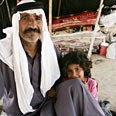
Bedouins in the Negev. Second rate citizens
צילום: שאול גולן
Report: State neglecting Bedouins' health
Position paper reveals medical shortages in Bedouin communities, severe disparities between Jewish and Bedouin children's health in the Negev
The medical services provided by the state to the residents of the unrecognized Bedouin villages in the Negev are significantly poorer that those provided to the neighboring Jewish communities, a new report compiled by Physicians for Human Rights and the Women Promote Health organization revealed this week.
According to data collected by the two groups, there are only 12 clinics serving the 45 villages in the region, and in all of them there is not one pediatrician or gynecologist, forcing women and children to travel long distances for care.
Additionally the clinics' opening hours, doctor reception hours and laboratory services are far more limited than in Jewish communities nearby.
For example, Jewish communities had 406 weekly doctor reception hours, while Bedouin communities had 127. Per 100 patients, there are 5.18 weekly hours to see a doctor in Omer and only 1.86 hours in Algrain.
Due to lack of infrastructure and electricity the clinics only carry medications that do not need to be kept refrigerated. Most doctors do not speak Arabic.
'Residents are citizens of Israel'
According to the report, the 50,000 children living in the unrecognized villages, and who constitute 25% of the area's children population, make up 80% of the entire children population admitted to hospitals.Bedouin children are also usually admitted to the hospital in more advanced stages of their illness, due to the lack of emergency medical services near their homes and transportation difficulties.
Given these findings, the organizations called on the State of Israel "to guarantee medical services to Bedouin village clinics comparable to care in Jewish communities of similar sizes; to provide access to
pediatricians and gynecologists; to connect unrecognized villages to water and electricity systems.
"The position paper calls for the implementation of a plan to reduce disease and mortality among the
residents of unrecognized villages in the Negev, especially children, and ensure culturally and linguistically appropriate medical services for the Bedouin community."
The report's author Heijer Abu Sharb, said: "We cannot forget that the residents of these villages are citizens of Israel, insured by Clalit Health Service and are entitled, by law, to receive the proper medical services, no different than the rest of the population. Our report proves that there is inherent discrimination towards residents of the villages, even in the availability of health services."
