


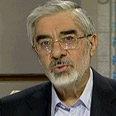
Dr. Jekyll and Mr. Mousavi
Iranian reformist may seem moderate but his history is one of a radical sympathizer of the ayatollahs' regime. Can a leopard really change its spots?
Reformist Iranian leader Mir-Hossein Mousavi, with his sleek, striped shirts and overall serene demeanor, may seem like the nuclear threat-wary West's wildest dream, but a closer look into the man's past reveals a darker image, of a man who was a radical sympathizer of the ayatollahs.
Mousavi (67), who became Iranian President Mahmoud Ahmadinejad's main political rival during the last presidential race, is an architect by training, an amateur artist and a would-be poet, who has penned dozens of romantic songs.
His presidential campaign focused on problems rooted within the Islamic Republic: He pledged to improve the status of women, fight unemployment, poverty and the younger generation's disconcerting affection for drugs, and he vowed that change will come.
His resume, however, depicts an extremist – a man who is not so different than Mahmoud Ahmadinejad.
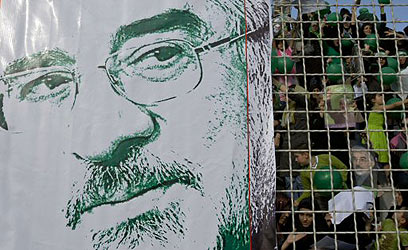
True colors? Mousavi (Photo: Reuters)
Back when we were revolutionists
Mousavi began his career as a member of the Islamic resistance in Iran, which eventually toppled Shah Mohammad Reza Pahlavi in 1979. When the Ayatollah Ruhollah Khomeini took power, he made Mousavi his foreign minister.
"After the Revolution, I found my true Islamic nature," he said then – and was promptly made prime minister. His tenure saw the eight-year Iran-Iraq War (1980-1988) and he used his extensive authorities to launch chemical and biological weapon programs.
He also ordered brutal police sweeps meant to locate army deserters, or soldiers who fled the battlefield. Thousands were arrested, and anyone who met his definition of "traitor" was sent to a special prison – never to be seen again.
Related stories:
- Iran braces for mass opposition protest
- Distributors of vote's 'true results' arrested
- Iran's Revolutionary Guard warns online media
- Ayatollah Khamenei orders probe of vote fraud
- Ahmadinejad: Disputed vote 'free and healthy'
The Ynet guide to the presidential elections in Iran
Mousavi was Iran's fifth and last prime minister. During his final years in office, the Ayatollah Khomeini issued the fatwa (religious decree of the death sentence) against author Salman Rushdie, accused of blasphemy after his book "The Satanic Verses" was published. All Muslims were essentially ordered to kill Rushdie on sight, and he ended up surviving several assassination attempts. Mousavi did nothing to contest the fatwa.
Another turning point during Mousavi's reign as prime minister was the 1979 Iran hostage crisis, which sparked a diplomatic crisis between Tehran and the Washington: November 4, 1979 saw Islamist militants take over the US embassy in Tehran, holding 52 Americans hostage for 444 days. Mousavi refused to act for the hostages release and the US eventually severed all ties with the Islamic Republic.
Mousavi is also "credited" with being one of the driving forces behind the formation of Hizbullah, as Iran's local "spearhead against the devil" – i.e. Israel.
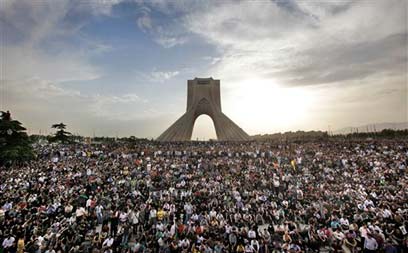
Pro-Mousavi rally in Tehran (Photo: AP)
Pulling the strings
Once the office of the prime minister was officially annulled in 1989, Mousavi was asked to run for president several times, but refused. In 1997 he opted to endorse his friend Mohammad Khatami for the role, and was rewarded with a special advisor position. In 2005 he refused the position once more, reportedly sensing that then-virtually anonymous candidate Ahmadinejad had the masses vote.
When the Iranian Election Committee approved his nomination for the 2009 race, Mousavi met with Iran's supreme spiritual leader, the Ayatollah Ali Khamenei, who – as he later told his associates – "promised to endorse the winning candidate." Apparently, Mousavi failed to see how far the ayatollah and his Revolutionary Guard were willing to go for Ahmadinejad.
Mousavi's presidential campaign, much like US President Barack Obama's was all about instating change, won over young voters. Since his loss, he seems to be the invisible hand responsible for the mass wave of protest sweeping through Iran.
Nevertheless, he seems to be exercising extreme caution, diligently calling for cooler heads to prevail. Then again, otherwise he may become the subject of a subversive activity case and as such, find himself behind bars.
- Stay focused
