


Military Police to probe Armored Corps abuse case
Following Ynet report on severe acts of violence against soldiers in Armored Corps' Battalion 74 during hazing ceremony, military advocate general calls for full-fledged probe of commanders on top of disciplinary action
Military Advocate General Avi Mandelblit ordered a Military Police investigation into the severe abuse cases of involving IDF Armored Corps troops and commanders.
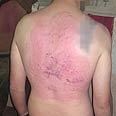
Ynet revealed recently that several newly inducted soldiers placed with one of the Armored Corps brigades were subjected to abuse by their squad commanders as part of a hazing ceremony.
The soldiers were beaten by seven other servicemen, to the point of suffering substantial bruising and scarring. The event, described as extremely violent, was apparently sanctioned by the company commander, though he did not participate in it personally.
The incident took place in a company which is a part of the Armored Crops' 188 Brigade. The father of one of the soldiers abused told Ynet that while his son was initially reluctant to say how he was hurt, he eventually told him that he and nine other soldiers were subject to a beating.
Harsher sentences possible
The brigade commander ordered a full inquest into the case and his investigation found that the officers' actions were in gross breach of IDF norms.
The company commander, a captain, was tried by the commander of the 36th Armored Division (the Ga'ash Division) and sent to 30 days in the brig. He is also facing a dismissal, despite the fact he did not take an active part in the hazing.
Other officers involved in the incident were sentenced to various jail terms.
At this time, the disciplinary action which was taken against those involved stands, but it may be overturned at a future date.
The abused soldiers will be deposed as part of the Military Police's investigation, after which the Military Prosecution may file severe indictments against those involved in the case. If convicted, the commanders' sentences will apparently be significantly harsher than those handed down during the disciplinary proceedings.
Relatives of some of the soldiers told Ynet that some of the commanders who acted violently have not been tried in the affair because the troops were afraid to incriminate them. These commanders are expected to be questioned under warning during the Military Police's probe of the case and may even be detained.
