


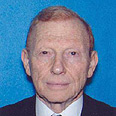
Mazel. 'Japanese doesn't help'
'Israel's UN ambassador must know Arabic'
In letter sent to prime minister, foreign minister, Israel's former ambassadors write that given informal, covert contacts made in UN between Israel and Arab states, next ambassador to UN must know Arabic
Should a command of Arabic be a requirement for Israel's ambassador to the UN? Former ambassadors along with members of the academia and media in the Middle East field sent a letter Monday to Prime Minister Benjamin Netanyahu and Foreign Minister Avigdor Lieberman in which they suggested that the next person to be nominated to the post in New York be fluent in Arabic and in Middle East affairs.
The letter was signed by former Israeli ambassadors to Egypt Zvi Mazel and Eli Shaked, and Middle East scholars such as Dr. Mordechai Kedar and Prof. Rafi Yisrael.
The letter reads: "As those who have served and are serving the State and are aware of the challenges facing every one of the diplomatic delegates representing the country in the international community, we place much importance on the role of the Israeli ambassador to the UN. It is our desire to call to mind the fact that many of the informal and covert contacts between Israel and the Arab states, with whom there are no diplomatic ties, take place in the UN. It is very important that Israel's ambassador in the UN be proficient in the Middle East and will be able to carry on these contacts from a place of knowledge and understanding."
The letter's authors suggested that proficiency and fluency in the language, culture, and history of the Arab peoples and Islam could stand as a significant advantage for the State of Israel. "Choosing a candidate the embodies in his personal qualities and personality these basic advantages will benefit the interests of the State and will likely be a springboard for advancing relations between Israel and the Arab states."
'He should know how to read Arab newspaper'
The letter's signatories were careful not to make a personal attack against the current ambassador, Prof. Gabriela Shalev. However, it is difficult to ignore the implied barbs at the woman who came to the post from the world of academia and law.
"In the past, there were good people in the post, but they were lacking the dimension that is so important to us as a country in the Middle east," said former Ambassador to Egypt Zvi Mazel. "This post requires a capable person who can open a newspaper in Arabic, see what is going on and respond accordingly. Respect for the recent ambassador stand's in its place. She is talented and has a lot of experience in her field. She received instructions and carried them out. However, now we are speaking about choosing a new person."
Mazel pointed out that the UN is an international, political, and media center that the Arabs blatantly use against Israel. "There are thousands of people working there day and night in order to spread their thoughts and lies. Alongside them needs to be an experienced diplomat who is also a Middle East specialist. He must be an Arabic-speaker who is familiar with Arab culture so that he can respond appropriately in the media. This is something that is very important that we are lacking."
The former ambassador refused to name names, but hinted that the current front-runner candidates for the post, including Alon Pinkas and Zalman Shuval, do not fulfill the necessary requirements outlined in the letter.
"We do not have any concrete recommendations on specific candidates, but we are seen that Pinkas and Shuval are being discussed. The names are unimportant. They should pick whomever they want, but we see the prime minister waffling, and the time has come to say: 'Gentlemen, capable people need to be placed there who understand the Middle East.' We don't need people who know other languages. It's nice if you know Czech or Japanese. The question is to what extent does this help you as an Israeli ambassador to the UN," Mazel said.
Former Ambassador to the UN Danny Gillerman came out against the initiative and the letter in a conversation with Ynet.
"This demand contains no small element of hypocrisy and meddling in Israel's decision-making process. It would be good if every citizen in the State of Israel were an Arabic-speaker, but this certainly is not a criterion for serving as Israel's ambassador to the UN.
"I would be glad to meet ambassadors from Arab countries who speak Hebrew, but I do not recall that anyone from these states with whom I worked closely in the UN received this as a demand from their countries. In any case, I, personally, do not think it is my position or my colleagues' position to meddle in the decision on appointing the next ambassador," countered Gillerman.
