


Iran bank assets withdrawn from Europe
Islamic Republic's central bank chief says Tehran attempting to escape latest round of international economic sanctions by pulling out assets from its Europe banks
Iran's central bank chief said on Friday that Tehran has withdrawn the assets held by its banks in Europe to escape the latest round of international economic sanctions over its nuclear drive.
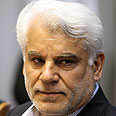
"The Central bank ... has transferred the (Iranian) banks' assets from Europe. Currently there is no problem in regards to blocking of assets of the Iranian banks by the European Union," Mahmoud Bahmani was quoted as telling the Fars news agency.
He did not say how much money was involved, what its destination was or when the transfers took place.
"We will address the needs of our people during sanctions, since the Central Bank predicted the situation six months ago," he added.
On June 9, the UN Security Council hit Iran with a fourth set of sanctions over its nuclear program. The United States and European Union have since imposed even tougher punitive measures of their own.
Leading Iranian banks have been specifically targeted by the international community, with the United States sanctioning Mellat, Melli, Saderat and Export Development Bank of Iran, accusing them of financing weapons proliferation.
The EU measures include a ban on the sale of equipment, technology and services to Iran's energy sector, hitting activities in refining, liquefied natural gas, exploration and production.
New investments in the energy sector are also banned.
The Iranian banking sector was also hit by restrictions, forcing any transactions over 40,000 euros (51,000 dollars) to be authorized by EU governments before they can go ahead.
On August 8, Bahmani said Iran must cut imports to overcome the sanctions, which target Iran's banking, financial and energy sectors.
Limiting purchases from EU
Two days later, First Vice President Mohammad Reza Rahimi said Iran would limit its purchases from the European Union, which amounted to 11.4 billion euros, or 27% of Iranian imports in 2009, according to EU statistics.
He said this would mainly affect food imports, such as wheat and soybeans.
Iran is accused by world powers of seeking atomic weapons under the guise of a civilian programmed. It is under Security Council sanctions for its refusal to halt uranium enrichment - the process that can be used to make nuclear fuel but also the fissile core of an atom bomb in highly purified forms.
Tehran strongly denies this.
- Follow Ynetnews on Facebook
