


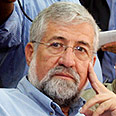
Amram Mitzna
צילום: צפריר אביוב
The fight for equality
Op-ed: We need more national service opportunities for weak population groups
Two main frameworks that enable social mobility exist in Israel – military service and volunteering for national service. Yet precisely these frameworks present inequality of opportunity for the population groups that are most in need. In every recruitment round of 18-year-olds at this time, more than 50% of youngsters do not enlist for IDF service - nearly 60,000 people, mostly of whom are not draft-dodgers as is commonly perceived, but rather, youngsters the army is uninterested in recruiting.
As a member of the Knesset Defense and Foreign Affairs Committee, I co-approved the national service regulations. The idea was to provide two population groups – Arabs and haredim – with the opportunity to perform volunteer service at their place of residence and within their own communities. When we later introduced such plan in the southern town of Yerucham, I discovered another immense advantage inherent in this kind of national service: It provides an opportunity for young men and women at risk, on the margins.
We are talking about youngsters who belong to one of society's weakest groups. Most of them do not finish high school and are barely connected to society. For them, the starting point for an adult life is significantly lower than their 18-year-old peers who join the army. These people face trouble integrating into the job market and gaining admission into academic institutions; as we know, higher education is the most important factor in respect to social mobility. Moreover, these youngsters are not entitled for the benefits provided to their peers who served in the army or performed national service.
The problem has to do with the open spots earmarked by the State. At this time, we have 14,000 open national service spots, and only about 15% of them are earmarked for weak population groups. That is, only some 2,000 youngsters can enjoy such significant means to improve their future.
The greatest threat
These weakened population groups include Arab youngsters, young people with physical or mental disabilities, and people on the margins who are not enlisted. The number of open national service spots at this time is nowhere near sufficient for such broad population group.The greatest threat faced by Israel at this time is not Iran, Hamas, or global anti-Semitism. The gravest threat is the socioeconomic gaps that we not only failed to address, but rather, let grow over the years.
Upon finishing high school, the youngsters who complete their studies with high grades rush forward, while those who do not graduate, or who earn low grades, stay behind. National service is a means that presents many opportunities for these youngsters. It provides them with self-confidence, teaches them personal responsibility, allows them to become familiar with their own abilities, dream, and believe they have the power to realize their dreams and change their destiny.
Moreover, if we manage to address this weak link in society, we'll strengthen the entire chain. In order to bring about this change, we must boost the number of open spots dedicated by the State to national service by weakened population groups. In the town of Yerucham alone, for example, we need to double the number. The objective has to be for every youngster who receives an IDF exemption to be directed to national service, with anyone interested in it having the possibly and right to serve.
