


The price of neglect
Op-ed: Dire state of Israel’s education system threatens our future as a scientific superpower
Thomas Jefferson defined dictatorship as a country where citizens are afraid of the government, while a country where the government fears its citizens is a democracy. According to this definition, there is no doubt that Israel is the most democratic country in the world. The Israeli government is run like a commercial TV channel, where most decisions are made rapidly and are then changed as rapidly in response to daily polls.
As to the wisdom of poll participants, we can quote writer Henry Louis Mencken, who said that democracy is a pathetic belief in the collective wisdom of individual ignorance. It is not difficult to imagine where we would be today had David Ben-Gurion waited every morning for the daily polls to determine his agenda.
Crafting policy on the basis of popularity considerations is particularly problematic for organizations that are in charge of long-term processes, such as the Ministry of Education. One diagnostic outcome of the populist policy adopted by this Ministry is the non-focused curricula that includes multiple popular, fashionable and seemingly innovative subjects, but neglects core studies. Perhaps the demand that ultra-Orthodox schools include core studies in their curriculum must first be applied to secular schools.
The plethora of 165 topics and over 650 different matriculation exams offered by our high schools makes the system not too different from stock exchange trading. The Ministry of Education’s grade market is a land of unlimited opportunities. Like agile investors, the students and their parents, sometimes with the assistance of teachers, select the subjects that will give them maximum return on minimal effort. There is an incredible supply of marginal subjects, offering high marks and certificates of excellence at bargain prices.
Every year the Ministry issues new stocks to feed this vibrant market. In the current school year, Israeli students will be able to choose matriculation exams in Chinese and Italian as well. It's great to learn Italian, but one can do it in extracurricular courses, not as a substitute for regular structured studies, and certainly not as a substitute for proper teaching of reading and expression in Hebrew. It does not make much sense for high school graduates to know a few words in Chinese, but still remain ignorant of science and mathematics, not to mention their ignorance in Bible, history and civics.
As many have learned firsthand from the stock market or the real estate market, economic bubbles work fine for everyone, until the inevitable moment of encounter with reality. Our happy students usually meet with the bitter reality on international tests, upon entering universities and at competitions with their peers worldwide.
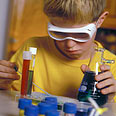
Analysis of public records published by the Ministry of Education reveals that minority pupils are far more responsible than their Jewish colleagues in their attitude to science education. While only 6% of Israel's Jewish students choose to study chemistry at the highest level of 5 units (and only 3% of students in the religious schools,) 18% of minority students choose to study chemistry. In absolute numbers, the number of Jewish students and non-Jewish students is almost equal. The situation in biology and physics studies is similar.
The significance of these data is clear: The proportion of Arabs and Druze among scientists, medical doctors, teachers, engineers and founders of Israeli start-up companies will increase dramatically in one or two decades, more than twice as much as their relative population in Israel. We should recall that the three Israeli Nobel laureates in chemistry won the prize for 30-year-old achievements. If in 30 years we will still see Israeli Nobel Prize laureates, they are as likely to be Arab/Druze as Jewish.
Man-made process
Of course, this is great news for the State of Israel in general and for minorities in particular, because this process paves the way for a true integration of the Arabs, Druze and Bedouin into the social and economic fabric of the country. Ironically, it is the right-wing government headed by the Likud party that will be remembered as responsible for these demographic changes. The bad news is that regardless of the internal demographic distribution, the State of Israel is losing its international status as a scientific superpower.
The Carmel blaze was a painful reminder to the Israeli government that neglect has a price. Continuing neglect of our education system would exact a much higher price. The government refers to the continuing failure of Israeli students in international tests as a negligible nuisance, which can be removed with the help of image consultants and public relations work. We should remind the government that this is not a nuisance, but rather, preliminary seismic signals of a demographic and political earthquake. To the credit of the current leadership, we can say that the populist conduct by the Ministry of Education has a history of more than two decades.
Evidence of the education system failure is coming from all directions. Technion President Prof. Peretz Lavie warned in an interview with Haaretz newspaper that the teaching of science in Israel is collapsing. Prof. Zehev Tadmor, former president of the Technion, warns that the future of high-tech is unclear, and it is uncertain whether the Israeli economy will be able to sustain the high-tech industry in the country. Professor Haim Harari, former president of the Weizmann Institute, warned for years that this neglect leads to economic disaster beyond the intellectual crisis and damage to democracy.
History teaches us that demography is not merely about a head count. At the height of the Dutch Empire, the population of the Netherlands numbered only one million. The world does not refer to the same degree of seriousness to 140 million Pakistanis as it relates to 4.5 million Singaporeans. Also we tend to underestimate the value of 300 million of our neighbors, due to their technological inferiority.
Historians of 2040 who will explore the demographic upheaval in Israel will find that it did not derive from changes in preferences of Israeli students of different sectors, but from a wrong and negligent education policy. They will discover that the choice of most Jewish students to avoid scientific subjects did not stem from a balanced decision based on proper information, but simply because they did not have a clue what is science and what it is good for.
The expected erosion of the scientific/technological power of the State of Israel is not a force majeure; rather, it is a man-made process that can be stopped. Moreover, the corrections are achievable with the existing budget, so top Ministry of Education officials cannot hide behind the usual excuse of lack of resources. All it takes are good faith, determination and courage. But I doubt that an exhausted government that just wishes to peacefully complete its current term is indeed able to stand in the breach. It is more likely that we must be patient, and wait with hope for the next government.
Ehud Keinan is Professor of Chemistry at the Technion, President of the Israel Chemical Society, member of the Inter-Senate Committee of the Universities, and Chairman of the Chemistry Syllabus Committee, Ministry of Education
Follow Ynetnews on Facebook
