


Back to future in Tel Aviv
Op-ed: Jog along Tel Aviv coastline provokes memories of past, thoughts about future
Tel Aviv is often viewed as primarily a party city, where bars and clubs take centre stage over the political strife and conflict which all too often dominate the region. One of Tel Aviv’s nicknames, “the bubble”, is testament to the perception that the city is somewhat detached from the struggles of the Middle East. Yet in reality, even my well-trodden small stretch of promenade tells a different story.
Those familiar with the Tel Aviv coastline would likely identify my run as starting at the multi-coloured facade of the Dan Hotel down to the Dan Panorama hotel just outside Jaffa and back again. The short distance between the two hotels is cluttered with a variety of bars, hostels, restaurants and cafes. Yet hidden among the busy collection of tourist traps is an assortment of significant landmarks that appear increasingly relevant each time my weary legs trot past them.
Immediately after setting out from the Dan Hotel, a diamond shaped monument juts out from the side of the promenade, catching my eye. Marking the spot where in June 1948, the fledgling IDF shelled the Altalena ship, carrying weapons for the Jewish paramilitary Irgun, the memorial lists the names of those killed as violence raged but mercifully ended on Tel Aviv beach. The memorial serves as a reminder of how internal schisms between fellow Jews and Israelis can spiral out of control, the stone slab starkly warning “Never civil war.”
One cannot help but contemplate the sharp and often bitter divisions in Israeli society today and wonder whether a common national goal is nothing more than a dream and if so, where it might all end.
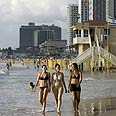
Although the promenade teams with attractive Tel Avivians, the idyllic scene is permeated with reminders of a violent past. Barely 100 metres beyond the Altalena memorial, Mike’s Place is one of several popular beachside bars in the area. It was also the scene of terrorist carnage in April 2003 after two UK-born suicide bombers killed three and wounded 50. Still as popular as ever, Mike’s Place continues to thrive. The sound of music and revelry accompanies me as I continue to stride southward, the uplifting beat underlining the gritty Israeli determination to make the most of life.
Enormous challenges
By this point, the Dan Panorama hotel comes into sight and I know that it will soon be my cue to turn back and head for home. Just before my half-way marker though, stands another grim reminder of terror. Now a derelict shell, an empty structure is all that remains of the Dolphinarium discotheque, the scene of one of the most infamous suicide bombings during the wave of second Intifada terror. The vast majority of the 21 victims were teenagers, mainly from immigrant families from the former Soviet Union. A memorial lists their names and defiantly states “We won’t stop dancing” – Another demonstration of the country’s “life must go on” attitude.
Turning round, homeward bound, in the midst of the traffic and skyscrapers, I encounter the incongruous yet graceful Hassan Bek mosque. Standing somewhat secluded from the surrounding bustle, the mosque was built in 1916 and named after the governor of Jaffa. It is the last remaining structure of the Arab neighbourhood of Manshiye, a lonely memorial to an age long since gone. Yet, the mosque’s minaret, a unique tower in the skyline, also provides a symbol of hope for a long awaited era of coexistence.
I’m on the home stretch now, just enough time for one final reflection. I wonder what the area of Manshiye once looked like and reflect on the scarce everyday interaction between today’s Arab population in Jaffa and the average Tel Avivian. I catch a glimpse of the Opera Tower, which at first glance offers little more than high-rise accommodation and a second rate shopping mall. The square in front of the building is most notable for its fountain, but is significantly known as Knesset Circle – evidence that in the old Opera House on this site sat Israel’s parliament until the end of 1949.
And so here, at this inconspicuous corner where Allenby and Hayarkon streets meet, I find the former seat of government. In doing so, I am reminded of the enormous challenges that democratic Jewish sovereignty brings to this small stretch of land. Tomorrow’s historical landmarks will soon tell us whether peace, equality and prosperity for all of Israel’s citizens remain a dream or a bright new reality.
Dan Kosky is a writer and communications professional based in Tel Aviv
- Follow Ynetnews on Facebook
