


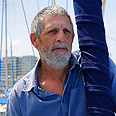
The never-ending battle
Shell-shocked soldiers speak of post-war life as nightmare they never really wake up from
"When I came back from Damascus I was euphoric," he continues. "I thought I was a strong person... I honestly believed I could put the entire thing behind me. It took me several years to realize that this nightmare wasn’t going to go away."
Hevkin in one of 4,000 IDF soldiers who have been diagnosed as suffering from Combat Stress Reaction (CSR) and Post Traumatic Stress Disorder (PTSD). Come each Memorial Day, they too mourn the loss of friends in battle – but their own battle never seems to end.
Hevkin is part of a special program by Etgarim – a non-profit organization dedicated to the rehabilitation of handicapped veterans, as well as children. The program, titled the "Fellowship Ship," uses sailing as a therapeutic tool to help soldiers and veterans suffering from CSR and PTSD find their inner strength again – while training them to be licensed skippers.
The group currently numbers 55 people, ages 20 to 70.
The non-existing dimension
"The idea here is to use a new therapeutic model for dealing with PTSD, based on the formation of a self-help community," Yoav Ben-David, who heads of the program, says.
"One of the biggest problems people like us face is avoidance," Ben-David, who himself suffers from CSR, explains. "PTSD patients turn into people who are completely dependent on their surroundings. You just can't get out of bed. The idea is that I'm here to help first and foremost myself – to get out and be active, while having a support group around."
Part of dealing with the debilitating mental condition posed by shell-shock is finding ways to deal with the memory of lost comrades: "You have to deal with the fact that many of your friends are gone. I can't really go to memorial services… but each person deals with it differently. Some PTSD patients are obsessive about memorial services," he says.

Shalom Fitusi was a combatant medical aidman during the Lebanon war. "The hardest thing about this kind of trauma is that it exists outside of time," he says.
"You're here, it is 2011, but just like that you're transported 30 years into the past, to that one traumatic event, and you are 100% there, reliving it and scared to death."
Nightmares, he continues, are a daily – or rather nightly – occurrence. "I hardly ever sleep. One of the classic symptoms of PTSD is chronic sleep disorder. The good thing about the Fellowship program is that people here understand. We all experience the same thing, so we all understand what the others are going through. It is very difficult to explain to outsiders."
The ocean is an unusual therapeutic tool, "But the link we have here between the maritime activity and this special group of people helps us – helps me – live a more normal life," he says.
"Besides, the most amazing thing is that the ocean is alive. It reacts to you, speaks to you through the waves."
Eye of the storms
Members of the Fellowship Ship program are studying for their international skipper license, but according to Ben-David, the calm seas often cover raging internal storms.
The program "allows each person to set the pace for themselves," he says. "Some workshops deal specifically with the trauma and its ensuing instability. A PTSD patient does not know when a flashback will attack. It could be anything – a door slammed hard, a picture that triggers a memory – anything can set it off."
"The people here enjoy the full understanding of the group with or without sharing their personal story." Hevkin adds. "Some people feel safe and open up. Others don’t – and we don't ask. One of the trauma's commons symptoms is paranoia, so we don't push."

A unique self-help community (Photo: Dudu Azulai)
The group is comprised of veterans of all wars and military campaigns, young and old. "We try to offer the younger guys, the ones hurt in Operation Cast Lead and the Second Lebanon War, some stability," Hevkin says. "They somehow find it reassuring that us older ones are here."
What the group tries to teach new members is how to deal with the agonizing symptoms of their condition. "The mind triggers the body," Ben-David explains. "PTSD patients often experience pain reminiscent of a heart attack – your chest, your intercostal muscles spasm and it hurts like hell.
"With time, you learn to deal with the pain, take a deep breath and understand that it's not real. These are the kind of methods we try to teach the younger guys."
The program has a unique approach, he continues. "We don’t fight the symptoms – which represent the disability. I tell participants who come here looking to leave the trauma behind, the truth. This is a disability and it's never going away – but you can live with it."
The Fellowship Ship program is funded by the Defense Ministry
- Follow Ynetnews on Facebook
