


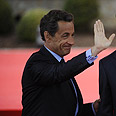
The host, French President Nicolas Sarkozy
צילום: AFP
Arab spring expected to top G8's agenda
Group of Eight summit in Fracne to debate financial aid to budding Middle East democracies; discuss changes in IMF
Leaders of the Group of Eight gathered in France on Thursday to agree aid for new Arab democracies, but with a host of other issues demanding their urgent attention, from European debt to war in Libya and Yemen.
The G8, which includes the United States, France, Germany, Italy, Japan, the United Kingdom, Canada and Russia, is also expected to rally support behind France's candidate for the International Monetary Fund chairmanship in the face of discontent among the emerging economies, who want a bigger say at the IMF.
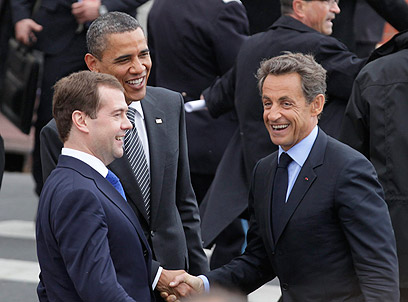
Presidents Obama (m), Medvedev (L) and Sarkozy (Photo: AP)
Bilateral meetings among the leaders of the G8 had begun even before the summit officially opened, and the main focus is expected to be the changes sweeping through the Arab world.
The G8's formal agenda will see the powers discuss plans to provide aid for Tunisia and Egypt, the vanguard of the Arab Spring uprisings, with a view to fostering democracy.
However, the three-month-old war in Libya and the explosion of violence in Yemen overnight may well take up more of the discussions around the summit table.
One European diplomat said leaders may agree to seek United Nations Security Council action on Yemen, where the refusal of veteran President Ali Abdullah Saleh to step down in the face of mass protests and demands from his US and Gulf allies, has been followed by fighting that has raised the risk of civil war.
The group will also condemn Syrian President Bashar Assad's crackdown on protesters, officials said.
Japanese Prime Minister Naoto Kan will brief the G8 on Tokyo's response to the nuclear crisis at Fukushima after the tsunami in March, part of a process of discussions aimed at improving the safety of nuclear power plants.
On the global economy, the future leadership of the IMF and efforts in the European Union to deal with sovereign debts that have pushed several states which use the euro currency into crisis, are likely to be discussed in tandem.
AP and Reuters contributed to this report
- Follow Ynetnews on Facebook
