


The secret Jewish weapon
Jews believe in education, but are we teaching our children to be decent human beings?
The pressures and forces exerted on the children of this generation are so aggressive that it appears there is barely any room for the parents or teachers to come in and play a significant, active role in shaping the child’s world.
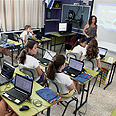
These children, who will return to school soon, were born into a world of computers, smartphones, Facebook and Internet. Things that amaze us, adults, are taken for granted by the children. What appears complex to us is natural to them.
These children live in a world of excitement, voices and colors; their excitement and concentration threshold is different than the one who lived through. They march into the education system surrounded by virtual digital space and their quick fingers use the various keys and buttons quickly and skillfully.
The children’s emotional world is also different than what it used to be in the past. They’re exposed to powerful materials, issues, sights and messages that shake up and toughen their emotional world and innate soul. They are surrounded by channels, devices, noises and accessories that turn their world, in the broad sense of the word, into a very different place than the one we lived in not too many years ago.
This is neither good nor bad. There is no room for judgment here; that’s reality. It won’t help if we say “it wasn’t like that in our days,” because it’s of no interest to these children and it’s not relevant to where they are today.
The post-modern world has also made it more difficult for the students. The exclamation marks have been replaced by question marks, certainty has been replaced by doubt, and the absolute has been replaced by confusion.
High-tech skills aren’t enough
In a world where the pace and power of changes is so significant, children need an anchor of stability. Educators who wish to add more confusion into the world of these young children in the name of supposed freedom of choice are wrong. The opposite is true: Children need emotional stability, complete truths, guidance and endorsement, emotional support and a source of authority. They need boundaries and red lines. They demand targets, values and clear messages. The time for questions shall come, but the base must be stable.
The Jewish people always invested in education. It viewed children as the most important thing in its world; an asset that one does not gamble on; purity whose sanctity must not be undermined. Parents saved money on food in order to provide their children with better education. Young students were the Jewish people’s secret spiritual weapon.
Yet today it becomes increasingly clearer that education is not only about imparting information; it turns out that high-tech skills do not guarantee the creation of human beings who are sensitive, moral and decent.
What kind of education system will our children enter this week? What are the messages they will be exposed to? What will be the educational forces that counter the powers or TV ratings, shallowness, aggression and voyeurism that are working in full force these days? How can we put parents in their place, so that they don’t push their children into places they are unfit for, to aspirations of money-career-self-fulfillment without any boundaries and reservations and to bogus success that exacts such a high emotional price from the soul?
- Follow Ynetnews on Facebook
