


Dead Sea bills pass preliminary reading
Bills seeking to have Dead Sea Works fund 90% of basin's salt harvest, State to form special fund to rehabilitate area pass first legislative test
Two bills focusing on the future rehabilitation of the Dead Sea passed their preliminary Knesset readings on Wednesday.
The first bill states that Dead Sea Works (DSW) will pay for 90% of the future salt harvest operation in the area, and the second bill states that the government will allocate special funds for the rehabilitation of the area.
Related stories:
- Gov't backs salt harvest to prevent Dead Sea flooding
- The day the Dead Sea died
- Dead Sea loses 'wonder of nature' bid
Both bills were brought before the house by MK Moshe Matalon (Yisrael Beiteinu).
Forty-three Knesset members voted in favor of having DSW shoulder the majority of the salt harvest's costs. Salt harvest is meant to prevent the Dead Sea's south bank area from flooding.
The state will be liable for the remaining 10% of the funding – some NIS 150 million (roughly $40 million).

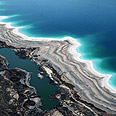
The Dead Sea (Photo: Lowshot)
The second bill, calling for special government funds to be allocated for the area's rehabilitation, garnered the support of 45 MKs. The bill states that the government will create a Dead Sea environmental rehabilitation fund, which will be financed by both government funds and DSW royalties.
Both bills are now pending the review of the Knesset's Economics Committee, which will revise them according to expert recommendation, ahead of their first reading.
The Treasury said that it was negotiating the issue with Dead Sea Works. "Finance Minister Yuval Steinitz prefers reaching a settlement in the matter, rather then applying legislation to it, but naturally, we cannot stop private bills.
"The bills in question will eventually have to be coordinated with the Treasury," the statement said.
Tourism Minister Stas Misezhnikov added: "We are running out of time to save the Dead Sea.
"If we want to save, conserve and rehabilitate this national resource for the sake of future generations, we have to begin doing what we can to stop the water-lever from rising and continue with the area's development as a one-of-a-kind tourist attraction."
