


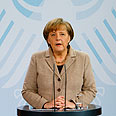
German police assure they are pursuing neo-Nazis
War against far-right crimes in Germany considered 'success' after 46 people tied to neo-Nazi groups arrested by German police who pledge they are 'hunting 100 more'
German police, facing accusations they bungled inquiries into a string of murders of immigrants, have this year arrested 46 people suspected of crimes linked to neo-Nazi groups and are hunting over 100 more.
An Interior Ministry document, released on Thursday by a left-wing parliamentary critic of Chancellor Angela Merkel's centre-right government, described the arrests as a "success" in combating far-right crimes, which can range from displaying swastika tattoos and praising Hitler to inciting racial hatred, violence or theft and dealing drugs to finance militant groups.
Merkel is also under pressure to ban the far-right National Democratic Party (NPD), which has seats in some regional assemblies and, as a result, has access to state funding.
Last month, in response to what became known as the "kebab murders" scandal, she issued a public apology to families of 10 people, most of them Turkish immigrants, whose killers police failed to trace for years until two neo-Nazis, now the presumed culprits, died in an apparent murder-suicide in November.
Of 160 people who were on the newly drawn up police wanted list of far-right suspects in January, 46 have since been arrested, the Interior Ministry document showed.
No comparison was available for then number of radicals being pursued in previous years. Data shows the crime associated with far-right groups has been fairly stable in recent years.
Since the reunification of Germany in 1990, neo-Nazis have been seen as particularly strong in the formerly communist east, where economic problems are harshest. But the document indicated that most of the fugitives were believed to be in the more populous western states.
This week, conservative regional leaders took a step that may pave the way for further efforts to ban the NPD, which condemned the murders of the immigrants but which officials say is nonetheless racist and anti-Semitic and defies a ban on denying elements of German history, notably the Holocaust.
