



Israel is looking for meaning
Op-ed: Former Minister of Education Shai Piron writes on the eve of Tisha B'Av of the need for Israel to unify and stop the inter-sect racism and fear; the temple in Jerusalem was destroyed in the year 70 because of Jewish factionalism; if we continue on this path, argues Piron, we will see Israel fall once again.
The Temple, the destruction of which is marked by Tisha B'Av, was the heart of Jewish life, the gathering place of all strata of the nation, a place of both religious and national experience. Festivals requiring a pilgrimage to it were days when the streets of Jerusalem took on the feel of a happening of the masses: Rich and poor, eastern and western, northern and southern—all met in the city's streets.
Like the establishment of the state in 1948, the Second Temple was also built after international recognition by the powers. The Declaration of Cyrus was also recognition by the world for the establishment of an autonomous Jewish community, because the Temple was intended not just for us, but for the entire world.
According to tradition, the Temple stood for 420 years, of which only some 80 were of full political independence. And in those days, too, our neighbors sought to prevent us from constructing the temple. First among them were "Sanballat the Horonite and Tobiah the Ammonite servant and Geshem the Arabian" (Nehemiah, Chapter 2).
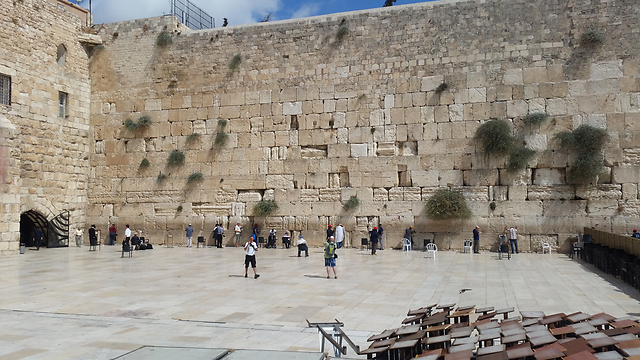
Today, as then, the builders of the country split their time between the miracle of establishment and the duty of defense. "And the builders, everyone had his sword girded by his side, and so built" (Nehemiah 4:12).
It wasn't crowded in the Temple. Crowdedness comes from distance. It is the way of lovers to feel the breath of their beloved, being perfumed by body heat. Love makes room, because the lover is one who knows how to accommodate the other. "Ten miracles were performed for our forefathers in the Holy Temple… They stood crowded but had ample space in which to prostrate themselves… And no man ever said to his fellow, 'My lodging in Jerusalem is too cramped for me'" (Pirkei Avot 5:5).
One thousand nine hundred forty-six years ago, in 70 CE, on the 9th of Av, the Temple was destroyed. The destruction didn't come because of religious deterioration. Not for violating the Sabbath, for breaking the dietary rules, for founding the framework for civil marriage and divorce, and so forth, was the cursed exile brought upon us. The destruction came because of baseless hatred that destroyed us from the inside. The siege that Vespasian and his son Titus laid to us lasted five months—enough time for the besieged to fight amongst themselves, to whisper behind each others' backs, to betray each other and even to burn their own food stores.
Sixty-eight years ago, we returned to the land. The miracle of Zionism is a marvel of historic proportions. Nearly 2,000 years of exile did not harm the Jewish longing to revive the national home. A rich cultural and religious life—including a huge blossoming of Torah scholars and culture, movements and groups—also took place overseas, but the nation wanted to come home. Jews dreamt of returning to independent, normal life.
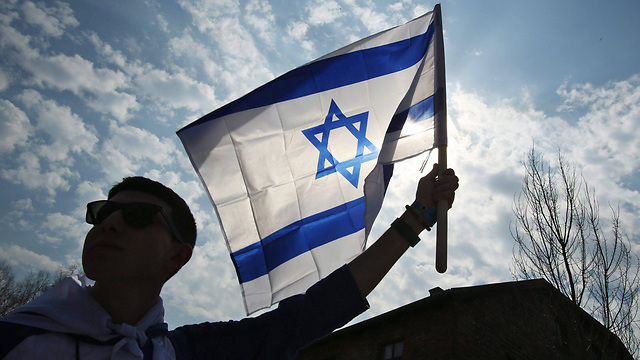
We didn’t learn. Division and hatred, a culture of improper speech, arrogance, vanity. A sweeping rejection of everything that is outside of "myself." Only "I" know the truth. Putting everything into boxes. Everything has a place and a role. Only secular people know what democracy truly is, and only the religious know what keeps faith burning. Only the poor know what are hunger and need, and only the rich have taken ownership of giving. Ashkenazim are experts in liberalism, and Sephardim in tradition. Like a giant walk-in closet, outfitted with compartments and drawers. Soon, that closet will become our casket.
We know that we need each other. The believer knows that, if not for the feminist movement, we wouldn't meet women in the public sphere. The secular man knows that tradition and roots have a significant role in building the future. Heritage is not a millstone, but rather wings that allow us to fly beyond the temporary and the present. And even though all of us know that we don't have the entire truth, we continue to vilify and antagonize. Because when the truth is external, I fight for it by improper means. When the truth is a bit of a lie, we strengthen it with sharp words and violence. I convince myself that I am right, and I know that I'm not.
And the more that I'm sure of my position, I cause strife, am fussy about the words of the other, call everyone who is different than me a bunch of curses. "Racism" has become cheap currency. We have desecrated the sanctity of ideas and sanctified the loathsomeness that is in words. Senior leaders from all sides are experts in fanning a strange fire, the lover becomes naïve, the inclusive is portrayed as innocent. Terrible acts are perceived as political genius, the air is polluted, and despite the occasional victories, Israel is deteriorating.
Tisha B'Av must not become a day of "the religious." It's a day of national reckoning, a day on which we become aware of the most important warning sign of all: We're our own most dangerous enemies.
Some suggestions
Here are some suggestions to repair the national spirit of the individual and the whole, to change everyone's lives in the country:
Cynicism has become the greatest enemy of the rebirth of Israel. Everyone looks at everything askance and with disbelief. We look for the motive, doubt the purity of heart and longing for good. Under the guise of lofty words like "transparency" and "criticism," we have become "a country that devours its inhabitants." We enjoy exposing scandals and not necessarily out of moral reasons. Schadenfreude has spread. If we want to live, we must despise odious cynicism, permit the heart to accept the good and beautiful in the other.
Israeli leaders are pros at cynicism. It seems to me that their positions serve the latest poll; the temporary like has replaced the worry for national continuation; they prefer the personal and not humanity. It hurts, it makes us cover our ears, shut our eyes.
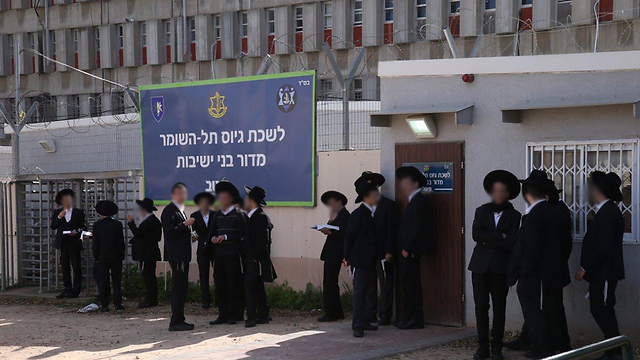
Instead of looking upwards, we're looking downwards, at the young and impressive generation that is growing here, in youth groups, in pre-army programs, in volunteer gap years, in significant service, in young communities. There, "downwards," diamonds in the rough are scattered, and we need to do everything so that an invisible hand will not polish them. So that they won't learn that "these are the rules of the game," because our lives are not a theatre.
Let's switch the cynicism with faith. With the ability to listen to the voice of the other, without mocking. "Tikkun Olam" ("repairing the world") isn't a slogan, but rather the moral foundation of the Jewish story. We didn't come here because they wanted to kill us "there," and we didn't establish the state just to be stronger. In Auschwitz, they didn't just burn the Jewish body, but also the Jewish soul including justice, charity, and loving-kindness; the duty to listen to the cry of the poor; the commandment not to torture the stranger.
Fear has become the central factor in shaping the Israeli image. The religious fear the secular. The secular fear the religious.
Inauthentic Mizrahi leaders like to perpetuate discrimination, preserving the poverty and ignorance, putting up barriers under the guise of keeping tradition. An enlightened leadership is boastful and superficially blemishes the rich Mizrahi culture. The verses of the poet Rabbi David Buzgalo are no less dear to Israeli culture than the miraculous words of Yehuda Amichai.
Extreme leftists scorn nationalism even at the expense of undermining the love of the homeland. The tears of emotion at seeing the raised flag and hearing the words of the anthem, the love of the land, even to he who is somewhat distanced from it, are seen as obsolete and even racist emotions.
Extreme rightists undermine the Zionism and Judaism of those who yearn for absolute justice, scorn the centrality of peace in our lives. The longing for peace and sensitivity to the quality of life of the other is not defeatism or losing the way, but part of the Jewish and Zionist vision.
Poor people fear the rich and successful and turn them into the enemies of the nation, as if success were the mark of Cain. When they talk about the issue, they treat them as variances in the wind. My grandfather was a blacksmith, but he knew by heart the works of Sholem Aleichem. Poverty does not necessarily entail poverty of the soul.
Everyone is afraid of everyone, closed off inside the walls of their own communities, needing a spiritual leader to raise barriers. A country of religious people of sorts: the religious are religious, and the secular are religious. And everybody talks loudly of "togetherness" on the condition that their opinion is accepted. Good thing that we have an external enemy who causes fear. Thanks to him, we remain together (for now). "Dulce et decorum est pro patria mori" has become the drug of our lives.

We can defeat fear with discussion, acquaintance and love. True love, not sticky, artificial, superficial love. Love is not agreement, but the willingness to listen. Love in its essence is curiosity to discover the spiritual treasures of the other. Love is the understanding that I am missing something without you, that my life is not life when I am alone with members of my own community. In a world of sameness, there's no turbulence and clarification. A society without arguments is a society without life. The Hebrew word for argument, "machloket," comes from the word "chelek"—part. Its basic tenet is the search for the missing opinion from the mosaic of opinions.
"I seek my brethren" (Genesis 37:16). Without my brethren—there is no me. The me becomes meager, in opinions, in spirit. Alone. Lacking.
Ignorance—the flight from the beautiful to the useful, from the aesthetic to the plastic, from the humanities to material attainability—is the third enemy to our quality of life here and now. When the mall became the center of our lives, the depth disappeared. Herds wander amongst the display windows and satisfy their hunger for meaning with a worthy sale, on credit if possible. Living on credit because who knows what tomorrow will bring.
I believe that the longing for learning has not disappeared. Curiosity, seeking, the will for depth, learning for learning's sake, learning that inspires the heart, excites the imagination, that develops the mind, are all deep in the hearts of the young and the old. Tired of superficial, "utilitarian" knowledge. To learn in depth. Torah and literature, science, mathematics and Talmud, history and philosophy. "Not a hunger for bread, nor a thirst for water" (Amos 8:11), a hunger for meaning, for life with a driving force. We were "the people of the book" before we understood that no important revolution in the world lacks behind it a book or manifesto. There is no reason not to continue so being today.
Cynicism, ignorance and fear are the three biggest dangers of the renewed Israel. Instead, we have to tell a deep Israeli story about a people who never gave up their right and duty to repair the world, who never stopped thinking of a model society. We're allowed to go for greatness. We're allowed to replace the small existential thinking with a large version. Herzl and Jabotinsky, Ben-Gurion and Begin, Kook and the Chazon Ish, each of them in their own way, in their own language, sought to bring a new light to the nation and troubled world.
A short time after the destruction of the Temple, the wise men of Israel realized that the war must be transferred from the battlefield to the field of meaning. From killing to debate by students in a house of learning. They realized that victory is the design of eternity. The future will not design weapons.
The separation barrier
Israel is looking for meaning. The meeting of secularism and faith, east and west, nationalism and universality is a great opportunity for rebirth.
Instead of turning the arguments amongst us into jumping points and rejoicing from them, we use them as separation barriers. The politically correct culture has destroyed the debate; Israel is missing an historic opportunity for national awakening.
The ability to tell the new story threatens memory. "Who started," "Who said." Where we should be finding the right blend of memory and forgetting, memory has won in the wrong place. We have forgotten the historical lessons, but we remember the words of the other, and boy do we remember.
My words can kill me. Technology, which could become a tool for social repair, has instead become a tool for destruction—you can look for what I said ten years ago and strike me. Prof. Jonas Frisén of Stockholm, a biological stem cell researcher, found that most of our body tissue renews regularly. Every two or three days, we have a completely new coating in our mouths, every five days we have a new lining in our stomach and intestines, and more. Ninety-eight percent of our bodies are replaced every year, so that most of our bodies are about a year old. So what if I said something? It wasn't me at all. It was a different person, in a different context and a different place.
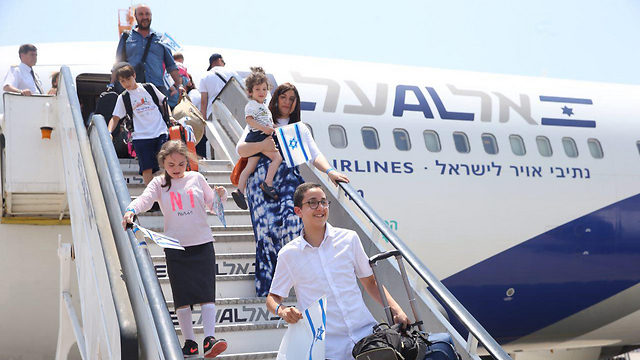
I propose to lead the "statute of limitations on words." Ten years after I said, wrote and was interviewed or had my photograph taken, it will be forbidden to mention what I said. It’s a great proposal for rabbis, Deputy IDF Chiefs of Staff, politicians, and lovers.
It all begins with you and with me. We'll start by believing in our fellow man. I'll catch myself every day with a cynical and thin smile, without saying "oh, I understand," falling for another cunning trap.
A promise to stay away from the fear, but a desire to meet and know the other, not only just via food or cursing or music. Meeting with different people, getting to know their souls, their nature – not just their culture. These small steps can contribute to a huge revolution in Israeli society.
It's the time of the story – of the complete, all encompassing Israeli story. It's exhilarating. Our story is being laid down in front of us bit by bit. We can rip the book to shreds and throw the pieces into the wind. It is upon us to enforce our past covenants, live in the present, and create our future – sew the different pages together into one collective story. This will enable us to build the country for which we yearn.
Rabbi Shai Piron was the minister of education from 2013 to 2014.
