



Democrats hold slight edge in contest to control US Senate
While the House of Representatives is expected to remain in Republican hands, the control of the Senate is up for grabs with many extremely close races.
WASHINGTON — The Democratic Party was very slightly favored to wrest control of the US Senate from the Republican Party in Tuesday's elections, according to some analysts, with the final outcome to determine how difficult a challenge the next president will face in passing legislation.
The Democrats' hopes of making major gains in the Republican-controlled US House of Representatives and Senate had been dampened in the closing days of the election campaign even if their nominee, Hillary Clinton, wins the White House.
Only two weeks ago, Democrats hoped to sharply scale back the 246-seat Republican majority in the House and capture control of the Senate. But they fretted that the FBI may have taken the wind from their sails by reigniting the controversy about Clinton's email practices while she was secretary of state, congressional aides and analysts said.

Americans are voting to choose either Clinton, also a former US senator and secretary of state, or Republican Donald Trump, a businessman who has never previously run for political office, and to fill 34 of the 100 Senate seats and all 435 House seats.
Senate results may not be available for some time because of the number of close races, analysts said.
Polling website RealClearPolitics.com on Tuesday showed Democrats likely to capture one Senate seat now held by Republicans and listed eight other Republican seats as toss-ups. House races showed no clear trend.
But projections from the New York Times and the forecasting website FiveThirtyEight.com showed Democrats with a just over 50 percent likelihood of having control of the Senate when it convenes again on Jan. 3 to tackle weighty issues from a US Supreme Court vacancy to immigration and free trade deals.
An analysis of Senate races by political scientist Larry Sabato's "Crystal Ball" project at the University of Virginia projected the election would end with Democrats and Republicans each holding 50 seats.
Continued Republican dominance in Congress could stymie any legislative agenda put forth by Clinton. A Trump victory, along with a Republican Congress, could mean a swift end for Democratic President Barack Obama's health reforms.
A senior Democratic aide said the emails controversy, which erupted again after Federal Bureau of Investigation Director James Comey said on Oct. 28 his agency would examine newly discovered emails, could reduce by at least 10 the number of House seats Democrats may capture from Republicans.
Comey told Congress on Sunday that after the latest review, he was standing by his July decision that no criminal charges were warranted against Clinton.
But coming only two days before the election, Comey's latest announcement may have been too late for Democrats hoping to regain control of the House for the first time since 2010 and the Senate for the first time since 2014.
"It's terribly damaging to us," the Democratic aide said, adding Democrats could end up gaining only 12 to 16 House seats, instead of the 30 needed to win control of the chamber.
To win control of the Senate, Democrats would have to score a net gain of five seats. Republicans hold 54 Senate seats to 44 Democratic seats and two independents who align themselves with Democrats.
Even a Republican majority could be divided upon itself, as party members have disagreed about some items such as when and whether to give a Supreme Court nominee a confirmation vote.
New Hampshire Senator Kelly Ayotte, a Republican in a close reelection fight, on Tuesday released a video in which she said: "it's going to take someone who can stand up to both parties when they're taking us in the wrong direction."
Republicans defend US House majority, Senate on razor's edge
Republicans will maintain their six-year control over the U.S. House of Representatives, according to early network projections, as the party also put up an unexpectedly tough fight to protect their majority in the U.S. Senate on Tuesday.
The ABC and NBC television networks said Republicans, as widely projected in opinion polls, would keep control of the House, which has been in their hands since 2011.
Winners had been declared so far in 11 Senate races, with Democrats making a net gain of only a single seat so far. Several other key races were still seen as too close to call as polls began to close on Election Day.
Party dominance in Congress will be a crucial determinant of the policy-making outlook for the next president, whether it is Democrat Hillary Clinton or Republican Donald Trump.
Democrats picked up their first Senate seat from Republicans as U.S. Representative Tammy Duckworth, as expected, defeated Senator Mark Kirk in Illinois, according to the major TV networks.
Duckworth is a double-amputee Iraq war veteran. With her victory, Democrats need to pick up four more seats from Republicans in order to win a majority in the Senate.
The networks projected that in Indiana, former Senator Evan Bayh failed in his bid to return to the Senate, losing to Republican Representative Todd Young. The two candidates had been vying to replace Republican Dan Coates, who retired. Bayh's loss was a missed opportunity for Democrats to gain a seat.
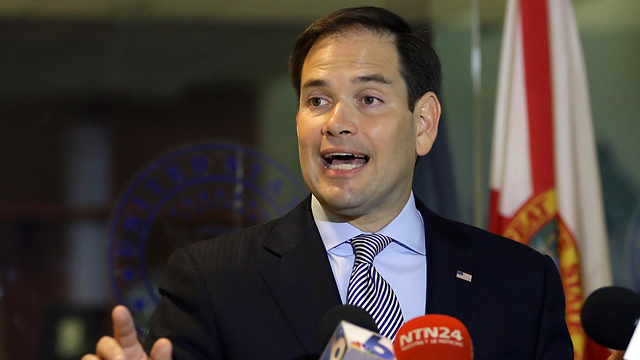
In Florida, incumbent Senator Marco Rubio, who ran unsuccessfully for the Republican presidential nomination earlier this year, was declared the winner and re-elected.
Republicans have controlled the 100-seat Senate since 2015, but they had to defend far more seats this year than did the Democrats. Some analysts have raised the possibility of the 2016 election season ending with a 50-50 split in the Senate. In such an outcome, the new US vice president - either Democrat Tim Kaine or Republican Mike Pence - would be the tiebreaker in the Senate and determine control of that chamber.
Democrats scored their first breakthrough in Illinois, where Republican Senator Mark Kirk lost re-election. But Republicans Rob Portman in Ohio and Marco Rubio in Florida won high-profile Senate re-election fights.
