


Palestinians fear being sidelined by Trump White House
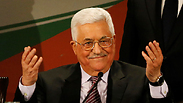
Analysis: Palestinian leader Mahmoud Abbas alarmed by the possibility of being sidelined at a time when the US administration is embracing Israel's prime minister who heads to the White House next week.
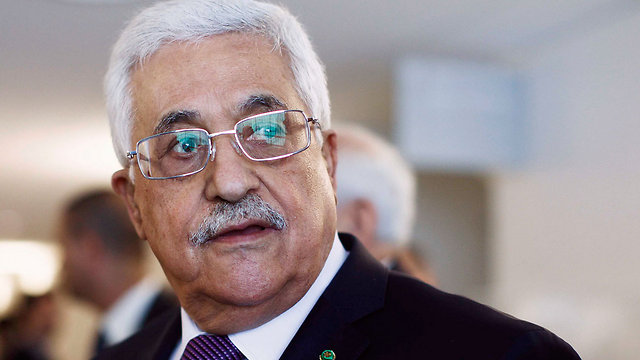
Palestinian leader Mahmoud Abbas, who spent hundreds of hours on the phone and in meetings with US presidents and secretaries of state in the past 12 years, has tried unsuccessfully to reach out to President Donald Trump. Abbas and his aides are alarmed by the possibility of being sidelined at a time when the administration is embracing Israel's prime minister who heads to the White House next week.
Here's a look at what's at stake for Abbas and Palestinian hopes for statehood.
Are the Palestinians really being ignored?
In December, the Trump transition team refused to meet with Palestinian officials visiting Washington, putting them off until after the January 20 inauguration, according to senior Abbas aide Saeb Erekat, the main point man for official contacts with the United States.
Other advisers say Abbas tried to arrange a phone call with Trump after the November election and again after the inauguration, but received no response to his requests. The White House did not respond to a January letter in which Abbas expressed concerns about possibly moving the US Embassy in Israel to contested Jerusalem.
Erekat, whose contacts are now limited to the US Consulate in Jerusalem, has been quoted as saying that "we have sent them letters, written messages; they don't even bother to respond to us." In contrast, Trump spoke twice with Israeli Prime Minister Benjamin Netanyahu by phone, on November 9 and January 22, and will receive him at the White House on February 15.
What has the Trump administration said?
The White House earlier this week denied an Israeli newspaper report, based on a secondhand quote from a Trump aide, that the administration does not intend to have a relationship with the Palestinian Authority, Abbas' self-rule government, at this point. However, the statement did not say what kind of relationship the White House envisions with the Palestinians.
A US official said he was given the impression that everything is on hold because Trump hasn't decided how to deal with the Palestinians. The official spoke on condition of anonymity because he was not authorized to discuss the issue with reporters.
Why does it matter?
A strong relationship with the US has been the centerpiece of the Palestinian strategy for winning statehood. The US served as sole broker in two decades of intermittent negotiations on how to set up a Palestinian state on lands captured by Israel in 1967.
Many Palestinians are disillusioned with a process they say effectively provided diplomatic cover for Israeli settlement expansion and distanced statehood prospects. However, Abbas has not come up with a strategy that could circumvent Washington.
How has the Palestinian leadership responded?
Abbas and his advisers have been careful not to antagonize Trump with public statements, other than urging him to rein in Israel's latest settlement escalation. They hope he'll eventually get in touch, arguing that Trump needs to involve them if he's serious about negotiating a Middle East peace deal.
Despite alarm over Israel's recent measures, including legislation retroactively legalizing settler homes built on private Palestinian land, Palestinian officials have drawn some hope from recent US policy tweaks. There also are signs Trump will not rush to relocate the US Embassy to Jerusalem, a move that could inflame the Muslim and Arab worlds.
Are the Palestinians losing access temporarily or being sidelined for good?
It's not clear if the Trump administration wants to coordinate with Netanyahu next week before approaching Abbas or sideline him for good. Jordan and Egypt could mediate between the Palestinians and Washington.
Jordan's King Abdullah II rushed to the US capital last week to present his views to administration officials before Netanyahu's arrival and appears to have had an impact on issues of concern to the Palestinians, such as settlements and the embassy move. On Tuesday, Jordan condemned Israel's latest settlement legislation.
What is Europe's view?
The EU has reiterated its support for a two-state solution—of Palestine arising alongside Israel, with the pre-1967 frontier as a baseline for border talks. EU foreign policy chief Federica Mogherini said on Monday that Europe will keep promoting this message, including in talks with Vice President Mike Pence, who will attend an international security conference in Munich later this month, followed by a visit to EU headquarters in Brussels.
