


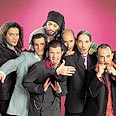
Hadag Nachash to tour U.S.
צילום: אבשלום לוי
Israeli hip-hop group to rock U.S.
Israeli band Hadag Nachash set to tour select venues in United States; Also expected to record new album in North Carolina
Israeli hip-hop group Hadag Nachash is set to take the United States by storm.
The seven-member band that had recently gained fame among Jewish-American students after playing at a number of colleges last year, is scheduled to embark on a new U.S. tour in April, starting with the University of Pennsylvania.
It will then hit up the Knitting Factory nightclub and Columbia University in New York, as well as a venue in Los Angeles. They will play at the House of Blues in Chicago on April 17.
At the end of the tour, Hadag Nachash will travel to North Carolina to record a new album, which the group said would take 10 days.
“The studio is in a forest, near an amazing lake and is totally disconnected from the world,” said bassist Ya-Ya Cohen-Aharonov. “We’ll hole ourselves up there for 10 days, forget our troubles and everyday woes and focus on creating. We are going on an adventure and we have no idea where we’re going. Anything’s open.”
The name Hadag Nachash means “The Snakefish” in English, but is actually a play on the words "Nahag Chadash," meaning "New Driver" in Hebrew.
The group tends to rap about Israeli social issues and is most known for its hit Israeli radio single, “The Sticker Song”, where they rattle off slogans from popular political bumper stickers issued in Israel throughout the years, such as “I'm feeling so secure here, with Sharon's peace
” and “We have no kids for unnecessary wars.”
The bumper sticker slogans that make up the song's lyrics were compiled by renowned Israeli author David Grossman.
Aharonov said Hadag Nachash are aiming to appeal to a more diverse group of fans.
“In the last tour there were many Jewish-Americans and Israelis but there were also regular Americans who like hip-hop,” he said. “The idea is really to reach not just an audience that’s related to Israel but also anyone who’s into good music.”
“It’s true that we sing in Hebrew and that our lyrics are a very significant part of what we do, but in past concerts in the United States, what was more amazing was the connection of the non-Hebrew speaking audience to the music. It just worked.”
