


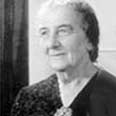
Remember Dayan, Golda
Olmert would do well to rethink declarations on Syria, Golan
In the early 1970s, between the Six-Day and Yom Kippur Wars, Moshe Dayan ruled that "it's better to keep Sharm el-Sheikh without peace than having peace without Sharm el-Sheikh."
Only few disagreed with this ruling by the then-defense minister, as it was right at the heart of the national consensus, and he was looked up to as a son of the Gods at the time. Everyone reached a clear-cut conclusion: We must not renounce straits that are so crucial to our security in exchange for a piece of paper from President Nasser or Sadat.
This conclusion was considered to be the epitome of wisdom and responsibility. Several years later, in the wake of the shock and trauma of the Yom Kippur War, Dayan's words looked completely differently. No longer the epitome of wisdom, but rather, a blatant testimony to the sense of hubris prevalent at the time.
Dayan himself did everything to demonstrate his new attitude to his declaration, and he did it not in words but through actions:
As foreign minister in the first Begin government he played a crucial role in the peace process with Egypt, which led to two developments – the signing of a peace agreement with our most important and most dangerous enemy, and also the renunciation of the entire Sinai, including Sharm el-Sheikh, for the sake of that same peace, which created a deep change in our strategic position in the region and the world.
Arrogant declaration
Now, 33 years after the outbreak of that war, our prime minister follows in the footsteps of Dayan's arrogant declaration. He behaves like the Bourbon princesses, who learned nothing and forgot nothing.
After the second Lebanon war, and after he himself openly announced the bankruptcy of the realignment plan, his one and only banner, Olmert made two declarations regarding the Golan Heights' future: The first is that there is no reason and point in trying to talk with the Syrians, because they "support terror."
Indeed, it would be very proper to engage in serious peace talks with the Danes or the Dutch.
Yet Olmert apparently forgot the old dictum that peace must be made not with friends, but rather, with the enemy, which might be bitter and unpleasant. In his declaration, the prime minister also violated the basic rule subscribed to by all Likud prime ministers, including Menachem Begin: Israel is willing to open negotiations with all its Arab neighbors without preconditions.
Olmert's second declaration was that the Golan will remain under Israeli sovereignty "for eternity." In response to this we can say that today, after we saw the razing of the Gaza settlement of Netzarim, which was said to be of equal status to Tel Aviv, it would be improper to use such ultimate sentences, but rather, one should resort to more modest utterances.
In addition, Olmert's statement regarding the Golan is perceived by the Israeli public and by nations of the world as a desire to sanctify the status-quo, a term that has led to many troubles, including the Yom Kippur War. He would do well to learn how this term, status-quo, tainted Golda Meir's magnificent career.
In his many recent interviews to the media, Olmert argued that a prime minister does not have to act in accordance with a binding agenda. His declarations regarding the Golan created, in practice, a new agenda premised on the notion of "we won't withdraw an inch." For Olmert, this means going back to his old views and re-adopting the doctrine of his first mentor, Shmuel Tamir.
Professor Yechiam Weitz heads the Land of Israel Studies Department at the University of Haifa
