


Archive helps understand scope of Nazi camps
Archive of meticulously kept documents sheds light on vast network of Nazi concentration camps
Within weeks of Hitler's 1933 rise to power, the iron gates slammed shut on inmates of the first Nazi concentration camps. It was the start of an unparalleled experiment in persecution and genocide that expanded over the next 12 years into a pyramid of ghettos, Gestapo prisons, slave labor camps and, ultimately, extermination factories.
Holocaust historians are only beginning to understand the vast scope of the camps, prisons and punishment centers that stretched across German-ruled Europe.
Collecting and analyzing fragmented reports, researchers at the US Holocaust Memorial Museum say they have pinpointed some 20,000 places of detention and persecution, three times more than they estimated just six years ago.
And soon they will know much more.
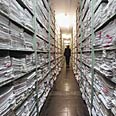
They are about to have their first access to millions of documents locked away for a half century in the sprawling archive of the International Tracing Service, an arm of the International Committee of the Red Cross, in the central German resort town of Bad Arolsen.
The 11 countries governing the ITS have agreed to lift the ban on research that had been imposed to safeguard victims' privacy. Recently, The AP was allowed to view ITS documents.
The "pyramid" ranged from death camps such as Auschwitz at the top, to secondary and tertiary detention centers. There were 500 brothels, where foreign women were put at the disposal of German officers, and more than 100 "child care facilities" where women in labor camps were forced to undergo abortions or had their newborns taken away and killed so the mothers could quickly return to work.
Historians have long sought to know more about the inner workings of the camps, hoping to draw on the Germans' own firsthand accounts and paperwork.
One directive seen by the AP, from November 1943 and marked Private and Confidential, instructed all camp commanders to keep visitors away from sensitive sites.
"During visits to the concentration camps, the bordellos and the crematoria are not to be shown. Visitors also are not to be told anything about these facilities," said the SS order.
Couched in patronizing and dehumanizing language, documents from the earliest camps foreshadow a system that would define the word "genocide." They show that years before the mass-scale killings began at death camps such as Auschwitz, the intellectual groundwork of viewing categories of humanity as subhuman was already in place.
'Rations cutback having negative effect on prisoners'
The records include two camps previously known to the Washington researchers, but about which few SS documents were available. Sachsenburg and Lichtenburg in eastern Germany were among the first sites opened in early 1933, but were closed in 1937 when the system was restructured into larger camps that housed tens of thousands of prisoners.
"These were records that were always under the control of the SS. That's very rare to find for these early camps," said Joseph White, of the Center for Advanced Holocaust Studies at the US Holocaust Memorial Museum,
Such documents could help trace the evolution of the camp system from its genesis, White said.
It was at Sachsenburg, for example, that the SS first used colored triangles sewn onto clothing to identify categories of prisoners, a method widely adopted later.
In Lichtenburg an officer reported to his commander that the "sharp cutback of rations is having a negative effect" on the prisoners, who were becoming increasingly ill. No response was found in the file of correspondence.
Sachsenburg authorities issued periodic behavior reports, but often they were just a sentence or two. "G. is a worthless subject and an irresponsible person. He would not be harmed by undergoing a really long upbringing in the camp. He is an example of the need for such camps," said one typical report.
Sachsenburg served as a "protective custody" facility for dissidents such as Jehovah's Witnesses, outlawed in 1935 because they were among the most obstinate opponents of the Nazi regime, refusing to sing the anthem, give the Hitler salute, respond to the military draft or vote in elections. Other early prisoners were communists, Social Democrats, homosexuals and common criminals. The Final Solution, which ultimately would claim 6 million Jewish lives, had not yet begun.
The ITS files will be a boon to the researchers in Washington, who are compiling a seven-volume encyclopedia of all known sites where "undesirables" were detained, tortured, put to work or killed. Project director Geoffrey Megargee said the museum team gathered fragmentary evidence from different sources to assemble the list.
"Most historians didn't have a grasp of the scope of the whole universe of camps and ghettos," he said. "Each of them knew their own little slice."
Over 20,000 camps
When they began work six years ago, Megargee said the researchers estimated 5,000 to 7,000 sites existed. "Based on our research, it is now clear that there were over 20,000 such sites," he said.
Organized killings began shortly after the war started in late 1939 at so-called "euthanasia sites," where the victims were physically or mentally handicapped people or prisoners no longer capable of work. Estimates say the number reached 200,000.
As German men were needed to fight, men and women were brought from occupied nations to work in German industries. Labor camps proliferated.
In 1941 the Germans devised the Final Solution to exterminate Europe's Jews. In September, even before the plan was formally approved, the SS began experimenting with gas chambers at Auschwitz.
In all there were six camps whose primary purpose was to kill Jews at maximum speed: Auschwitz, Chelmno, Belzec, Sobibor, Treblinka and Majdanek. By May 1945 when disbelieving Allied forces marched into the camps, 2.7 million people had been incinerated in the ovens or open pits of these six compounds. Of every three Jews in Europe at the start of the war, two were dead.
