


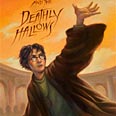
Potter's lesson for humanity
Harry Potter books teach us a fundamental lesson about good and evil
Evil is evil. Good is good. Good must fight evil to the end, whether evil arrives from outer worlds or is found in deep basements within the good itself. And if the good is persistent in fighting evil, makes sacrifices, and is willing to shed blood, sweat and tears, evil will be overcome.
This simple moral message, which is so clear and black-and-white, can be found throughout the adventures of Harry Potter, the tireless superhero of the 21st century, starting with the first book and on to the last one, which arrived at bookstores early Saturday.
Hundreds of millions of young readers, and adults as well, who have read and will still be reading these books, absorb absolute values of human ethics that praise virtues and condemn vices.
The Harry Potter series is therefore the most impressive response to post-modernism – as an ideology that is, rather than an analytical method – and its followers. Post-modernist ideologists have been trying for a generation now to convince us that there is "actually" no difference between "good" and "evil" and that both good and evil are verbal "constructions."
According to post-modernists, the value system adopted by Harry Potter is no better in any way than the value system of his enemies; both are mere inventions and patterns of discourse. Both are relative and therefore cannot be ranked, and we cannot determine which one is better – truth vs. lies, loyalty vs. treachery, love vs. hate. There is no good and evil in and of themselves in our world. Nothing is fundamental, everything is relative and rises and falls in the eyes of the observer.
The Harry Potter series challenged this relativist perception and overcame it. Precisely because it is not simplistic, precisely because even its good heroes are not inherently good and every time must choose the good of their own free will – precisely because of that, the message is so appealing, purifying and important. Particularly for young readers.
Potter and Churchill
When it comes to its philosophical message, the Harry Potter series is no different than another example of 21st century popular culture: the American TV show 24 and its hero, Jack Bower. Both here and there we have a superhero who aims to save humanity, while the hero himself is not wholly pure.
Both Harry Potter and Jack Bower are magicians with a complex personality that at times deviates from the straight and narrow, makes use of methods that should be condemned, and comes close to the edge of evil – and still, despite this, both Jack Bower and Harry Potter carry the message of victory of good over evil as the ultimate choice.
Universal culture is replete with good heroes who are constantly exposed to temptations to be bad. What makes them good is their inner ability to overcome evil temptations. Literary critics have identified clear elements of World War II in Harry Potter books translated into a fantasy of magicians, ghosts and spirits, in order to make it accessible to teenagers.
The older Winston Churchill, just like the younger Harry Potter, was able in the summer of 1940 to reject Hitler's rapprochement attempts and did not back off from his firm stand against negotiations with "Satan from Berlin," in a bid to avoid going down a slippery slope that ends with erasing the basic moral difference between good and evil.
The young Harry Potter readers don't know about Churchill. Yet through an extraordinary series they get a highly important lesson regarding the history of mankind: Be a good person and not a bad person. Go with the good, fight for the good, do not hesitate to choose the good, and don't be tempted to give in to evil. Because evil just waits for your moments of weakness in order to take over and subjugate you to its malicious objectives.
This is also the reason why post-modernist preachers bemoan works such as Harry Potter or the movie series The Matrix. Who determined, they ask, what's good and what's evil? Who can and who is even allowed to rank the system of human values from better to worse and put Harry Potter and Winston Churchill on top? After all, everything is relative; The Nazis too had values and beliefs. Al-Qaeda has them too. Who are we to decide between them? Who made us the judge?
Nobody did, except ourselves. There are no signs for us in the sky – and even if there are, they are weak, blurry, and open to contradictory interpretations. The powerful moral light does not shine outside, but rather, only on the inside; we fight al-Qaeda because we need to fight it. You can ask Harry Potter to tell you where and how.
