


Hotel for the holidays
Despite steep prices, hotels are at full capacity for the Rosh Hashana holiday weekend
As a result, the majority of Israeli hotels are now insisting that guests make reservations for a minimum of three nights. Normally, owners of bed-and-breakfasts or cottages are the ones who refuse to permit their guests to come for less than three nights.
Now, however, hotels have adopted a minimum stay policy, because of the huge anticipated occupancy rate. Meanwhile, many bed-and-breakfasts are relaxing their rules and are permitting guests to arrive for only one or two nights during the busy holiday weekend.
Hotels even report a high demand for the holiday meals. Recent years have seen locals using hotels as venues for their holiday dinners. Although prices tend to go through the roof, guests seem to enjoy making do without all the fuss and bother of cooking and hosting.
Yet, parents should be aware that they won’t be getting any bargains for their kids. Most hotels define children as being between the ages of 3 to 12. But what five-, six-, or even seven-year-old can eat a full meal? In this regard, the Sheraton hotel chain is a noted exception; children’s meals cost only about half of the price of an adult meal.
What’s available?
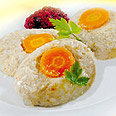
Yedioth Aharonoth has learned that most hotels are bursting at the seams. In fact, some central hotels are booked solid – even just for the meals. A list of hotels which wouldn’t be able to squeeze in another piece of gefilte fish if they tried includes: Grand Beach, Sheraton Moriah, David InterContinental and Panorama in Tel Aviv; Dan Carmel and Panorama in Haifa; and the Kings and Panorama in Jerusalem.
So where can you dine without staying the night? Try luxury hotels such as the Tel Aviv Hilton or Daniel and Shizen in Herzliya. Also, with a little effort, you may be able to get reservations at some smaller hotels, including: Tadmor in Herzliya as well as Melody, Tal, Basel and City in Tel Aviv. All these hotels are part of the Atlas chain, and each one faces the sea.
But when it comes to rooms, there are practically no vacancies. “Already a month and a half before the holiday, all the chain’s hotels filled up,” says Gad Friber, CEO of the Fattal hotel chain.
“As opposed to last year - when the holidays fell after the war and reservations were made at the last minute - this year, the Israeli public reserved places for the holiday well in advance.”
Nevertheless, rooms are still to be had at the Golden Tulip in Beersheba, the Tulip Inn on the Kinneret, and Haifa’s Meridian Hotel. But most Sheraton hotels – including the Sheraton Moriah in Tel Aviv, the Sheraton City Tower in Ramat Gan, and the Tiberias Sheraton – are fully booked, although there are vacancies at the Sheraton Plaza in Jerusalem.
In addition, the Rimonim hotels as well as Africa-Israel’s Holiday Inn and Crowne Plaza hotels still have some available rooms.
A peek at the menu
Why are Israelis willing to shell out hundreds or even thousands of shekels for hotel meals during the holidays? Apparently, the hotel chefs manage to strike a perfect balance between traditional and gourmet food.
In order to justify the exorbitant prices, hotel menus tend to use extravagant names for their dishes, but patrons seem to be prefer the traditional foods they grew up on: gefilte fish, sweet kugels (puddings), and tzimmes (a sweet cooked carrot dish) for the Ashkenazim and peppery fish, spicy meat and couscous for the Sephardim.
Some sample offerings: At the Dan Acadia in Herzliya, the menu includes terrine de fois gras and honey cream with spices as an appetizer as well as beef fillets and herbed lamb chops for the entrée. Guests at the King David Hotel in Jerusalem will be able to select between duck carpaccio served over pickled carrots and “breast of poussin wrapped in tarragon-smoked goose breast.”
At hotels where the food is served as a buffet, the prices are slightly lower. For instance, at the Tel Aviv Hilton, one can either enjoy a five-course sit-down dinner in their elegant ballroom for NIS 470 per person or partake of the buffet for NIS 390 a head.
Checkout times
When making hotel reservations for the holiday, you’ll want to inquire about the hotel’s Saturday night checkout time. Each hotel has a different checkout time, and many hotels charge extra for late stays.
For instance, the Rimonim hotels allow guests to remain until 4:00 pm; those remaining after the posted checkout time will be charged an additional NIS 250. Meanwhile, at the Fattal hotels, guests are asked to leave by 3:00 pm, but “conditions permitting, one may stay longer.”
On the other hand, Dan hotels are fairly strict about their 2:00 pm checkout time, even on Shabbat. “Due to the high occupancy rates, we have no choice but to make the rooms available for the new guests,” explains the chain’s manager.
However, officials at the Holiday Inn and Crowne Plaza hotels report that “at most of the chain’s hotels, one can stay until after Shabbat or the holiday.” Moreover, at the Ein Gedi guesthouse, there is no official checkout time at all. “Since many guests hike in the area or prefer to stay for a while at the baths, we don’t chase them away,” a spokesperson notes.
What about the other holidays?
Yet, plenty of hotel rooms are still available for the Succot and Simchat Torah weekends, but most bed-and-breakfasts are just about full.
As for Yom Kippur – for the first time, many hotels (including some in Eilat) have opted to close due to low projected occupancy rates. In contrast to the high demand for Rosh Hashana and Succot, reservations for Yom Kippur are notably sparse this year.
For example, seven of the country’s 14 Isrotel hotels – including the Carmel Forest Spa and the Isrotel Ramon Inn in Mitzpe Ramon - will close for Yom Kippur, because of meager reservations and high operating costs.
Similarly, the Fattal chain will close their Golden Tulip hotels in Tiberias and Eilat. In addition, the Rimonim Galei Kinneret in Tiberias, the Ruth Rimonim in Safed, and the Rimonim Hermon in Neve Ativ will all shut down over Yom Kippur.
But Yom Kippur will provide a glimmer of hope for the hotel industry. The Kabbalah Conference – scheduled to take place at the InterContinental and Dan Panorama hotels in Tel Aviv - will attract some 2,500 adherents from overseas, including celebrities Madonna, Demi Moore, Bruce Willis, Ashton Kutcher, and Donna Karan.
