


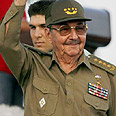
Raul Castro takes over as Cuba president
Brother of Cuba's ruler for 49 years rakes his place as president of communist country. 'This is about signaling continuity externally and internally,' US expert says
Raul Castro was named president of Cuba on Sunday, ending his brother Fidel Castro's 49-year rule but keeping the country on a communist path.
Raul Castro, 76, nodded and smiled as legislators applauded his election by the rubber-stamp National Assembly.
Raul Castro is widely expected to bring some economic reforms to Cuba's economy but in a sign that change is unlikely to be deep or abrupt, hardline communist party ideologue Jose Ramon Machado Ventura, was named first vice president, or Cuba's No. 2.
In his first speech as Cuba's new leader, Raul Castro said he could continue to consult Fidel Castro on important decisions of state.
"This is about signaling continuity externally and internally," said Julia Sweig, an expert on Cuba at the Council on Foreign Relations think tank in Washington, although she said Cuba's leaders are well aware they need to address food shortages and other problems.
"Raul is really a pragmatist and for all of them the clock on bread and butter issues starts ticking now," she said.
Fidel Lite?
Raul Castro has led the West's last communist state since July 2006 when long-time US foe Fidel Castro temporarily handed over power after undergoing intestinal surgery. The bearded revolutionary officially retired on Tuesday.
The US administration has dubbed him "Fidel lite" and criticized the leadership transition as the handing of power from one dictator to another.
Secretary of State Condoleezza Rice on Sunday urged Cuba in a statement to move further toward democracy.
"We urge the Cuban government to begin a process of peaceful, democratic change by releasing all political prisoners, respecting human rights, and creating a clear pathway towards free and fair elections," She said.
