


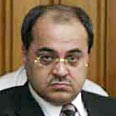
Tibi, 'Arabs say 'no' to Zionists'
צילום: חיים צח
Arab public rejects ruling parties
Results of second round of municipal elections show growing trend in Arab sector to reject major parties Labor, Kadima, Likud. MK Tibi says results forecast of Arab vote in upcoming general elections
The results of the second round of municipal elections held Tuesday night in the Arab sector showed that quite a few candidates running on behalf of Kadima, Likud and the Labor party have been forced to part with their seats.
Politicians from the Arab sector said Tuesday's results are a reflection of what is to be expected in the upcoming general elections.
"The results of these elections, and the fact that in the previous Knesset only 29% of the Arab voters elected ruling parties, while in prior elections the vote rate for these parties was 38% - show that the Arab sector will say 'no' to Zionist parties and will give them a hard blow in the upcoming elections," said MK Ahmad Tibi (United Arab List-Ta'al).
The list of local authorities in which ruling heads lost this time around is long, and includes Tira, where Kadima representative Khalil Qasem was voted out, Shfaram, where Likud man Ursan Yasin lost, and Rahat, where Kadima member Talal Krinawi lost to Islamic Movement man Faiz abu Sahiban.
"This is only a partial list, and the trend is clear," said Balad Chairman Jamal Zahalka. "This is a process that has been in the making for years, and did not start today.
"People are sick of the empty promises, and at the same time, there is also a constant rise in national awareness. Even Labor, that was once a party that got many votes in the Arab sector, is collapsing."
Zahalka gave the example of Labor man former MK Nawaf Massalha who lost in the elections for Kufr Qara.
According to United Arab List-Ta'al Chairman MK Ibrahim Sarsur the trend of dissatisfaction with the above parties "stems from the fact that the Arab population is starting to come to its senses and think in responsible terms".
Sarsur explained that "the tough socio-economic situation and the rise of Israeli fundamentalism are speeding up the process". Sarsur pointed out that the growing Israeli tendency to favor right-wing parties, as presented in polls, has had its effect on the Arab population "that feels a commitment to itself".
Representatives of the Arab sector said the results of the local elections will be reflected in the general elections in February as well.
"The three major parties will suffer a tough blow, and the votes will be directed at one of the two major Arab blocks – Hadash and the United Arab List-Ta'al," said Tibi.
Sarsur called for the unification of all the Arab parties and said, "Just like the Arab sector said 'yes' to its real representatives on the municipal level, the same will happen in elections to Knesset."
