


Blending musical traditions
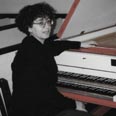
'Harpsichord Music by Israeli Composers' is a representative and interesting collection of works performed by harpsichordist Marina Minkin
“Harpsichord Music by Israeli Composers” (Albany Records, TROY 977) is a representative and interesting collection of works performed by harpsichordist Marina Minkin. Born the Ukraine and living in Israel, Minkin has studied harpsichord and organ performance in Israel and Boston, earning a Doctor of Musical Arts degree in historical performance in 1998. For this disc, she has chosen works of eight composers of two generations, all of whom, excepting Yinam Leef, came to Israel from other countries, blending musical traditions from their past with perfumes and flavors of the Middle East in general and Israel, in particular.
Take, for example, Haim Alexander’s (b. Germany, 1915) miniature - “Improvisation on a Persian Song” (1974). Melodic and dance-like, Alexander weaves his melody in and out of a constantly spiraling, repetitive accompaniment.
Paul Ben-Haim (1897-1984), born in Germany, scored his “Sonata a Tre” (1968) for harpsichord, mandolin and guitar; the work represents the composer’s ideal of synthesizing eastern- and western music. Minkin here is joined by guitarist Hanan Feinstein and mandolin-player Alon Sariel. The three instruments emulate Arabic plucked instruments and maqam motives in a moving performance which contrasts moods and textures.
Yinam Leef, born in Jerusalem in 1953, is a prolific composer, attaching importance to his pedagogical work at the Jerusalem Academy of Music. His “Elegy” (Canaanite Fantasy no. 3) composed in 1990, is contemplative and contemporary. Minkin breathes life into this collage of local, familiar motifs, from the call of the Moazzin to prayer, to Jewish prayer, to church bells sounding from the Old City of Jerusalem.
Benjamin Bar-Am (b.Germany, 1923) composed his “Petite Suite for Recorder and Harpsichord” in 1967. Literally forgotten for many years, Minkin came across it by chance and premiered it in 2006 with Israeli recorder player Drora Bruck. Decidedly modal in flavour, the work has four short movements, at times energetic, at others, thoughtful and whimsical.
Yeheskel Braun (b. Germany, 1922) is a versatile and prolific composer of vocal-, orchestra- and chamber music. His “Four Keyboard Pieces,” written in 1992, were originally composed for the harpsichord. Rich in melody and influenced by 17th century styles, Braun’s writing is, at times, minimal and he writes: “As to expression, I rely upon the performer because I have offered only the naked notes”.
Segiu Natra was born in Romania in 1924, immigrating to Israel in 1961. His “Theme and Variations,” conceived in 1945 as a piano work, were adapted for harpsichord in 1974. Abounding with irregular rhythmic patterns, clusters and mood changes, the piece calls for flexibility, with Minkin identifying with the improvisational character of the piece.
Born in Moscow in 1974, Uri Brener’s “7-11 and Much Later” also presents a play of improvisational ideas and jazz rhythms, with much attention to harpsichord sonority. Minkin’s playing lures the listener to listen, to be involved.
Dina Smorgonsky (b. Belarus, 1947) wrote her “Three Dances for Harpsichord” for Minkin in 2007. The composer mixes styles of past with present. Minkin gives this work an elegant reading.
With her choice of high-quality Israeli harpsichord music, Minkin’s playing leaves no stone unturned. Her technique is crystal clean and boasts ease; her ability to interpret very different styles is evident throughout. Above all, Minkin’s playing delights the senses. Adding to the listener’s enjoyment is the fine technical quality of the recording itself.
