



Vladimir Presin. Wants to live in dignity
צילום: ירון ברנר
Elderly Soviet refuseniks trying to survive
For years they fought for freedom of one million Jews behind iron curtain. Many of them are now more than 70 years old, living in extreme poverty. 'No one is helping us,' one of them says
Twenty years have passed since the collapse of the Soviet Union and the immigration of about one million Jews to Israel, in a wave of aliyah which was characterized by the relatively young age of the immigrants (71% were under the age of 50) and the large number of university graduates (70% of all immigrants).
But even before the iron curtain's gates were opened, hundreds of Jews fought for immigration across the Soviet Union in the 1970s, and only managed to make aliyah at an adult age due to Moscow's ongoing refusal to let them leave.
This is why those 400 immigrants, many of whom are more than 70 years old, have not managed to save enough money for retirement and are now living in extreme poverty conditions with tiny allowances from the Nations Insurance Institute.
The elderly aliyah refuseniks have recently decided to launch a battle, demanding that the years the Soviet authorities refused to let them immigrate to Israel, during which they continued to fight for the Jewish state, be added to the calculation of their pension funds.
Vladimir Prestin, 75, was an aliyah refusenik for 20 years due to his work at a secret plant. He asked to immigrate in 1970, when he was 36. The Soviet government refused to let him leave, but he continued to work for the State of Israel for many years, organizing seminars on Jewish culture and publishing a magazine on the State of Israel and Judaism.
"We, the aliyah refuseniks, were just like Jewish Agency activists today," he says, adding that "because of my work I was not allowed to leave the Soviet Union, but I always did things for Israel."
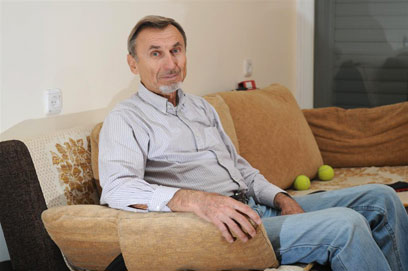
Prestin eventually arrived in Israel in early 1989, and began working as a respiration machines technician at a hospital.
"I worked for nine years and was fired at the age of 65. I receive a pension of NIS 1,600 (about $425) a month, and the National Insurance Institute pays a similar sum. My wife has died and I am paying a mortgage on my own, which doesn't leave me much for living," he says. "If I could, I would take another job, but I'm too old. It's very difficult living off this sum. I have always done things for Israel and I would like to live here in dignity."
Aharon Gurevitch is leading the battle on behalf of the other aliyah refuseniks. He appealed to immigrate to Israel when he was 35, but arrived in the country only 15 years later. "Most aliyah refuseniks were also 'employment refuseniks' – because in order to file documents asking to make aliyah, we had to quit our jobs," he explains.
Gurevitch adds that all those year, the aliyah refuseniks did not have a regular income and made a living from giving private lessons, while living frugally.
"When we arrived here, most of us were already more than 50 years old and could not really get a job in our profession, so we went to work as cleaners, construction workers and similar types of jobs. Nonetheless, none of us managed to accumulate sufficient seniority for a pension plan, and we are now living off pennies, in poverty," he explains.
Gurevitch finds it difficult to talk about his economic distress. "It's very problematic for me to even buy a book for my grandson, and sitting in a café is basically a dream. I haven't traveled abroad, and I don’t even have money to tour Israel," he says painfully.
According to Gurevitch, he and his friends – who have worked so hard and made so many sacrifices for Israel – have simply been forgotten by the State. "We fought to have the gates of the Soviet Union opened, and thanks to that a million immigrants arrived in Israel. We are not asking for much, we just want our seniority years to be calculated so that we can live in dignity."
He says that many elderly aliyah refuseniks are living in poverty, but are too proud to demand a pension from Russia, especially considering their desperation in regards to the chances of receiving any aid from the State of Israel.
"People who have passed the age of 70 are delivering newspapers and taking care of small children and babies in order to make a few pennies. None of us have any savings, inheritance or assets. We are old and we need help now. Every politician or public servant we turn to just nods in agreement and expresses solidarity, but no one actually helps us," he says.
'Unbelievable ungratefulness'
Marik Shtern, the son of late Knesset Member Yuri Shtern, has decided to join and help the elderly aliyah refuseniks in their battle.
"This is a case of unbelievable ungratefulness on the part of the State of Israel. These are Zionist activists who risked their lives for many years in order to have Jews immigrate to the country and spread the Jewish culture in the Soviet Union," he says. "My parents become Zionists in Moscow in the 1970s, and eventually immigrated to Israel thanks to the efforts of these Jewish activists.
"Only thinking about the fact that many of them are living off a tiny sum of NIS 1,500 a month shocks and angers me," he adds. "These days, when the contribution of the Russian aliyah is being questioned, there is an important need to emphasize the glorious past of the aliyah refuseniks, and first and foremost solve their disgraceful economic situation. The Israeli government must come up with a quick solution for this distress."
Knesset Member Lia Shemtov (Yisrael Beiteinu), chairwoman of the Knesset's Immigrant Absorption Committee plans to discuss the situation of the aliyah refuseniks during next week's session. Information Minister Yuli Edelstein, an aliyah refusenik himself and a prisoner of Zion – told Ynet that he would work for the elderly immigrants and has already appealed to the relevant ministries in a bid to solve the problem.
"This is a relatively small group we are talking about," he said. "I promise to help and to try and pass a private bill, which will regulate the matter, and get the government to support it."
