


Milk prices may rise after holidays
Price of raw milk, used to prepare dairy products, expected to increase by up to 9% in October. Tnuva and Strauss dairies: We'll look into implications
The target price is the price guaranteed to dairy farmers for the milk they produce, according to the quotas allotted by the Ministry. This is the price dairies are forced to pay when they finalize contracts with dairy farmers for the purchase of milk.
The price is updated once every quarter according to a fixed formula which weighs the dairy farmers' input prices (for example, the price of the cattle's food, veterinary care and electricity and water costs).
According to estimates in the milk industry, the target price will increase NIS 0.17-0.20 (4-5 cents) per liter – an 8-9% hike in the price of dairies' main raw material.
Decision affecting all consumers
Although no one is saying it out loud yet, Israel's dairies will likely raise prices one after the other following the increase in the target price.
On the other hand, the companies are aware of the fact that increasing the price of certain products, like cottage cheese, will lead to great public rage which they will be find difficult to endure.
The prices of supervised products were last raised in May 2011, just before the social protest, when prices were increased by 5-6%. Dairies responded by raising the prices of some products by nearly 20%.
In today's consumer climate, dairies will likely not be able to afford such sharp price hikes and are expected to implement a higher price increase on luxury products rather than on basic commodities.
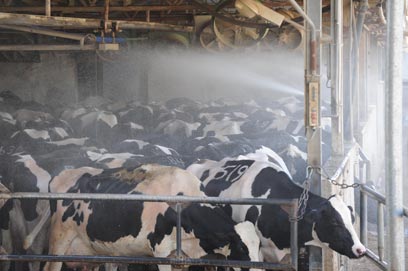
Cowshed in Kibbutz Amir (Photo: Avihu Shapira)
The Dairy Board said in response to this report, "The target price is determined by law and incorporates the production costs determined by a survey. Milk prices are updated in accordance with the milk production input prices once every three months. The next update is on October 1.
"Sixty-three percent of milk production costs are associated with the cost of cattle food. Animal food prices are determined in the global market and have recently recorded sharp hikes, like the price of corn which soared 40%.
"The raw milk component is just one parameter of many, which affect the product's final price. On its way to the consumer, the product is priced by other elements, including dairies, supermarkets and VAT. Therefore, we have no information or control over the final consumer price."
The Agriculture Ministry said in response, "Milk's target price is updated at the beginning of each quarter in accordance with the input basket, as dictated by the target price regulations (the Milk Law).
"The consumer price depends, among other things, on the target price, and its update will be examined by the Price Committee after the holiday of Sukkot in accordance with the input basket.
"An increase in the consumer price is subject to the approval of the two ministers in accordance with the recommendations of the Finance and Agriculture Ministries' joint Price Committee."
The Strauss company said in response, "We will study the decisions once they are made, and will accordingly look into the implications of the target price increase, as well as the costs of other input prices and raw materials.
The Tnuva company said in response, "We have yet to be informed of an increase in the target price. Once we receive such an announcement, Tnuva will look into the implications thoroughly."
