


Nazi train car in Florida
צילום: איי פי
Nazi train car displayed in Florida
Officials plan to park the car on railroad tracks that end near the site of the planned South Florida Holocaust Museum
Three teenagers were pushed onto a cattle car in 1943. They stood for two days in the sweltering car, lurching as the train rattled toward Auschwitz. Only one survived, the digits 5-7-7-7-9 tattooed on her arm.
Joyce Wagner trembled Tuesday before the railroad car, just as she remembers trembling before that similar car six decades ago in Poland. "I was thinking - my brother, my sister. Where did we stand?" said Wagner, 84, her voice wavering. "I'm the only one who survived, from nine children."
Wagner joined about 150 other Holocaust survivors Tuesday to view a railroad car of the type used to transport Jews from Poland's Warsaw Ghetto to a Nazi death camp during World War II.
The 31-foot (9.3-meter) railroad car still bears a faint swastika stamped into the paint peeling off its side. It arrived in Florida last month from Poland. Officials plan to park it on railroad tracks that end near the site of the planned South Florida Holocaust Museum, scheduled to open next year.
A handful of similar cars are displayed at museums in Israel, throughout the U.S. and at the Auschwitz death camp in Poland.
Reminder of the Nazi war machine
"This particular car was seized from the Germans at the end of the war on Polish territory," Rositta Kenigsberg, the center's executive vice president, said Monday.
The car could have carried Jews to the infamous Polish death camp, Treblinka. It also could have transported Nazi soldiers or war supplies, officials said. Even without proof it carried human cargo, the car is a disquieting reminder of the Nazi war machine.
When exterminating Jews village by village, one by one, became too inefficient, too cumbersome for individual death squads to handle, the Nazis mobilized their victims instead.
"The trains were the indispensable ingredient that made all this happen," said Michael Berenbaum, a Holocaust historian who oversaw the creation of the U.S. Holocaust Memorial Museum in Washington, D.C.
The six major Nazi death camps were all located along rail lines. Auschwitz alone had 44 separate railroad tracks - about twice as many as Penn Station in New York - to receive trains from throughout Europe, Berenbaum said.
About half the six million Jews who died in the Holocaust rode to their deaths in such trains, Berenbaum said.
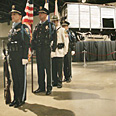
Officials asked the 150 survivors in attendance to stand during the unveiling ceremony. During the war, most of them would have been squeezed into a similar railroad car with no food or water. Many passengers on such cars died en route.
The car's unveiling ceremony included a recitation of the Kaddish.
