



Chief Rabbinate blacklists Orthodox rabbis with liberal views
Despite denials by the Chief Rabbinate, an internal memo from the Rabbinical Court indicates the state refuses to recognize the religious authority of some rabbis from Orthodox communities in the Diaspora; Chief Rabbinate and Rabbinical Court play blame game.
The Chief Rabbinate has compiled a "black list" of rabbis from Orthodox congregations abroad whose opinions on religious matters it rejects because of their liberal worldviews, an internal Rabbinal Court memo obtained by Ynet showed.
The document seemingly contradicts the Chief Rabbinate's explicit and repeated statements—including ones given in court—that it does not have such a list.
ITIM, an NGO founded help Israelis navigate religious authorities’ bureaucracy, has been waging an ongoing battle in recent years to have rabbis from abroad recognized by Israel's Chief Rabbinate. The NGO argues that in the existing situation, rabbis can be recognized or rejected for unrelated reasons and without explanation.
The court has already ordered the Chief Rabbinate to determine criteria for the recognition of rabbis from abroad, but the Rabbinate has been dragging its feet on the matter for quite some time.
ITIM claims that the Rabbinate has a "blacklist" of liberal rabbis whose religious authority it automatically disqualifies due to their personal views. The Rabbinate, meanwhile, insists that every case and every rabbi are examined on merits only.
The Rabbinical Court's internal memo, however, ostensibly supports ITIM's claims.
The memo came to light when a woman requested to register her marriage with the religious council in Haifa. The applicant presented a certification of Jewish status from Rabbi Akiva Herzfeld, who was the rabbi of the Shaarei Tfiloh congregation in Portland, Maine, and has since immigrated to Israel. But the council refused to recognize the rabbi's authority and sent the woman to the Rabbinical Court to clarify the matter.
The woman filed a request to clarify her Judaism to the regional religious court in Haifa, and her documents were sent to Rabbi Asher Ehrentreu of the Rabbinical Court.
In an internal letter he sent to the regional court, Ehrentreu ruled that Rabbi Herzfeld's opinion could not be relied on and should not be recognized. He also disclosed in the memo that this position was based on a categorical rejection of more than 100 rabbis from a particular beit midrash (Jewish study hall) considered by the Rabbinate to be "too liberal."
"Rabbi Akiva Herzfel (sic) is a member of the rabbinical association Chovevei Torah, who call themselves (Modern) Orthodox and are not recognized by the Chief Rabbinate of Israel," wrote Rabbi Ehrentreu. "I cannot determine the Jewish status of the petitioner based on this rabbi's recommendation, and I ask the court to instruct the applicant to turn to me for a comprehensive inquiry."
The woman's request was finally approved only after she presented a letter from another religious court in the United States, which is recognized by the Rabbinate.
Prominent rabbis on the blacklist
Chovevei Torah is a rabbinical school founded by Rabbi Avi Weiss from Riverdale, NY. Rabbi Weiss is considered to be on the far-left of Orthodox Judaism because he ordains women as spiritual leaders and Halachic instructors. He resigned from the Rabbinical Council of America over differences on this issue.
Four years ago, the Chief Rabbinate blacklisted Rabbi Weiss and refused to recognize his authority when reviewing the Jewish status of his community members. The Rabbinate claimed that there is doubt as to his "commitment" to Jewish law. Due to public and media pressure, Chief Rabbi David Lau eventually agreed to recognize his authority.
But now it appears 124 rabbis he has ordained since 1999 have been blacklisted by the Rabbinate.
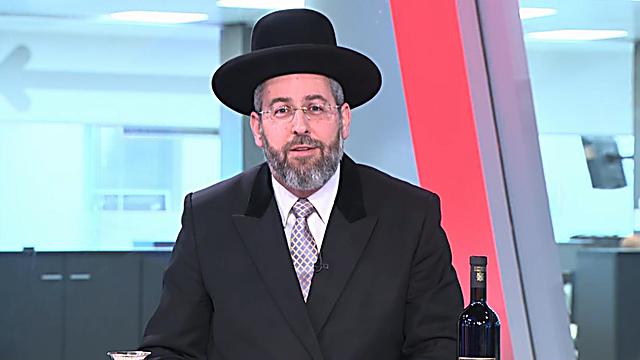
Rabbi Akiva Herzfeld is also from Chovevei Torah. In 2013, he was chosen by Forward magazine as one of 36 rabbis who inspire America.
ITIM believes that in addition to Weiss' students, there are dozens or perhaps hundreds of rabbis who have been blacklisted by the Chief Rabbinate due to their liberal worldview.
Embarrassment for the Rabbinate
The internal memo coming out has caused great embarrassment to the Chief Rabbinate and the Rabbinical Courts system, especially in the wake of a Knesset debate on Monday about the recognition of rabbis abroad.
Behind the scenes, officials in the Chief Rabbinate and the Rabbinical Courts system exchanged accusations, with the Chief Rabbinate claiming the Rabbinical Courts have no authority to determine which rabbis are recognized or speak on the behalf of the Rabbinate on such a sensitive matter.
The Chief Rabbinate declined to comment on a document written by a rabbinical court employee, noting past experience has shown that "over the years, the Chief Rabbinate has approved documents from rabbis belonging to the Chovevei Torah community."
"The Chief Rabbinate of Israel does not rule out rabbis or a group of rabbis belonging to one community or another," the Rabbinate said. "The Chief Rabbinate of Israel receives documents or certifications from rabbis that are examined on the merit of the document."

The Rabbinate added that "at the next council meeting, official criteria will be approved for the recognition of rabbis and (rabbinical) courts outside of Israel."
The Rabbinical Courts said that "To date, there is no set list of rabbis from communities abroad recognized by the Chief Rabbinate of Israel. We know that the Chief Rabbinate formed a committee that is working on an updated list. In such circumstances, when there is no up-to-date information, the court examines each case brought before it on a case-by-case basis, and for this purpose is assisted by experts on behalf of the court.
“Rabbi Asher Ehrentreu, who is familiar with the Rabbinates and Rabbinical Courts in the Diaspora, is one of the experts on whose expertise we rely on, something which has been acceptable to the Chief Rabbinate for years."
The founder of ITIM, Rabbi Shaul Farber, charged that "The Chief Rabbinate has repeatedly claimed that there are no blacklists, but here the opinion of an Orthodox rabbi has been rejected only because he belongs to an institution the Rabbinate did not approve of."
"What the Rabbinate is doing in this case is first and foremost dishonest," he claimed. "On the one hand, to assuage the harsh criticism against it, it issues all sorts of proclamations. On the other hand, following its takeover by extremist elements, the Rabbinate finds it difficult to stand by those proclamations," he added.
"This also contradicts Jewish law. Throughout the generations, Jewish communities around the world have had different Halachic approaches, and yet the communities treated each other with mutual respect and recognized each other's Halachic authority," Farber explained.
 |
