

Israel should reopen more carefully after its second lockdown as it is facing a new surge in COVID-19 cases, a scientist advising the government on its coronavirus response said Monday.
Israel on Monday saw the reduction in daily new coronavirus cases slowing, with its R value – the number of people that one infected person will potentially pass the virus onto – surpassing 0.8, just three weeks after some lockdown restrictions were lifted.
The government had identified an R value of 0.8 as its maximum limit before taking more steps to slow the spread of the virus.
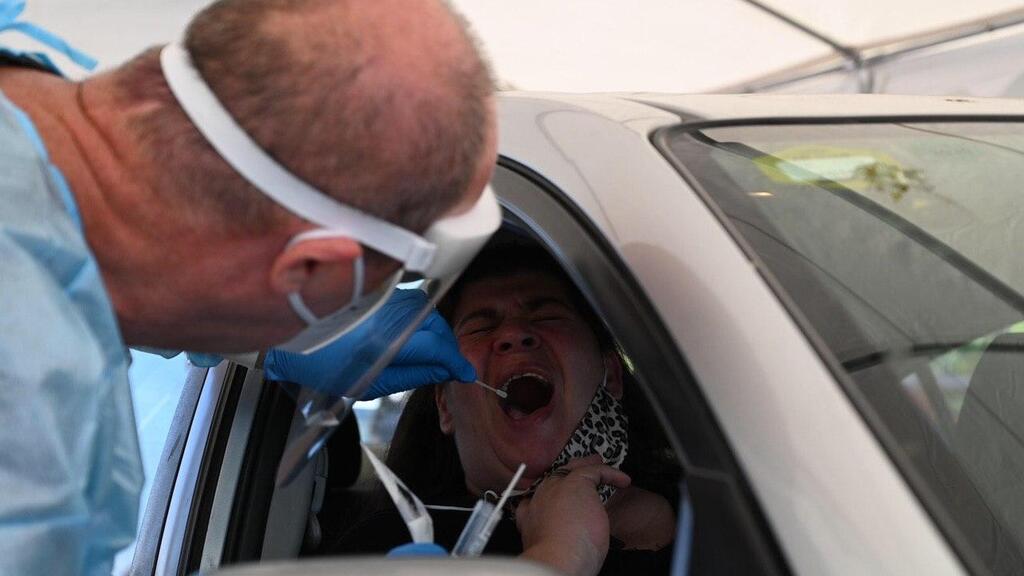
Earlier Monday, the Health Ministry said there had been an increase in the average coronavirus positivity rate, which now stands at 3.1%, causing concern among health officials.
Prof. Eran Segal, a computational biologist at the Weizmann Institute of Science said that if he were to decide whether to ease more restrictions based on this data he "would be hesitant."
He noted that the next 10 days would definitively show if Israel should proceed to the third phase in its gradual lifting of restrictions.
"We may wipe out the achievements of the second lockdown," he warned.

Prof. Eran Segal of the Weizmann Institute advises the government on the coronavirus response
Israel began exiting a month-long lockdown in mid-October, in a gradual lifting of restrictions that began with return of preschools and kindergartens.
On Sunday, schools opened for grades one to four and some businesses were also allowed to reopen though high street shops remain shuttered.
The cabinet was due to meet Monday afternoon to discuss further steps to ease the lockdown.
The Finance Ministry was calling for high street stores to be reopened as soon as this week, while Health Minister Yuli Edelstein was adamant on maintaining the scheduled lockdown exit timetable.
Segal said the only sector of Israeli society where there was no rise in contagion was the ultra-Orthodox community, where 25% of the population had already been exposed to the virus, as opposed to 7% of the general population.

An ultra-Orthodox man wears a mask as he walks through central Jerusalem
(Photo: AFP)
"This is not a question of herd immunity," Segal said, "but the fact that so many have already been infected does impact the rate of contagion."
The Arab sector on the other hand, is showing a positivity rate of 6.19%. More than half of the new cases confirmed on Sunday were in the Arab community.
"It is inconceivable that where there is the most morbidity, we have the least testing," Segal said, as he called on members of that community to get tested.
He also warned that children of all ages do get infected and infect others with COVID-19.
"The government must come up with a safe plan to reopen schools in areas of low contagion only," he said.