

Israel's government on Monday approved a partial reopening of the education system beginning Sunday, after a month and a half of forced enclosures due to the coronavirus pandemic.
The government approved the Education Ministry's proposal to resume school for children ages 0-9, subject to further situation assessment on Friday.
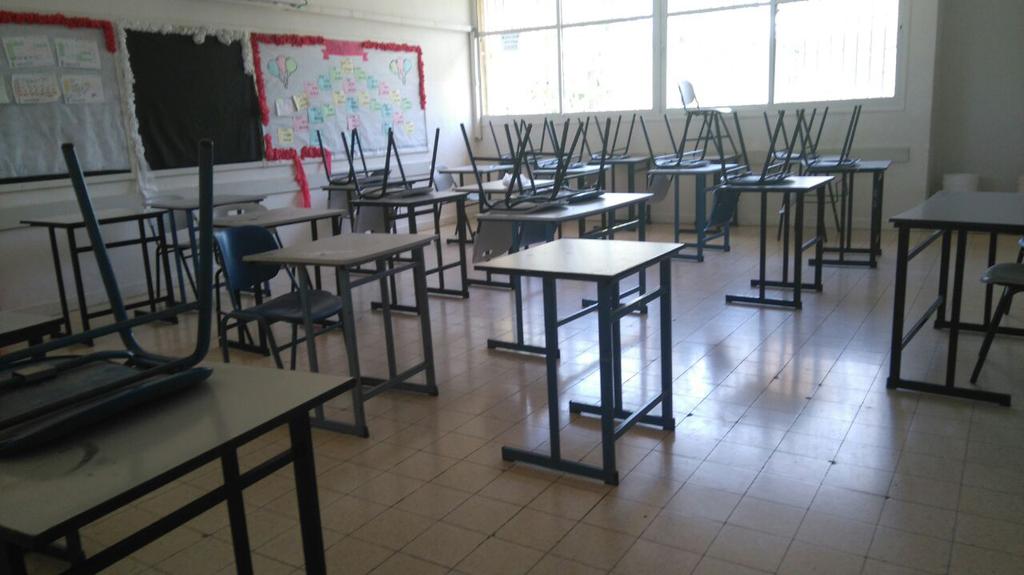
According to the proposed guidelines, children will return to school and study in small groups of up to 15 students.
The students will alternate between frontal learning at school and remote learning from home.
Frontal learning will take place in elementary schools on Sundays through Thursdays and recess time will also be alternated between the different groups to avoid mass gatherings in the schoolyard and potential exposure to coronavirus.
Nurseries will resume activity for children ages 0-3 in groups of up to 15, some 60% of the usual capacity.
If the number of students in a single classroom exceeds the limit, the class will be split into two groups and rotate attendance between them on a daily or weekly basis in accordance with Health Ministry guidelines and will be subject to further government assessment.
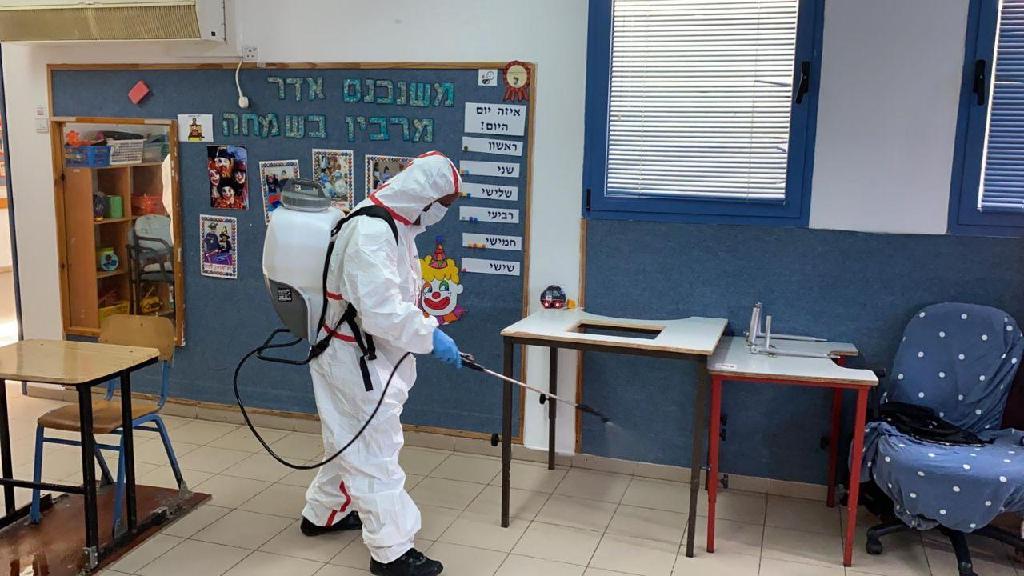
A health worker disinfects a classroom in Haifa
(Photo: Haifa Municipality)
Labor, Social Affairs, and Social Services Minister Ofir Akunis praised the move to reopen nurseries, citing its importance for the economy's exit from the coronavirus crisis.
The Foreign Ministry released a report on Sunday based on accounts from Israeli embassies around the world, which states that various countries have already begun to formulate an exit strategy for education systems in the coming months, based on the assumption that the coronavirus pandemic is still far from over.
According to the report, Northern European countries prioritize younger ages to allow parents to leave for work, but also due to the ineffectiveness of distance learning at these ages.
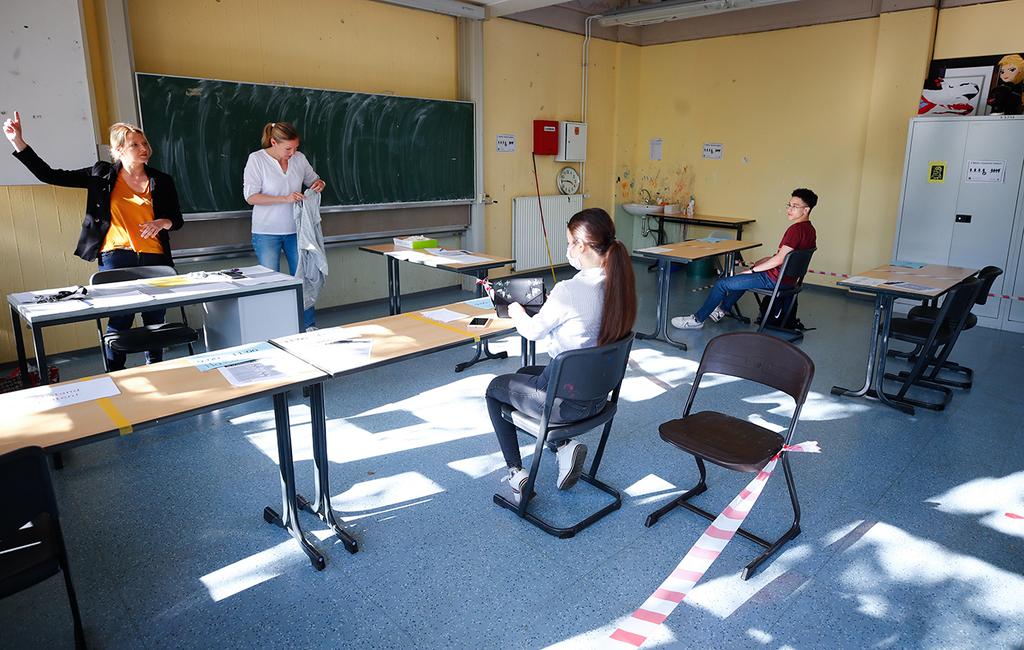
A German school implements social distancing
(Photo: Reuters)
Central European countries, such as Germany and Austria, prioritize reopening high schools and gymnasiums to allow senior students to prepare properly for their matriculation exams.
Some countries allow parents to decide whether to send their children back to school.
Given the need to reduce the number of students in a classroom and fears of local outbreaks, distance learning will continue to serve an important learning tool in the future.