

Prime Minister Benjamin Netanyahu took his time this week to admit that his planned trip to the UAE was canceled because of the Jordanian Royal Palace and not, as he first claimed, his wife's appendicitis.
One day after Jordanian Crown Prince Hussein Abdullah canceled his plans to pray at the Al-Aqsa Mosque in Jerusalem because of a disagreement with Israel over his security detail, his father ordered the skies over the kingdom closed to Netanyahu's flight to Abu Dhabi.
Gallery
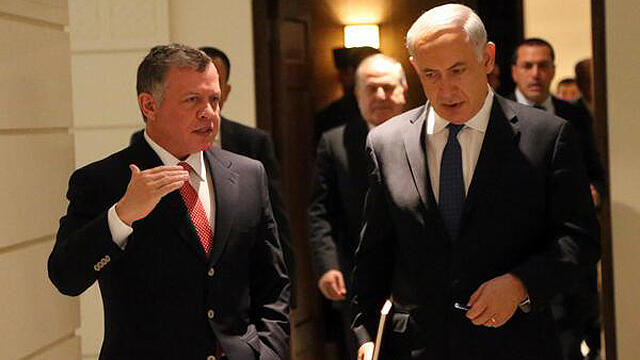
Jordan's King Abdullah meeting with Prime Minister Benjamin Netanyahu in 2014
(Photo: Getty Images)
Jordanian Foreign Minister Ayman Safdi added fuel to the fire by revealing the unflattering views of Netanyahu held among his country's leaders in Amman.
Saudi Arabia followed suit and banned Netanyahu's flight from its airspace, shortly after receiving King Abdullah with warmth and respect in the Saudi capital.
A senior Jordanian source told Ynet that contrary to statements made by Netanyahu's allies, Saudi Crown Prince Mohammed bin Salman does not intend to make a bid for control over the Muslim holy sites in Jerusalem, which are have under Jordanian authority for decades.
The UAE ultimately nixed Netanyahu's plan to visit the Gulf nation ahead of the March 23 elections and announced that they refused to play a role in the Likud Party's election campaign.
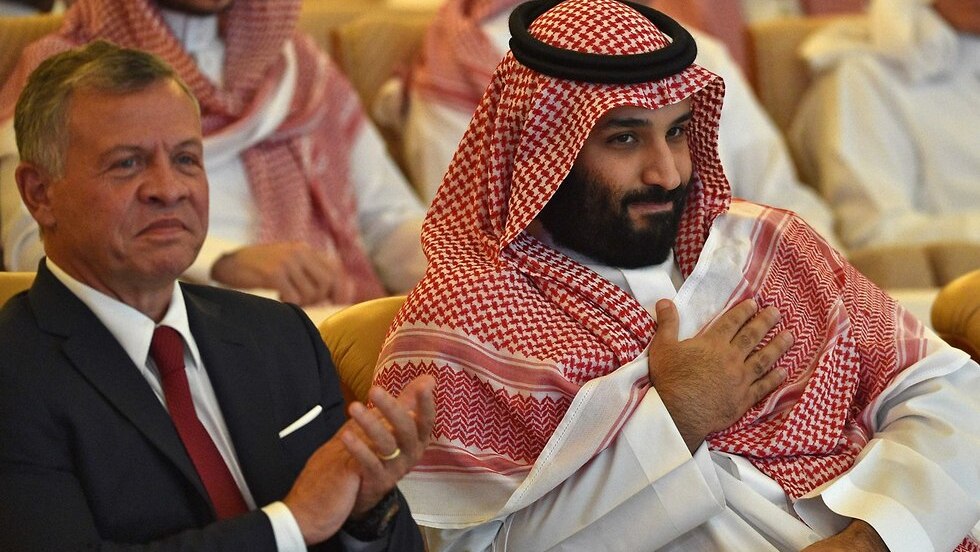
King Abdullah of Jordan and Saudi Crown Prince Mohammed bin Salman
(Photo: AFP)
Israeli-Jordanian relations are strained. King Abdullah has made no secret of his dislike for Netanyahu.
In an interview to The Times of London in 2009, Abdullah described his dealings with Netanyahu during his first tenure as prime minister as "the least pleasant of my ten years" on the throne.
Since returning to power in February 2009, the prime minister has repeatedly asked to meet with the king and was more often than not refused. His calls to Amman also often go unanswered. Defense Minister Benny Gantz and Foreign Minister Gabi Ashkenazi have on the other hand been given a warm welcome.
The king is expected to present U.S. President Joe Biden with his view of the relations with Israel when the two leaders meet and is set to explain the ties are based primarily on security cooperation.
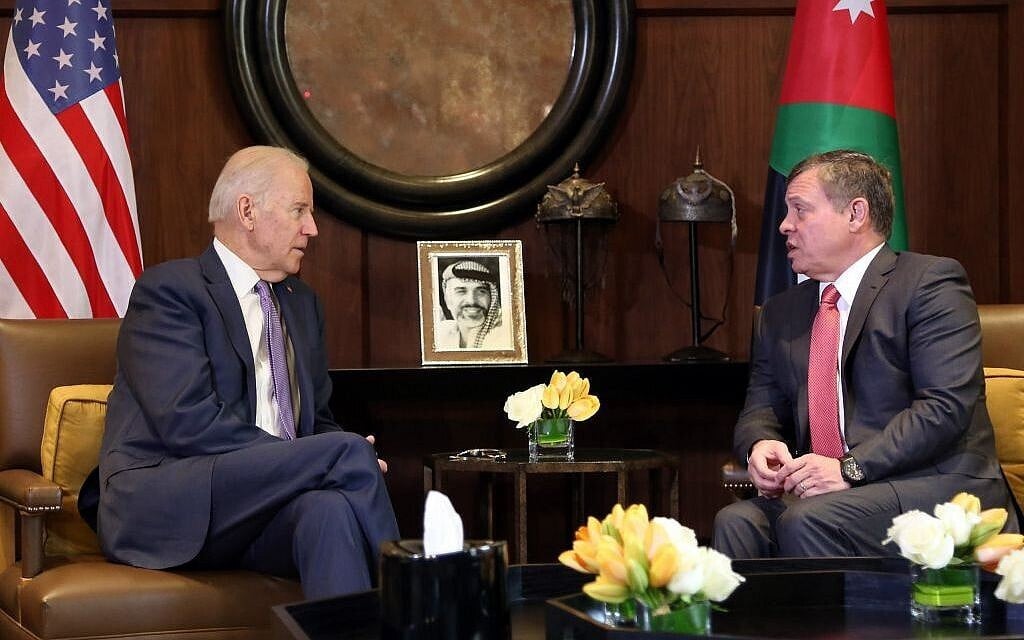
Then-U.S. vice president Joe Biden meeting with Jordan's King Abdullah during a visit to Amman in 2016
(Photo: AP)
Amid the tensions between Netanyahu and Abdullah, a group of 30 or so Israeli current and retired generals, industry leaders and various politicians have been working behind the scenes to keep the relationship with Jordan from deteriorating altogether.
They have lobbied government ministries to explain the importance of Jordan's role in maintaining a peaceful border, preventing terrorists from infiltrating and drugs and weapons being smuggled into Israeli territory.
Over the years, Israel has come to trust Jordan's cooperative role.
But two different schools of thought are now prevalent in Jerusalem. One supports the reign of the Hashemite dynasty and regards it advantageous to Israel, while the other hopes that Jordan will become the future Palestinian state, citing its 80% Palestinian majority.
What would the second option look like in terms of Israel's future security? What would Israel do if the leadership of Jordan was made up of both Fatah and Hamas?

Jordan's King Abdullah and his son Crown Prince Hussein pray at Tsofar, after Israel returned it to Jordanian control in 2019
U.S. emissaries are busy collecting information in Jerusalem and Amman ahead of White House meetings with Netanyahu and Abdullah. They are aware of the tensions between the capitals and hearing the messages from the Jordanian king: Amman is a partner for peace and agrees with Biden on the need for a two-state solution to the Israeli-Palestinian conflict.
Unless Netanyahu, should he be re-elected next week, makes a dramatic shift in his approach to his neighbor to the east, he may find he is perceived as no better than an obstacle to regional stability and peace.
First published: 13:38, 03.19.21