

The polls ahead of Tuesday's elections indicate there may again be a stalemate after the votes have been counted, hardly a surprise as there has been no smooth formation of a government after any of the last three elections.
There could be a Likud-led coalition or one made up of factions that oppose the Likud and its leader Benjamin Netanyahu. There could even be a fifth election cycle soon - although that too could fail to present a clear winner.
It is, therefore, incumbent upon Israelis to search for a logical solution that would move the country forward.
Israel must reboot many of its institutions, including its political establishment and leadership.
One man alone is responsible for the repeated election campaigns and that is Netanyahu. Should he remain in power after the next elections, he will only subvert the political system further in the service of his personal agenda.
Without Netanyahu, the Likud party would be able to conduct its own reboot and rebuild its leadership in order to return to the political field with new leaders and ideas.
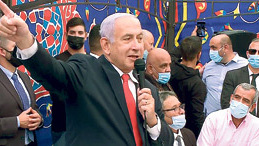
Prime Minister Benjamin Netanyahu campaigns in the Arab town of Abu Gosh, near Jerusalem
(Photo: Facebook)
The latest campaign was not about ideology, perhaps for the first time since the establishment of the state. It was also not a fight between two leadership options, which is why we must look for a different approach.
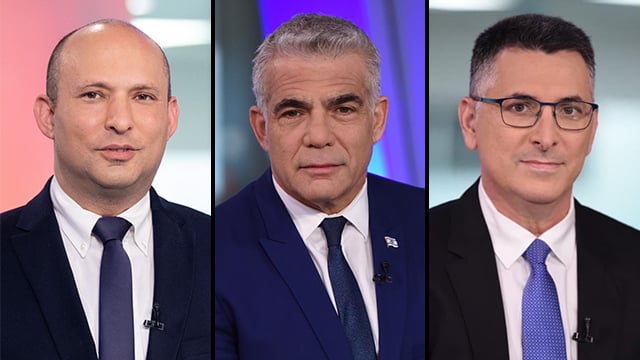
Israel should have an emergency government made up of the four leading parties outside Likud: Yesh Atid; Yamina; New Hope; and Yisrael Beytenu.
The four people at the head of these parties should lead the country in a temporary government that would be in power for a year or two at most, in order to deal with the problems caused by Netanyahu and his governments over recent years.
The new government would concentrate its efforts on issues that have a wide consensus and postpone matters of ideology for a later date.
Among the problems that need urgent attention is the health system. It must be bolstered to meet the challenges still posed by the coronavirus pandemic and the measures needed to prevent further outbreaks.
It must also put in place methodology required to handle future health emergencies and given the budget to provide proper care for Israelis in need of medical attention.
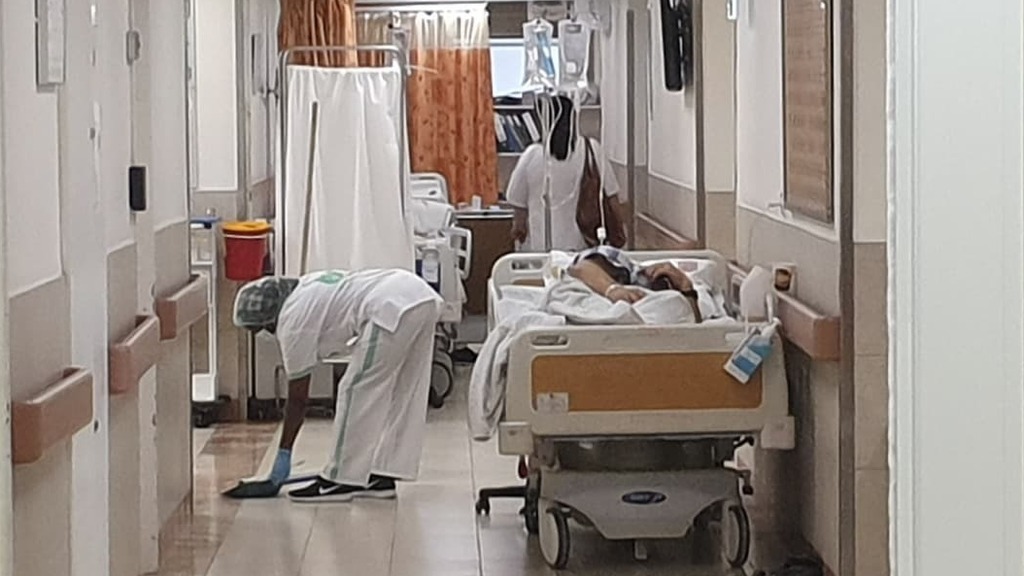
A patient is treated in the hallways at Wolfson Medical Center in Holon due to a shortage of resources
(Photo: Yariv Katz)
The economic ruin caused by the pandemic should also be addressed. The next government must increase economic growth, reduce the national debt and offer special assistance to those sectors devastated by the lockdowns.
The country's political system must be rebuilt on the basis of justice and ethics.
There must be legislation to bar anyone who indicted for crimes from running for prime minister. There must also be limits on the size of government and a reversal of the legislation that allowed the power sharing deal between Netanyahu and Alternate Prime Minister Benny Gantz, which was anchored in law but never fulfilled.
The judicial system must be amended but not destroyed. The courts are the third branch of government and must be protected.
There has to be a supermajority of 75 or 80 for MKs to reinstate any law overturned the Supreme Court.
It is imperative to rebuild public trust in the government, repair the rifts in Israeli society and have some national reconciliation after the toxic atmosphere of the past two years.
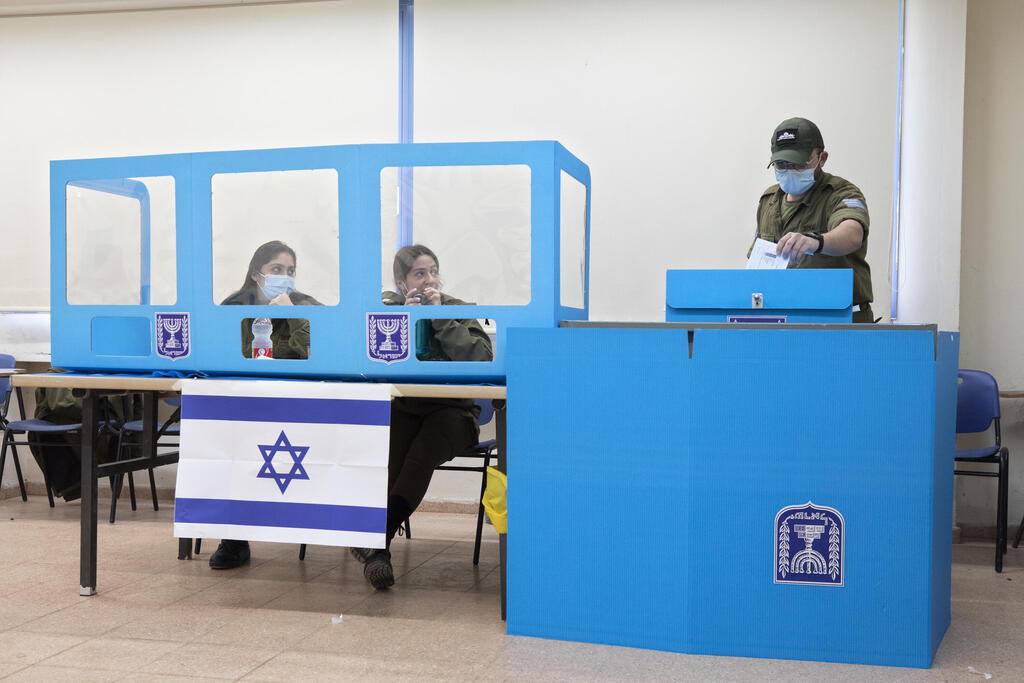
IDF troops casting early ballots ahead of the March 2021 elections
(Photo: AP)
The new government must refrain from deciding on ideological policies but should still be able to bolster peace agreements already signed as part of the Abraham Accords, which normalized relations between Israel and parts of the Sunni Muslim world.
The question of egalitarian military service should be suspended during the term of the emergency government, allowing ultra-Orthodox parties to join the coalition should they desire to do so.
The success or failure of such a government would depend on the politicians that comprise it. If they are able to put their egos aside for the good of the country, it may yet succeed in its mission.
Amos Malka is a retired IDF general who served as the head of Military Intelligence