

Four million doses of COVID-19 vaccines are making their way to Israel. Health Minister Yuli Edelstein announced on Saturday that the first batch will possibly arrive before the end of December.
But despite the optimism that this news brings, there is still a way to go before masses of Israelis are inoculated. We must still take every precaution to protect ourselves by wearing masks, adhere to social distancing and wash our hands regularly.
This discipline must still be kept because there are questions that should give us cause for concern.
The Pfizer/BioNTech vaccine that has only been given emergency authorization thus far in the U.K was produced at record speed and after only seven months of human trials. The U.S. Food and Drug Administration has yet to OK it.
It would be wrong to ignore the political pressure to get the vaccine approved, or the shortcuts taken to rush the process through.
This is a new and groundbreaking vaccine that was tried on 43,000 people, but the British authorization is based on only 170 infection cases.
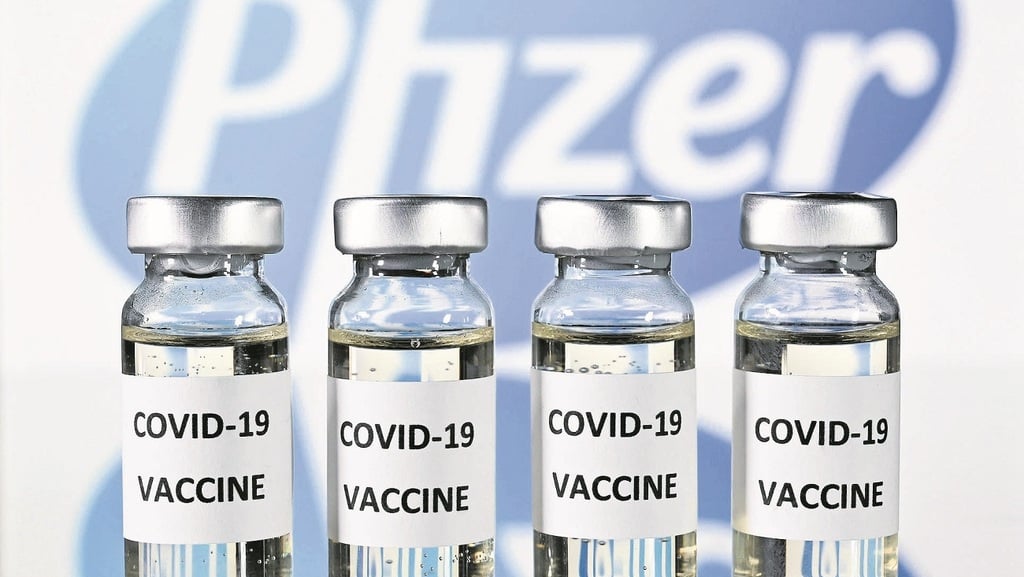
The Pfizer/BioNTech COVID-19 vaccine
(Photo: AFP)
Anthony Fauci, the most respected American authority on the virus, told Sky News the UK's decision may have come too soon.
"They've done it in a way that is much less deep than has been done and is being done by the FDA in the United States," he said.
He did retract some of his comments in a later NBC interview, but a proper review would normally take months before approval and in the case of the COVID-19 vaccine the development stage lasted no more than a number of months.
There are also questions that have not been answered about the efficacy of the vaccine.
There is no proof that the vaccines developed by Pfizer/BioNTech, Moderna and AstraZeneca prevent contagion and guarantee that those who received them would not infect others.
There is also no data on the length of time those who were vaccinated would remain immune to the virus.
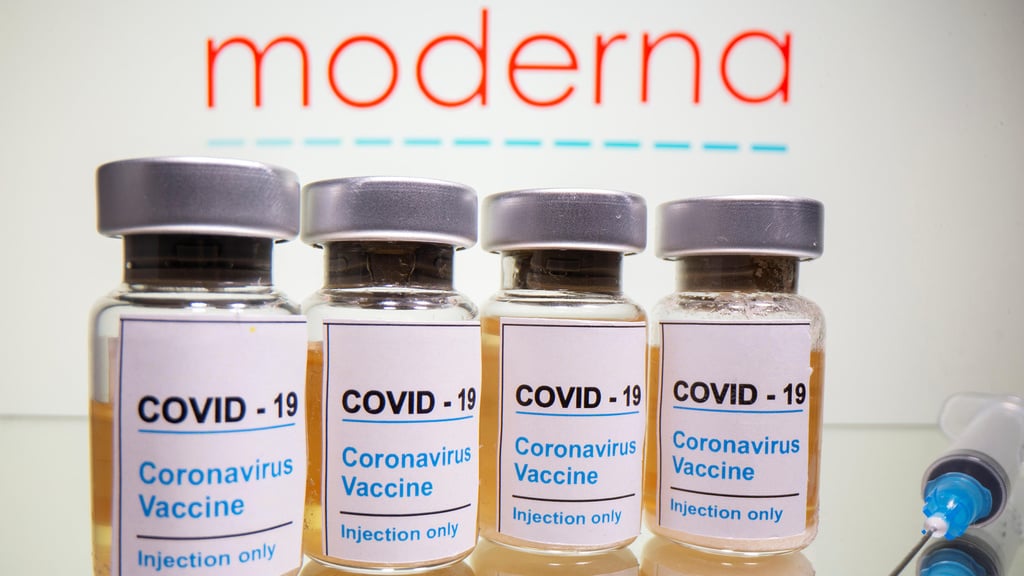
Moderna's COVID-19 vaccine
(Photo: Reuters)
We are also still in the dark as to which of the soon to be approved vaccines would be the most effective.
All of those questions would not be answered before the effort to vaccinate a large section of the worlds' population begins.
Another challenge that has more questions than definitive answers is how the vaccines will be transported.
They are so sensitive that there is not only a temperature consideration that must be observed. They must not be subjected to vibrations or light, and must not be removed from refrigeration more than four times before they are administered.
The logistical operation needed to be put in place is very complex and includes special refrigeration of the genetic material (mRNA) before being used, however, vaccination must take place at room temperature.
Any mishap along the way could impact the efficacy of the vaccine.
Israel is just beginning to prepare for this logistic challenge. A senior health official said the preparations are too slow.
Israel's Health Maintenance Organizations are a bright light in a bleak future because they have the experience of mass inoculation efforts.
Uri Gat CEO of Sela, the company tapped to head the logistic effort said his company is prepared for the challenge.
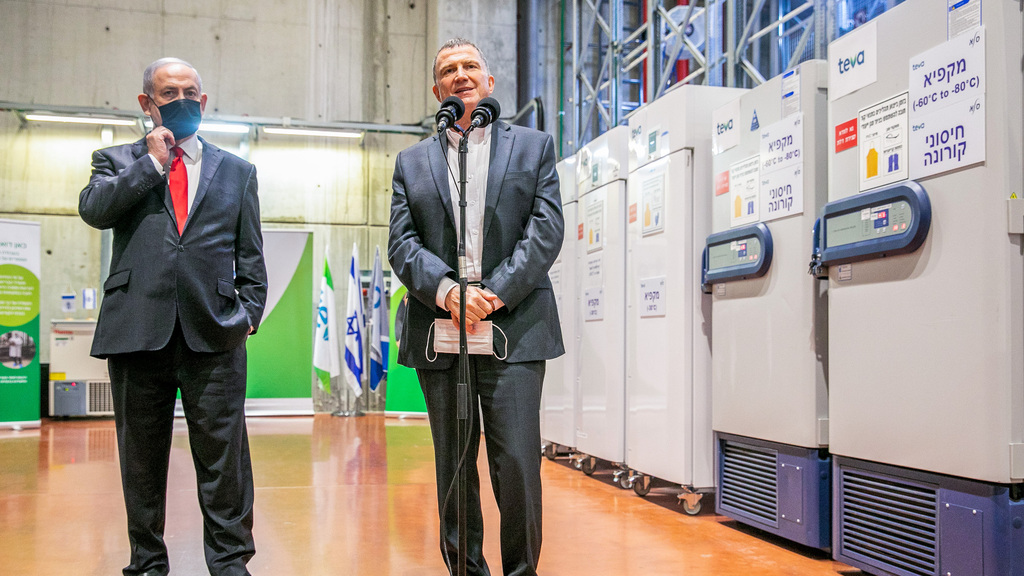
Prime Minister Netanyahu and Health Minister Edelstein visiting the Sela Medical solutions logistical center last month
(Photo: Flash 90)
"We've acquired the necessary freezers," he said, "We will be able to store millions of vaccine doses and the procedure to transport them to the vaccination points would only take a number of hours."
But how willing will the public be to receive the vaccines? The first in line should be the medical teams and those charged with the care of the most vulnerable among us but past experience has shown they have not been to be vaccinated. Data shows that in 2018, only 36% of medical professionals chose to receive the flu shot fearing adverse side-effects.
The Health Ministry has set up a task force for the vaccination operation that is already trying to get ahead of the problem.
"We've learned from past mass vaccination efforts that medical teams are suspicious of new vaccines so we will have to convince them. They are the first people the public will turn to with their concerns," Einav Shimron-Grinboim, Deputy Director General for international relations in the ministry, said. We will do our best to convince them.