

Brig. Gen. Ella Shado-Shechtman, you recently completed your term as the chief of staff’s adviser on gender affairs. Do you feel you left a clean desk behind, or are there issues you wanted to change but did not have time?
"I am leaving with a great sense of satisfaction. The things I wanted to change, I did. But the needs never end. There are always more tasks".
Who are you, beyond the uniform?
"I was born and raised in Afula, the third of four children, in a warm and supportive home. My parents taught us to love the land and people, to give, and to pursue dreams through hard work. I majored in biology-music .I play alto saxophone and flute, and to this day, for my soul, I play on weekends with my daughter - who plays piano and guitar and sings beautifully".
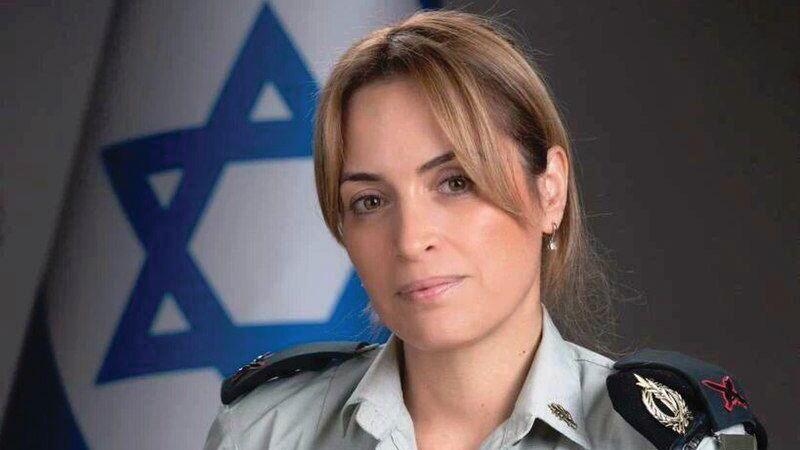
Did you always want a military career?
"When I enlisted, I was assigned to the IDF Orchestra, but I wanted to be a squad commander. In basic training I was sent to be a teacher-soldier, and after six months of effort I was accepted to the squad-commanders’ course. My daughter, who is about to enlist, has also been assigned to that course.
“Once I entered the 'Magal' training system, which prepares the IDF’s combat support troops, one challenge led to another. I was a squad commander, went on to officer training, then became a platoon commander, a company commander, a basic-training base commander, head of the command school, and eventually commander of the entire 'Magal' system. From there on, in 2021, I was promoted to the position of the chief of staff’s gender affairs adviser".
Did you come into the role with ideas for dramatic change?
“One of the goals I set for myself was to write a General Staff gender strategy that would serve as a kind of compass. My aim was to maximize human capital, including women, to increase the IDF’s operational effectiveness. It was important for me to identify barriers, both those stemming from our patriarchal society and those that we as women impose on ourselves - by thinking we are less capable than we truly are.”
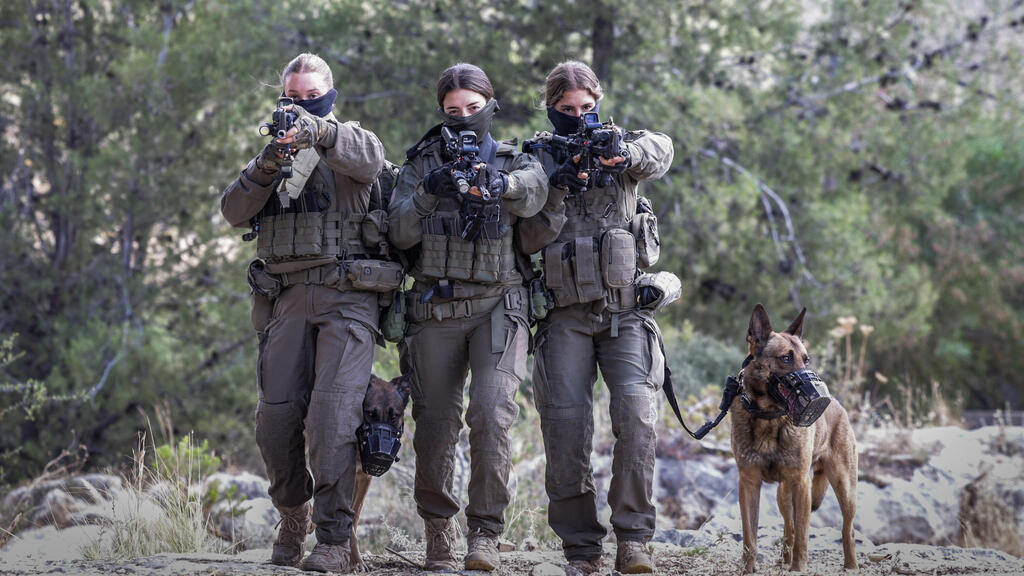
Female 'Oketz' Fighters
(Photo: Abigail Uzi)
On your first day in office, the case of Col. Dan Sharoni became public - the former commander of Training Base 6 who secretly filmed female soldiers under his command. He was convicted and in April was sentenced to more than six years in prison, demoted to private and fined.
"Correct. It was a shock to the army, an incident that does not align with IDF values. Alongside the legal proceedings against him, we had to care for the victims. We did so through the 'Mahut' Center, which is unique among world militaries. It supports victims of sexual offenses, and during my tenure we significantly expanded the treatment it provides. At the same time, together with the military police and prosecution, we broadened our ability to pursue perpetrators".
You made fighting sexual harassment a central cause, yet reports indicate a sharp rise in such incidents in the IDF.
"There has indeed been an increase in reports, but in my view this shows greater awareness and trust in the authorities, and that soldiers will not tolerate abusive behavior toward them — which is positive. Field commanders cooperate with me in rooting out these phenomena, and their partnership is key to change.
“In the past two years we published a General Staff protection doctrine defining proper conduct. I personally went through the entire sequence of command training — from cadets at Training Base 1 to senior commanders’ courses — to give them tools to foster a respectful service environment. And if misconduct is discovered, they know how to handle it".
Reservist women guarding Nukhba militants in Sde Teiman complained of sexual harassment by them. How was that handled?
"Significant steps were taken inside the detention facilities to prevent direct contact between the terrorists and staff. When incidents did arise, they were dealt with very harshly. The victims were cared for, and those who wanted emotional support received it".
Your role also included integrating transgender soldiers.
"Gender transition is a complex process for the individual and their family. For us, it is important to ensure that recruits from this community receive the support they need, without interfering with other soldiers or the service environment".
"I have never asked for concessions"
I have come to understand that under your office a center was set up to address issues of parenthood.
"Five years ago the 'Metzapim' Center was established to support career soldiers on a range of issues: fertility problems, stillbirth, children with disabilities, single parenthood and more. The IDF understands that the connection between parenting and service quality creates challenges that require solutions. We provide personal support and also develop procedures tailored for them".
How do you balance service and family?
"I have never asked for concessions. I married at 27, and at 29, when my eldest daughter was born, I was already in command roles. Between the ranks of captain and major I went to study. I completed a bachelor’s degree in organizational sociology, a master’s degree in organizational consulting at Bar-Ilan University, and another master’s in business administration. Later I also took a directors’ course.
"My four children grew up with my limited presence at home. My husband, Naor, is self-employed and an entrepreneur — the backbone of our family. Alongside his own career, the home rested on him. He never made me feel it was a burden — on the contrary. I couldn’t have committed to any role without his support. Over time I learned how to be a meaningful parent even from a distance, where to insist on being present and where not. Guilt? Sometimes. But I always remind myself that I am making choices and I am happy with what I do".
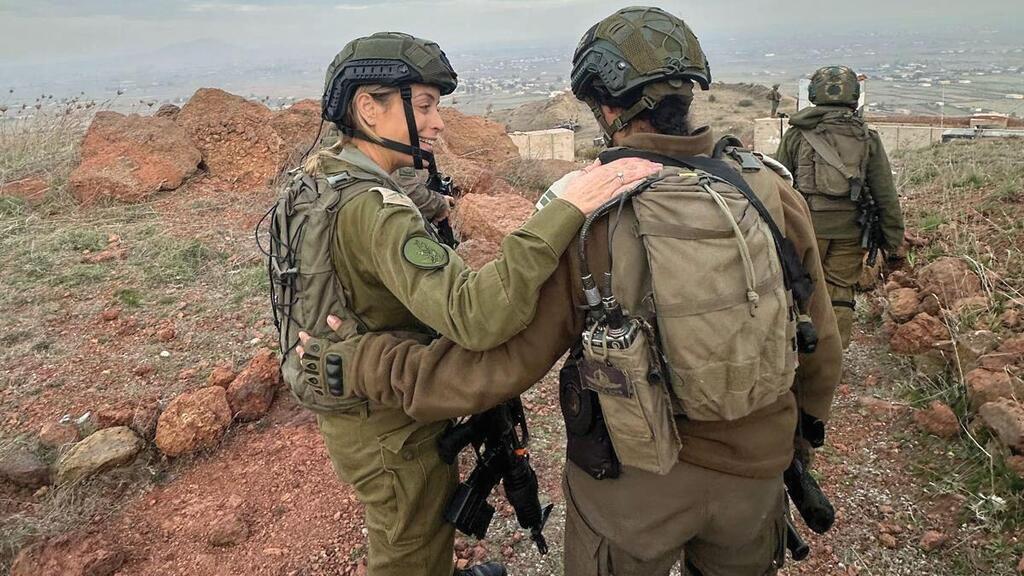
learning to be a meaningful parent even from a distance. Brig. Gen. Ella Shado-Shechtman in the field
(Photo: Private)
Have you encountered a glass ceiling?
"When I was a squad commander I didn’t dare look up and imagine becoming a basic-training base commander. It wasn’t a glass ceiling, it was a concrete ceiling. But I never felt my gender affected my professional path. I always knew decisions about me were made on a professional basis, without gender considerations".
Alongside your IDF decorations, you also have paratrooper wings.
"Yes, when I was a company commander in the officers’ course I was given the perk of attending a parachuting course. I was glad for the opportunity".
During your tenure, combat positions in elite units were opened to women.
"Today women also undergo selection for reconnaissance units. When I go to the field, I meet impressive fighters, full of motivation, and it fills me with pride".
Did you spend much time in the field?
"Absolutely. To understand the challenges and what steps are to be taken, you have to be in the field and see things firsthand. I visited all IDF branches and directorates, including Gaza, Syria and Lebanon during the war".
Women in the IDF demonstrated their full capabilities during the war. Were you surprised?
"It did not begin on October 7 and it wasn’t sudden. It is the result of processes the army has been carrying out in recent years. We, as commanders, have witnessed the contribution of women to the IDF’s operational effectiveness. Since the war began, the public has also been exposed to this power".
Did the war change your daily work?
"Immediately after October 7 I established the 'Le’ma’anam' system, under which we went to deliver the bitter news to hundreds of families of murdered civilians. It was not formally part of my role, but I understood that all must stop for this, because it was a sacred mission.
"I am not a casualty-officer, and on the night between October 8 and 9 I learned from professionals what must be done when knocking on the door of a family whose world is about to collapse. The next day I brought in 120 career officers who volunteered, we trained them in what to do, and sent them into the field".
Currently, is there a decline in women’s motivation to enlist in combat roles?
"On the contrary! There is a rise in women’s motivation to enlist in the IDF and in combat roles".