

The evidence hearing in nuclear whistleblower Mordechai Vanunu's trial has opened Wednesday at the Jerusalem Magistrates Court. Vanunu is charged of violating a restraining order by giving interviews to the foreign press and thus allegedly exposing secret information.
Prosecutors have presented the judge in the trial with a detailed list of internet reports, audio and video tapes of Vanunu's interviews to foreign news channels.
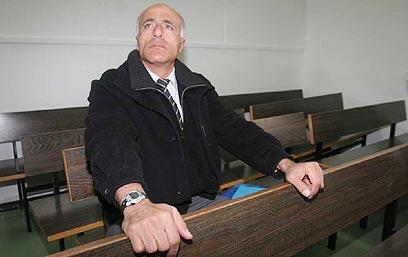
(צילום: גיל יוחנן)
Vanunu in court (Photo: Gil Yohanan)
In March 2005 Vanunu was indicted of giving 21 interviews to the foreign press, going against the "restriction package" imposed on him ever since his release from prison. He is also charged with attempting to arrive at Bethlehem for the Christmas mass in December 2004.
Vanunu's brother Meir refused to comment on the trial to Ynet, saying he only speaks to foreign reporters. "I refuse to speak to Ynet because you are correspondents of the Shin Bet. Neither me nor my brother will talk to you," he stated.
'Anyone can post on the net'
Meanwhile, Vanunu's attorney Avigdor Feldman said he was not concerned over the trial's results, adding he believes most of the evidence in the trials was inadmissible.
Feldman denied the web sites the prosecution listed in the indictment existed, and said that "they should have brought the witnesses themselves to testify, not just written or recorded evidence. Just because the sites published these interviews does not prove they actually took place. Perhaps the reporters made them up? Anyone can post anything on the net," he claimed.
Referring to television interviews, in which Vanunu is clearly seen speaking to reporters, Feldman said the prosecution will need to prove the journalists were indeed foreign nationals.
'Vanunu holds highly classified information'
State prosecutor, Attorney Dan Eldad said in response to Feldman's statements that internet records were admissible in this case.
Eldad also quoted a High Court ruling issued about two weeks ago, in which judges wrote there was a substantial security interest justifying restrictions against Vanunu "that can deter the petitioner (Vanunu) from revealing secret and sensitive information to unauthorized elements."
In the ruling, judges stated they were persuaded to believe Vanunu holds highly classified information, despite the years that have passed since he worked in the Dimona nuclear plant.