

In a joint declaration signed in the Kremlin, Russian President Dmitry Medvedev and Chinese President Hu Jintao also emphasized the need for diplomatic solutions to the disputes over the nuclear programs of Iran and North Korea.
As key participants in efforts by global powers to rein in North Korea's nuclear program and ensure Iran does not develop nuclear weapons, Russia and China said diplomatic solutions were needed.
They emphasized Iran's right to peaceful nuclear power but hinted Tehran should end its defiance by saying that resolving the dispute would "promote the development of full-scale cooperation between Iran and the international community."
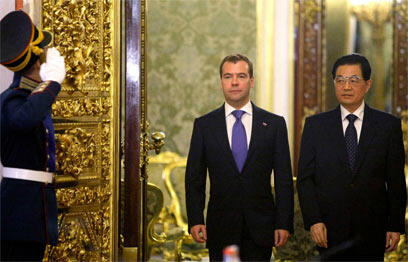
Dmitry Medvedev and Hu Jintao (Photo: Reuters)
Russia and China have reluctantly supported four successive rounds of UN sanctions against Iran, a so far unsuccessful effort to force it to halt uranium enrichment and prove its aimed are purely peaceful.
In the declaration, Russia and China said they were ready to cooperate with other partners to seek resumption of long-stalled six-party talks on North Korea's nuclear program.
They called for "broad national dialogue" to resolve tension that has led to unrest and violence across the Middle East and North Africa, but made no specific mention of Syria.
Both nations have said they oppose Western efforts to adopt a UN Security Council resolution condemning the Syrian government's crackdown on protesters.
China also said it backs Russia's aim of joining the World Trade Organization this year and expressed solidarity with Russian concerns about US missile defense plans.