

MKs voted in favor of the Regulation Bill seeking to legalize government-backed outposts in the West Bank Monday evening in the Knesset plenum during its second and third readings. The vote, which passed by a majority of 60-52, comes after hours of heated committee discussions and after months of political maneuvering.
The bill was brought for its second and third reading in the Knesset, despite Prime Minister Netanyahu’s request from Bayit Yehudi leader MK Naftali Bennett to postpone the vote until his return from his state visit to Britain where he met with Prime Minister Theresa May .
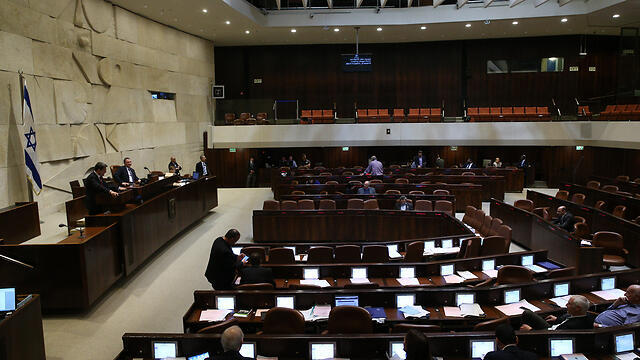
With Netanyahu still on his way back from the United Kingdom, the vote took place in his absence.
The final draft of the proposed bill seeks to regulate the status of thousands of homes in settlements located on land privately owned by Palestinians, amounting to around 2,000 homes.
According to the proposal, the state will transfer the rights of the lands’ use to the Commissioner of Government Property in the West Bank while Palestinian landowners will be compensated with a financial package amounting to a sum exceeding the land’s actual worth, or receive alternative plots in accordance with their choice.
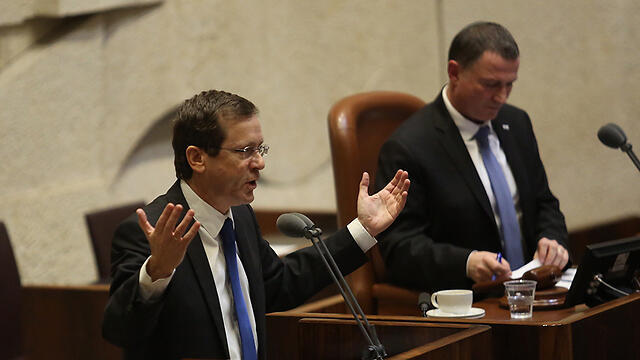
One by one, opposition members stated numerous reservations to the bill and advocates took to the podium to fire back, with the opening shots being fired by opposition leader MK Isaac Herzog.

“The Regulation Bill is de facto annexation," he contended. “Our opposition to the bill stems from our opposition to annexation. It does not stem from the problem that there is a nation of residents (in the West Bank) or that there are communities (in the West Bank), but rather with the entry of thousands of Palestinians into the Jewish State.”
“There are a few more minutes to stop this train of horror before it proceeds on its way. This train will depart from here and stop at the final station of The Hague,” he warned. “International indictments will leave its carriages against Jewish soldiers and officers and Israelis. The Prime Minister of Israel (will be responsible) for these indictments.”
Throughout Monday, members of the Likud party said that there was a good chance that the vote would be delayed, in no small part because of the timing deemed by many, not least the prime minister himself, to be less than opportune.
Notwithstanding Netanyahu’s hastened return from the UK in light of Bennett’s intransigence, Likud members stated that their leader had made clear his desire to postpone the vote until after his scheduled meeting with US President Donald Trump scheduled to take place in February 15.
Despite the diplomatic calculations at play however, Bennett proved unwilling to budge, opting instead to proceed full force with the vote.
The bill’s chief proponents were aware even as MKs vcast their vote that should it pass its second and third reading in the Knesset, a far greater, and possibly insurmountable, stumbling block lay ahead in the form of the High Court of Justice.
Indeed, Attorney General Avichai Mandelblit announced last week that he would not defend the bill in the High Court even if it did pass in the Knesset.
Almost immediately after the vote, former residents of Amona, who were evacuated last week in accordance with a High Court of Justice order, issued a statement saying that the bill was “born out of our enormous fractures and great pain caused by the sacrifice of our home and community.”
At the opposite end of the spectrum, the organization Peace Now issued its own statement responding to the bill’s passage, promising to stop “this dangerous bill in the High Court of Justice.”
First published: 22:45, 02.06.17