

Former minister Shlomo Benizri petitioned President Reuven Rivlin on Tuesday for a pardon in an effort to remove the restrictions imposed on him after committing a crime of moral turpitude.
The district court convicted Benizri in 2008 of bribery and sentenced him to 18 months in prison ,an additional eight months of probation, and ordered him to pay a NIS 80,000 fine. The court determined his crime involved moral turpitude.
Benizri appealed the verdict and the severity of the punishment given to him, while the state appealed the leniency of the punishment.
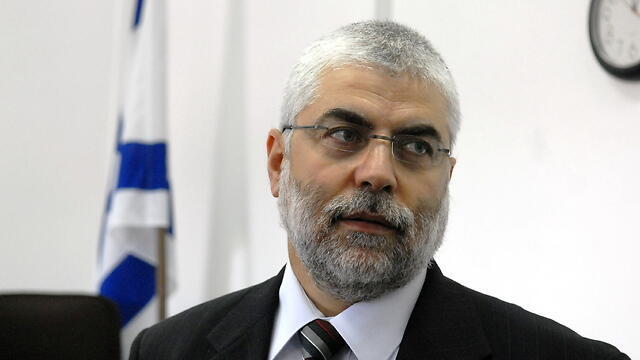
The Supreme Court decided to triple Benizri's punishment, explaining it sets a "price tag" to deter others of such a crime, and the former minister was sentenced to 48 months in prison .
Benizri serviced two and a half years in prison and was released early in 2012 after having a third of his sentenced reduced .
According to Benizri's lawyer Yoram Malka, the decision to triple the sentence was a legal precedent the likes of which no public official received since the establishment of the State of Israel.
The pardon request notes that Benizri's conviction was based on the testimony of state's witness Moshe Sela, who admitted in recent media interviews that he bluntly lied in his testimony against Benizri to save himself.
"I lied in court when I incriminated Benizri. I lied to bring Shlomo down, and I added things that never happened," he said on several occasions.
Sela also noted that the police "marked" Benizri as a target and that his interrogators instructed him on what to say and prepared him for questioning sessions and confrontations with Benizri.
Sela underwent a polygraph test and was found to be speaking the truth about lying during Benizri's trial.
The Supreme Court found Sela to be "a corrupt and corrupting man," yet Sela still received a lenient punishment.
Malka also cited "over 16 years of drawn out legal proceedings, terrible suffering, severe punishment, serious damage to a public servant who was stained by this conviction, and a prolonged sentence served without any relief or special demands by my client, who bowed his head and accepted the decree from the heavens."
Benizri asked President Rivlin to use his authority to order the shortening of a "period of disgrace," the result of his crime being determined as one of moral turpitude.
A pardon from Rivlin would strike three years off this "period of disgrace" and allow Benizri to return to public life and politics, and more importantly clear his name.
"Rabbi Benizri asks to take into account the complex legal situation he is in," Malka wrote in the pardon request. "The time that has passed cannot be returned, and my client has no energy to deal with a retrial—which would take additional years—as even if it does reveal the truth, no one will give him back the time taken from him due to this affair."
"It is a mark of disgrace to the investigative system and the State Attorney's Office when a state's witness clearly declares he lied in his testimony and the system does nothing about it," Malka added. "There's no doubt this negligent conduct does little to improve the public's trust in the system."