

An archive recently rediscovered in Israel’s National Library appears to shed light on the life and struggle of Ukraine’s Jewry before World War II, via a sundry of historical documents and century-old testimonies.
During the 18th century, Ukraine was nothing less than an epicenter of Jewish activity, as well as home to the founder of Hasidic Judaism - Rabbi Israel ben Eliezer.
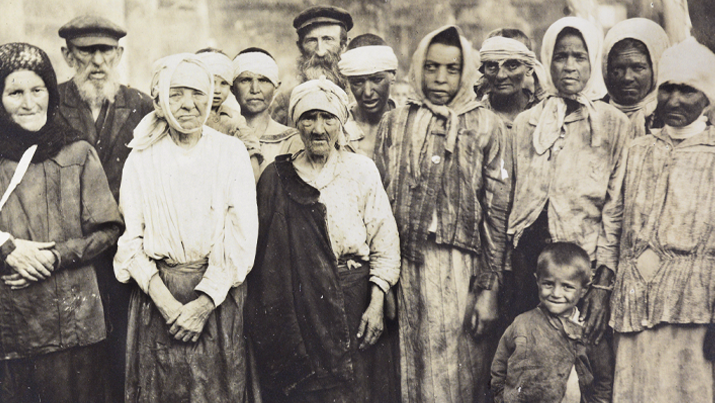
By the end of the 19th century, more Jews lived in Ukrainian territory than in Poland and Lithuania combined - including some of history’s most influential Jewish figures: Poet Hayim Nachman Bialik, as well as renowned authors Mordechai Ben-Ami and Ze’ev Jabotinsky, to name a few.
Despite Ukraine’s thriving Jewish community - which numbered over two million prior to World War II - the archive’s files, dated between 1919-1923, reveal the community had to endure violent antisemitism that ran rampant in the eastern European country at the time, sometimes under the direct endorsement of the government and its leader, Symon Petliura.
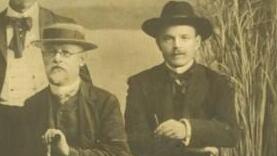
One such file provides testimony to the Jews' struggle with the country's compulsory army service, meant to secure the nascent state’s independence after the fall of the Russian Empire in 1917.
In a letter from 1919, addressed to the “Jewish Affairs Minister," a man named Aaron Feldblit, a representative of a Jewish council, recounts how “Cossacks" (partisans) were roaming the city and taking Jews to forced labor institutions, regardless of their status in society.
According to the letter, to release those that were taken required money, and "a lot of it.”
Feldblit in the letter further asks the ministry to "take all possible measures to stop the unauthorized capture of Jews,” for what he describes as “social and state work.”
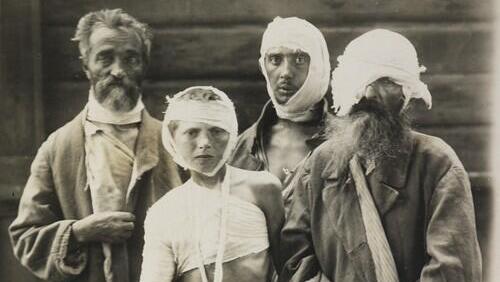
Another testimony from 1919 was provided by Jewish grocer Shlomo Dagdeman, who describes how a junior policeman stopped him on the way to work one day, in order to take him to forced labor.
Dagdeman continues to describe how the officer proceeded to “beat and threaten” him with a gun, all while tearing off his clothes and apparently sequestering the Jewish man’s watch.
At the end of the letter it turns out that Dagdeman did not write the testimony himself, simply because he was illiterate - or at least illiterate when it came to Ukrainian language.
Other documents recount the pogroms perpetrated against the country's Jews by Petliura's forces.
In one such letter a group of Jews tell how for years they owned flour mills that run on water, until a group of rioters came and expelled them from their homes sometime in 1919.
4 View gallery
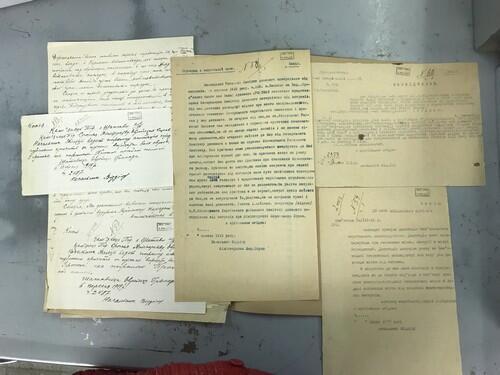
Some of the files and testimonies found in the archive
(photo: Israel National Library)
They were forced to leave their hometown, the place where their parents and grandparents grew up, and flee to other places, where they describe prevalent "poverty and misery.”
Another letter from the same year describes the experiences of a Jew named David Baron, who retells how he was beaten by rioters.
He also describes the terrible suffering they inflicted on him and his family: "They raped women and girls. They raped my wife in front of me. One of the Cossacks beat me with a sword, forcing me to bring my daughter to him."