


Prime Minister Benjamin Netanyahu is expected to meet with U.S. President Donald Trump Wednesday in Washington, and will discuss with him the negotiations with Iran. The prime minister believes any negotiations must include limitations on ballistic missiles and a halting of the support for the Iranian axis.
The urgency follows Friday’s talks between the U.S. and Iran in Muscat, Oman, and Israel’s desire to influence Washington’s red lines. In Jerusalem, officials are closely monitoring the negotiations. The understanding is that while the talks did not collapse and another round is expected early next week, the chances of reaching an agreement remain low — the gaps are vast and nearly impossible to bridge.
Footage: U.S.–Iran talks mediated by the Omani foreign minister
(Photo: Oman News Agency)


According to Israeli officials citing American sources, U.S. envoys spent eight hours in Oman in discussions with Iranian representatives, most of them conducted indirectly through Omani mediators. During that time, a direct meeting also took place, including handshakes between U.S. envoys Steve Witkoff and Jared Kushner and Iranian Foreign Minister Abbas Araghchi and his team.
At that meeting, the Americans presented their red lines: halting uranium enrichment, removing enriched uranium, limiting ballistic missiles in both quantity and range, and ending funding for proxy forces. Iranian representatives rejected all of the demands and continue to insist on maintaining their right to enrich uranium.
The talks focused largely on conditions for negotiations, and here too no real breakthrough was achieved. The United States agreed to another meeting but made clear it expects a concrete Iranian proposal rather than delays.
In an unusual step, U.S. Central Command (CENTCOM) commander Admiral Brad Cooper participated in the talks — a move Iran reportedly interpreted as a threatening signal, almost like a “gun on the table.” At the same time, the United States is preparing military measures on the ground to demonstrate its seriousness, while continuing to build up its war machine in the region in case of a prolonged confrontation.
Gallery
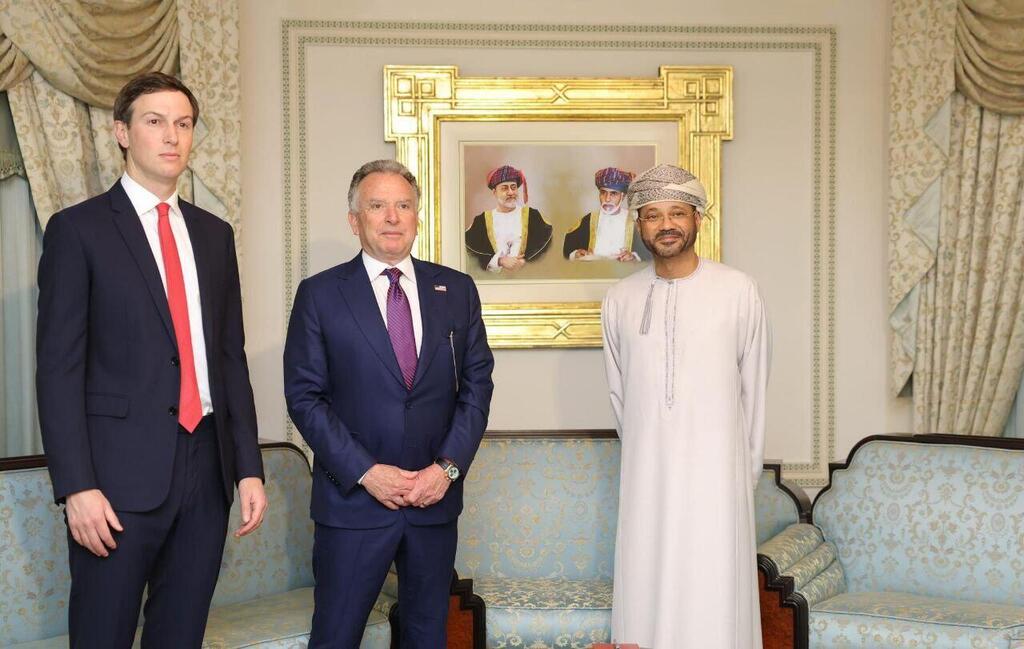
'Not naive': Witkoff and Kushner with the Omani mediator, yesterday
(Photo: Omani Foreign Ministry)
Israel believes the Americans “are not naive” and will not allow Iran to stall. At the same time, there are concerns in Jerusalem that President Trump ultimately wants a deal and may compromise on at least some demands. “Israel will not give up its principles and hopes the Americans will stand firm on the basic conditions for a good agreement,” an Israeli official said.
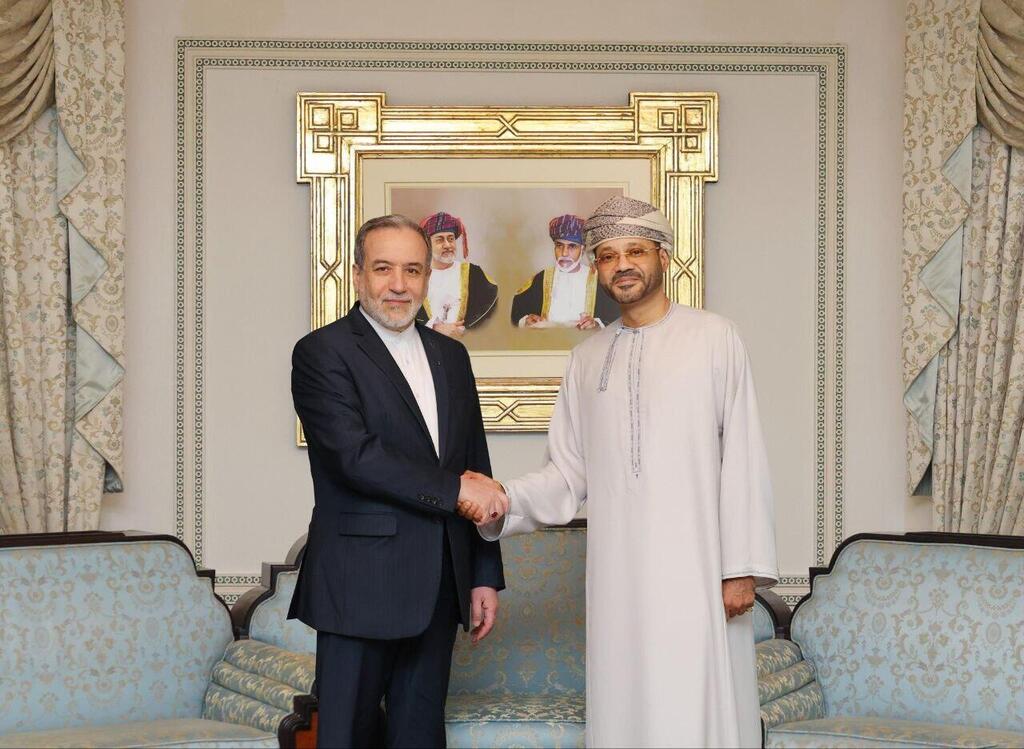
Araghchi in Muscat
(Photo: Omani Foreign Ministry)
At the same time, coordination between Israel and the United States continues to deepen in case the talks collapse; Israel is preparing for multiple scenarios, given the possibility it could be attacked by Iran; the assessment in Jerusalem is that there is a high likelihood Iran would strike Israel if it were attacked by the United States; in that context, Israel is preparing a very severe blow against Iran, as Prime Minister Benjamin Netanyahu warned — far beyond Operation Rising Lion — in what was described as “a strike the Iranians cannot imagine.”
Israeli officials also assess that the next meeting, not yet scheduled but likely to take place during the coming week, will be the most decisive; from it, it should become clear whether the United States is moving toward military action or whether there is still a chance for continued negotiations; in any case, time is short — perhaps days, at most a few weeks; the Americans cannot afford to keep the military armada they have built in the region for long, both because of cost and because it would project weakness across the region.
Trump said overnight that Iran “very much wants a deal,” but Israeli officials interpret the situation differently, believing Iran is trying to buy time while hoping Qatar, Turkey and Egypt will persuade Washington to accept a “thin” agreement. Ultimately, all understand the decision on military action will be Trump’s, based on recommendations from his envoys Witkoff and Kushner. Israeli officials who met Witkoff came away convinced the Americans “are fully engaged” and will not yield easily.
If the U.S. decides to strike, it will likely include Israel, and possibly other countries such as Britain. Coordination is also underway for an international effort to intercept potential attacks on Israel and U.S. assets. Unlike the 12-day war, multiple countries may participate in interception efforts — as occurred during Iran’s attacks in April and October 2024.
Sanctions and the signal: 'Peace through strength'
Alongside the negotiations, the United States is increasing military and economic pressure on Iran. On Friday, President Trump signed a new executive order expanding economic penalties against Iran, including the possibility of additional tariffs on imports from countries maintaining trade ties with Tehran.
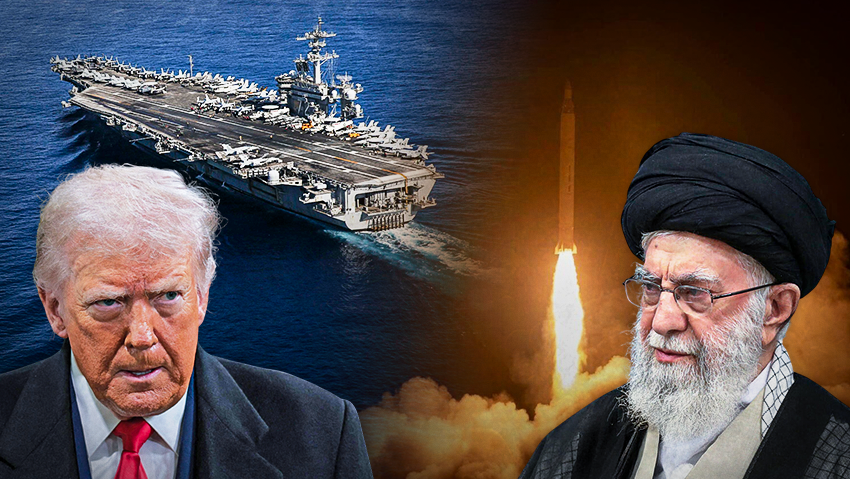
“National emergency.” Trump announces additional sanctions on Iran
(Photo: Anna Moneymaker/AFP, KHAMENEI.IR/AFP)
Under the order, the U.S. may impose tariffs of up to 25% on goods originating from countries that purchase, import, or receive — directly or indirectly — goods or services from Iran. The White House said the order builds on the “national emergency” declared in 1995 over what was described as an extraordinary threat posed by Iran to U.S. national security, foreign policy and economy. According to the president, that threat persists today and has expanded through additional executive actions covering energy, finance and human rights.
The new directive authorizes Commerce Secretary Howard Lutnick, in coordination with Secretary of State Marco Rubio and other officials, to determine which countries maintain trade ties with Iran. Based on those findings, Rubio — in consultation with the Treasury, National Security Council and U.S. Trade Representative — will recommend whether additional tariffs should be imposed and at what level.
The White House said the order is intended to strengthen the effectiveness of existing sanctions and increase economic pressure on the Islamic Republic.
Against this backdrop, the USS Abraham Lincoln carrier strike group sailed together in the Arabian Sea yesterday, accompanied by two military supply ships and two U.S. Coast Guard vessels, with aircraft from Carrier Air Wing 9 flying overhead. “Peace through strength!” CENTCOM wrote on X. Today, Witkoff and Kushner visited the carrier alongside CENTCOM commander Brad Cooper. The signal to Iran was clear: accept an agreement on our terms — or face the consequences.
First published: 20:09, 02.07.26