

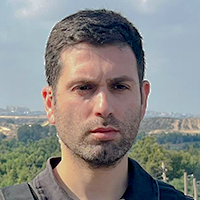
Lt. Col. Roi, 34, commander of the Paratroopers’ Battalion 101, grew up in a religious community in the Lower Galilee, lived for several years in Tel Aviv, and today — during his few breaks — resides in the career-officers’ housing at Hatzerim Air Base. The IDF grants this benefit sparingly to battalion and brigade commanders from the ground forces, as part of efforts to persuade them to remain in service amid the manpower crisis that struck the army even before the war and has continued since.
We are now with his battalion during an open-terrain drill in the Lachish region, but for a moment he brings up his wife and their infant son on a video call so I can hear what life feels like among the pilots and their families. “They treat us as if we come first,” she says, and Roi adds: “There is respect for us in the neighborhood, and also friendship.” Battalion 101 fighters training in the Lachish region — watch:
Yoav Zitun with Battalion 101 commander during a Paratroopers exercise
(**Photos: Yoav Zitun, IDF Spokesperson’s Unit; Editing: Coral Kot Markovitch**)


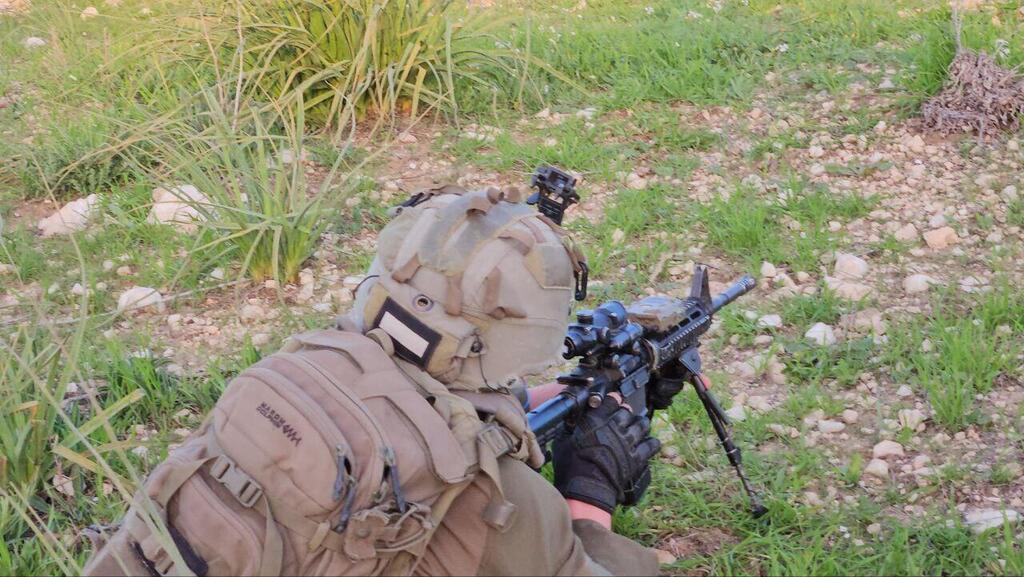
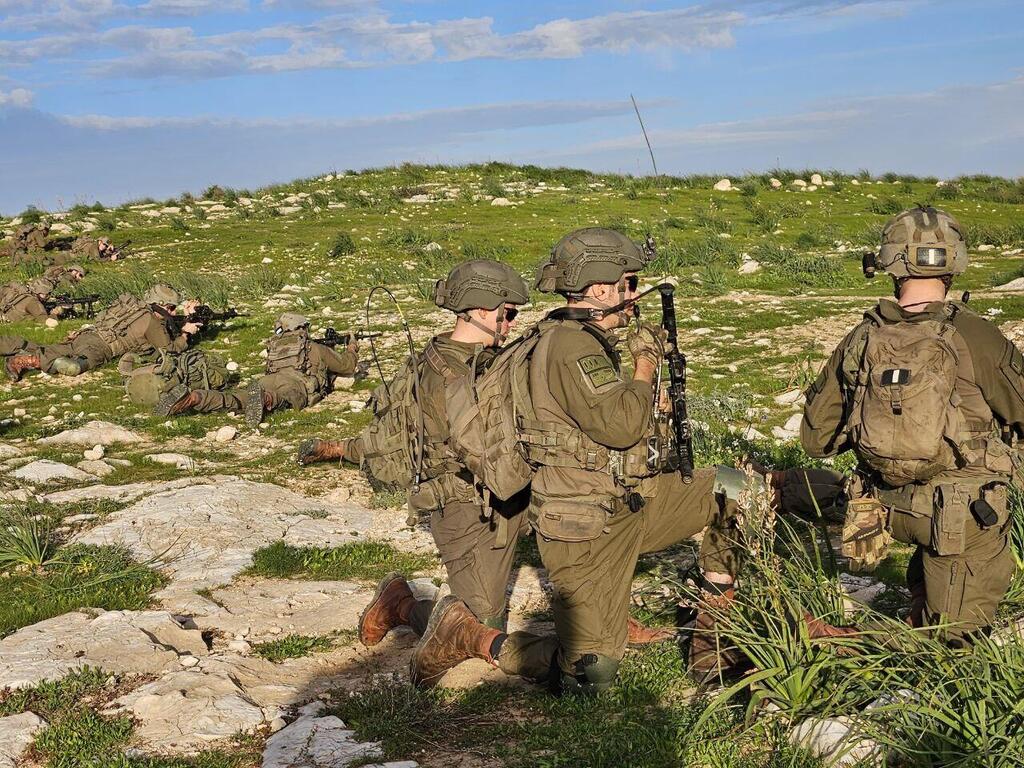
Paratroopers Brigade’s Battalion 101 during training
(Photo:Yoav Zitun)
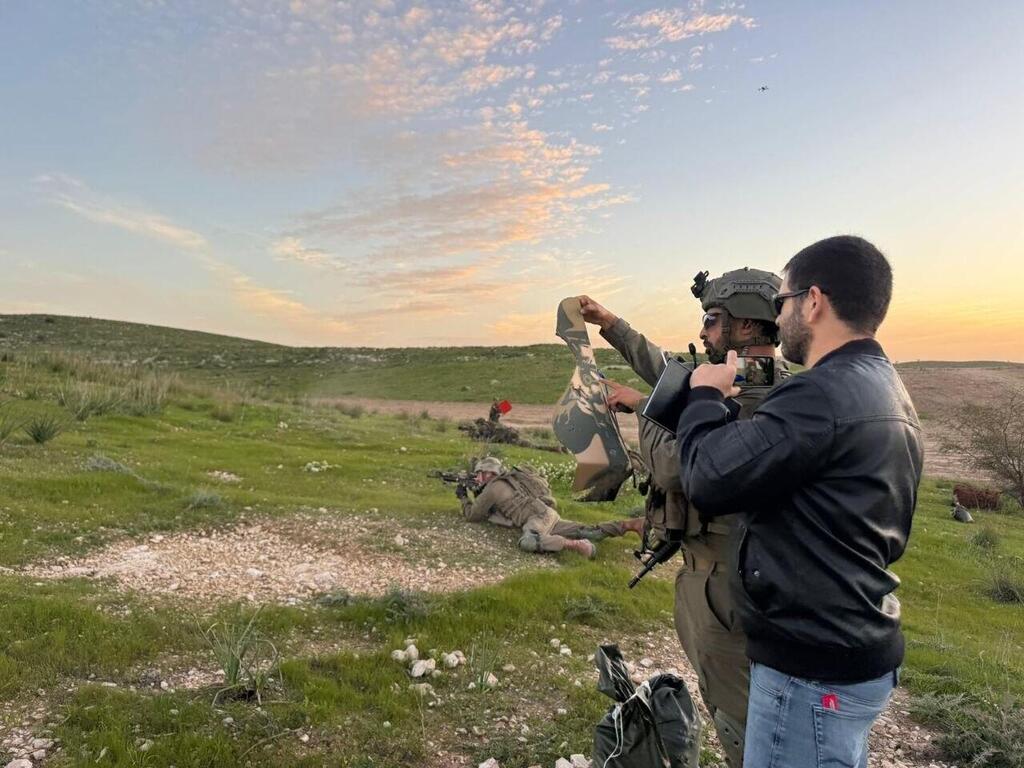
Paratroopers Brigade’s Battalion 101 during training
(Photo: Yoav Zitun)
For now, however, he is in the field. Not far from us, his soldiers carry a stretcher with a “wounded” casualty. He watches them working together and reflects aloud on the polarized reality of civilian life in Israel. “The winds of division do not enter here,” he says. “The IDF is still the melting pot of Israeli society. I have fighters from every background and sexual identity — from Kfar Shmaryahu and from Judea and Samaria, from the Negev and from Tel Aviv.”
Less than a month ago, for the first time since Oct. 7, his soldiers put on their Class-A uniforms — forgotten in closets and covered in dust during the longest war the IDF has ever known. So much time had passed that the sergeant major had to check whose size had changed over more than two years in which they wore only Class-B, tactical uniforms.
Discipline has become a central issue in the post-war IDF. The army suffered noticeable erosion in both operational and personal discipline, especially during the second year of the Iron Swords war, during which two committees were formed to address the matter. In recent days Lt. Col. Roi made sure all his soldiers were properly groomed, and that the short beard — now permitted for every soldier — was trimmed and orderly.
The IDF does not publish official figures illustrating the decline in discipline, but it is undeniable, reflected in safety incidents, friendly-fire cases, and shooting incidents involving Palestinians in Judea and Samaria. Roi does not wait: he has returned to punishing his soldiers — more strictly than before. During the drill he displayed marked toughness toward them, and they, out of his hearing, insisted it was not because of my presence as a journalist. “He’s tough on us in the good sense of the word,” one of them told me.
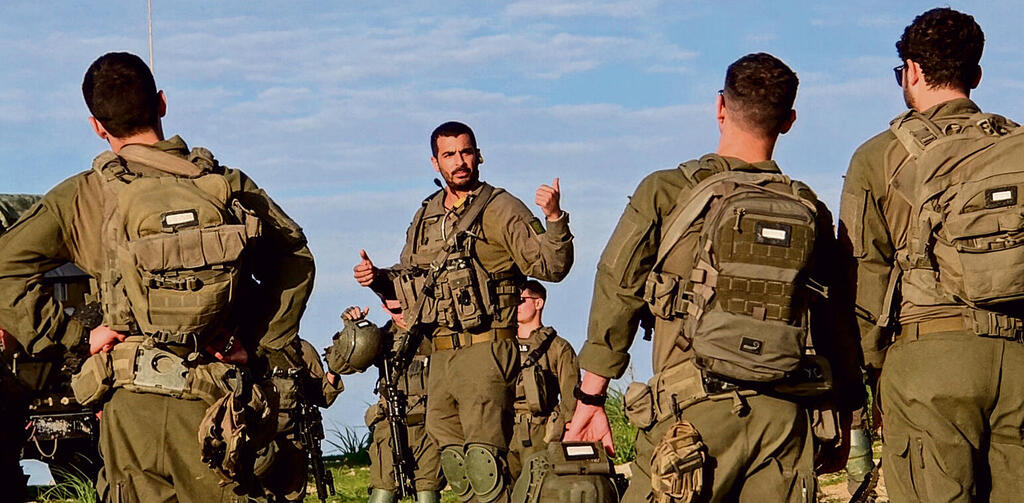
Lt. Col. Roi during training. “The battalion commander is tough on us in the good sense of the word,” one of the soldiers says
(Yoav Zitun)
About two months ago the disciplinary erosion erupted in Battalion 101 as well, when junior commanders and fighters vandalized Palestinian property in a village near Ramallah. It ended with dismissals and prison sentences for some of those involved. In the past, soldiers carried in their pockets a small blue card with the IDF’s values, but times have changed and that custom faded. (“It doesn’t matter whether the card is in the pocket,” the battalion commander’s radio operator told me. “What matters is whether the soldier remembers and lives those values.”)
Lt. Col. Roi, bottom line, this is a serious act.
“These are fighters who carried out thousands of flawless actions during the war, in every arena. You have to look at the broader picture. I visited them this week when they were released from prison. I sat with them over coffee and hugged them. If you saw them, you would understand — they are the best guys there are.”
So how does something like this happen?
“They stumbled.”
Déjà vu of the Intifada
Chief of Staff Zamir is eager to return the army to training — to implement lessons from Iron Swords, teach new combat techniques, and prepare for the next war. But there is almost no time. Moreover, the political leadership keeps the army removed from long-term decisions — certainly regarding Gaza — or simply does not make them. The result is difficulty planning. Battalion 101, for example, completed several months of operational duty in the Ramallah sector and received only five weeks of refreshment. They are about to end, but Roi still does not know whether he will be redeployed to Judea and Samaria or assigned to missions along the “yellow line” in Gaza. On one hand, Israel is supposed to withdraw from it under Phase B; on the other, millions of shekels are currently being invested there in fortifications and new outposts. Who knows.
Training in the IDF nearly stopped after the massacre, shrinking by roughly 90% compared to previous years. Before Oct. 7 the army — at least the regular forces — maintained a full routine of battalion, brigade and often division-level live-fire exercises. The war halted this. One of the central reasons Chief of Staff Zamir pushed to end the war, alongside the urgent need to return the hostages, was the need to stabilize the IDF and restore its readiness.
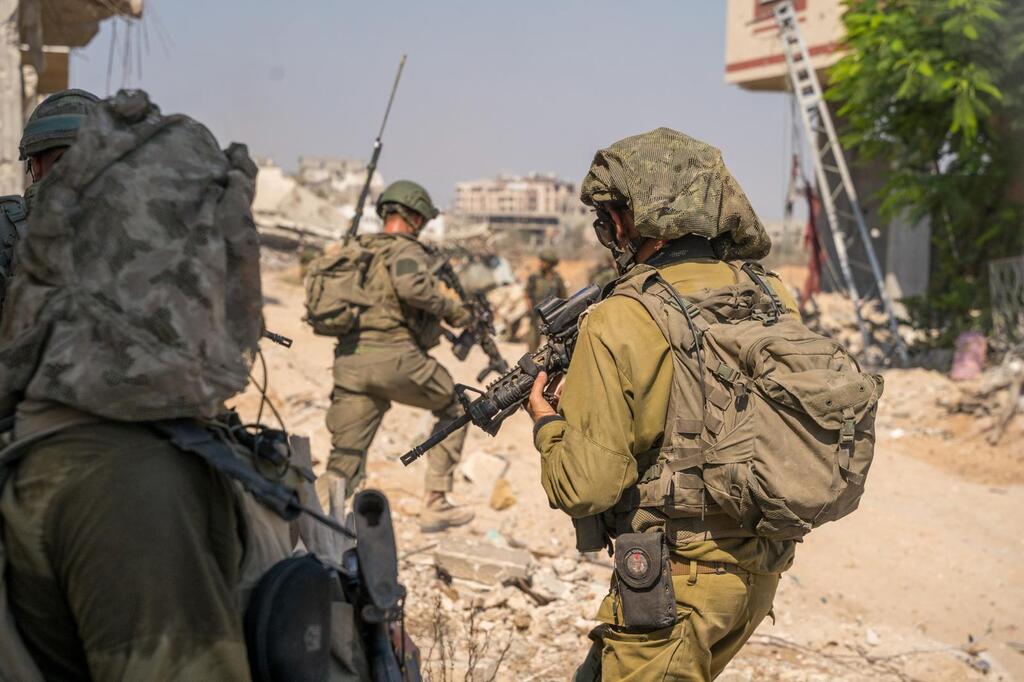
“Strange to train after two years of fighting.” Fighters in Rafah, archive
(Photo: IDF Spokesperson’s Unit)
Training courses were also damaged and shortened at the height of the war. Instead of preparing the next generation of commanders, the training brigades and the officers’ school were sent to maneuver. As the war dragged on, even companies of combat recruits were deployed to Gaza (a move later halted after criticism). Only before operational rotations or entry into ground maneuvers did commanders manage to take their soldiers for a few days of training or marksmanship.
Senior commanders say the past two years reminded them of the Second Intifada, when brigades were absorbed into four intense years of operations, peaking with 83 battalions deployed in Judea and Samaria. A year later, the surprised IDF found itself fighting Hezbollah with low readiness and experience relevant to the West Bank, not southern Lebanon.
“It felt strange to return to drills after more than two years of fighting,” said an officer from the Golani reconnaissance unit, currently conducting similar training in the Galilee. “Most of our soldiers did not fight in their primary arena — Lebanon — and mainly know Gaza. Every minute here sharpened why we must return to training.”
In the army, they avoid announcing large ground exercises planned for the coming year — almost out of superstition — but some are already marked on the 2026 calendar. “It’s true soldiers gained operational experience even generals don’t have, and their sense of capability grew immensely, but there are many alignments we must do — and only training can achieve that: pause, brief, simulate,” a senior commander said. He cited the “ruins warfare” doctrine developed during the war, after Hamas and Hezbollah turned destroyed buildings into tactical advantages. Nahal Brigade commander during the war, Yair Zuckerman, who lost about 20 soldiers this way in Beit Hanoun, formulated a doctrine now being taught in training.
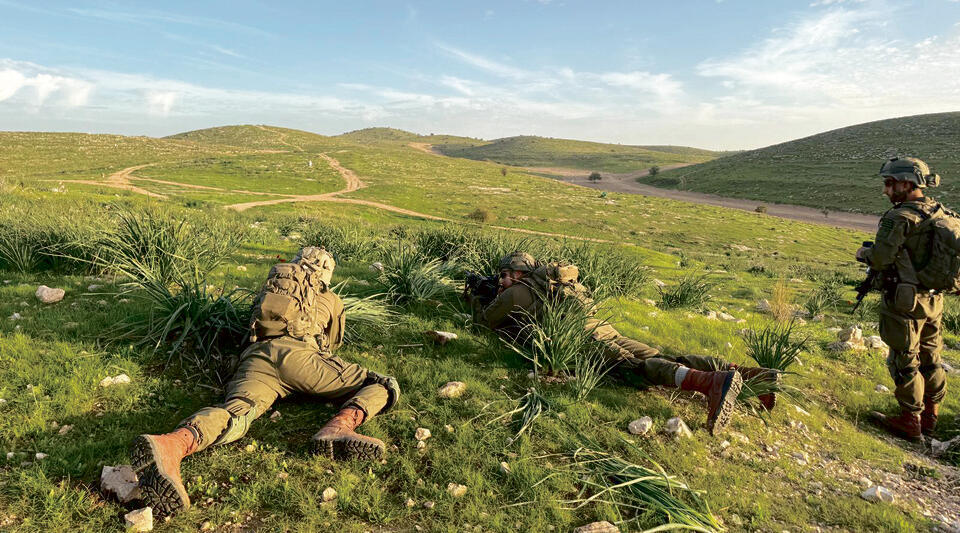
Battalion 101 soldiers during a drill. “We chose to focus on attack, not on boutique tactics with special technologies”
(Yoav Zitun)
Lessons from the war are being slowly absorbed. Some seem anecdotal but matter — literally. For example, the army realized fighters need not carry such heavy loads; some equipment can be moved by mobility units or cargo drones. Another issue: fighting with or without earplugs — they protect hearing but hinder communication and in some cases contributed to fatalities. No final decision yet; units act based on their own lessons. Another question concerns fighting with heavy ceramic armor versus lighter fragmentation-focused armor; medical corps tend to favor lighter vests, since shrapnel wounds — especially from explosives — were more common than bullet wounds.
“Why didn’t you stab?”
Back at Battalion 101’s drill. In five weeks Lt. Col. Roi must reorganize the battalion — wounded, replacement commanders; conduct psychological processing sessions; grant leave — and train, improve marksmanship and core skills. In summer, the brigade hopes to conduct another battalion-level parachute exercise. “It’s a must-have capability for projecting force into enemy rear and deep fighting,” he says. “We didn’t use it in the war, but every modern army needs it.”
How do you decide what to focus on in such a short training window?
“For most of his service, an average fighter is in defensive missions. Even in the war. When I had to choose between a 12-hour defensive drill and five attack drills, I chose attack. Not boutique tactics with special tech and drones, but basics — open-terrain combat, what we faced on Oct. 7 and in Gaza, with the bounds I learned in basic training and the ‘Zambiya’ procedure — silencing the battlefield, meaning a brief pause in fire. It’s the coldest, most refreshing shower a fighter can get after two years like these.”

The burned operations room of the surveillance soldiers at the Nahal Oz outpost. Lt. Col. Roi was deployed at the request of the late Lt. Col. Tomer Greenberg (Photo: Tal Shahar)
(Photo: Tal Shahar)
He repeatedly stops his soldiers — shouting at the grenade-launcher operator to fire faster after missing, at a squad commander who did not charge quickly enough, at a marksman who failed to spot the balloon simulating a terrorist 20 meters away. Even officers are not spared a tap on the helmet or a physical shake. “Why aren’t you crawling? You can advance without exposure,” he shouts over Negev machine-gun bursts. “Why didn’t you stab?!” he calls to a fighter gasping while running uphill.
“Stab” — meaning a kill-confirmation shot? As if with a bayonet?
(Lt. Col. Roi hesitates — only the second time in our meeting — then answers quietly.) “To fire another bullet or two at close range. The terrorists in this drill, like in Gaza, don’t stand and wait to be hit.”
For nearly three decades, kill-confirmation was broadly prohibited because the IDF focused on routine security. If a terrorist was neutralized and no longer a threat, soldiers had to stop firing and even provide medical aid. The concept became an offense. Since Oct. 7, it has returned to a gray zone — not an order, but a necessity born of battlefield reality.
“On the day of the massacre I reached a bathroom structure at the Nahal Oz post,” Roi recalls. “The corridor was narrow and we fired heavily into it. I saw a terrorist’s legs from a stall — not moving. I approached, sure he was dead — suddenly he fired a burst that grazed my vest. Only then we killed him. In Khan Younis I made a mistake entering a room without verifying the terrorist was dead — after tanks, grenades, a D9 and a drone showed no movement. In the end he fired at close range and wounded the fighter next to me.”
The second time Roi hesitated in our conversation was near the rear base behind the Paratroopers training base — once nicknamed the “training-base resort.” I asked if he recommended any of his soldiers for commendations for their actions on Oct. 7 or during the war. Roi himself began the war as a training commander and charged terrorists at Sha’ar HaNegev junction early that morning, later fighting to retake Nahal Oz, encountering an ambush and fighting alongside reserve generals Noam Tibon and Israel Ziv.
“I didn’t submit recommendations and no one asked me, and I’m glad I’m not the one deciding. The failure is etched in us,” he says, learning from me that the IDF recently launched a commendations committee. “Without disrespect — after Operation Protective Edge (Tzuk Eitan), some received medals for evacuating wounded. Every era has its own scale.”