

The IDF said Friday evening that special forces carried out Operation Eagle in southern Lebanon just minutes before the ceasefire took effect, landing on the Cristofani Ridge, a strategic high ground near the Syrian Hermon area.
According to the military, “special operators began Operation Eagle last night, before the ceasefire took effect, during which they landed in the heart of the Cristofani Ridge in southern Lebanon and established their activity in the area.”
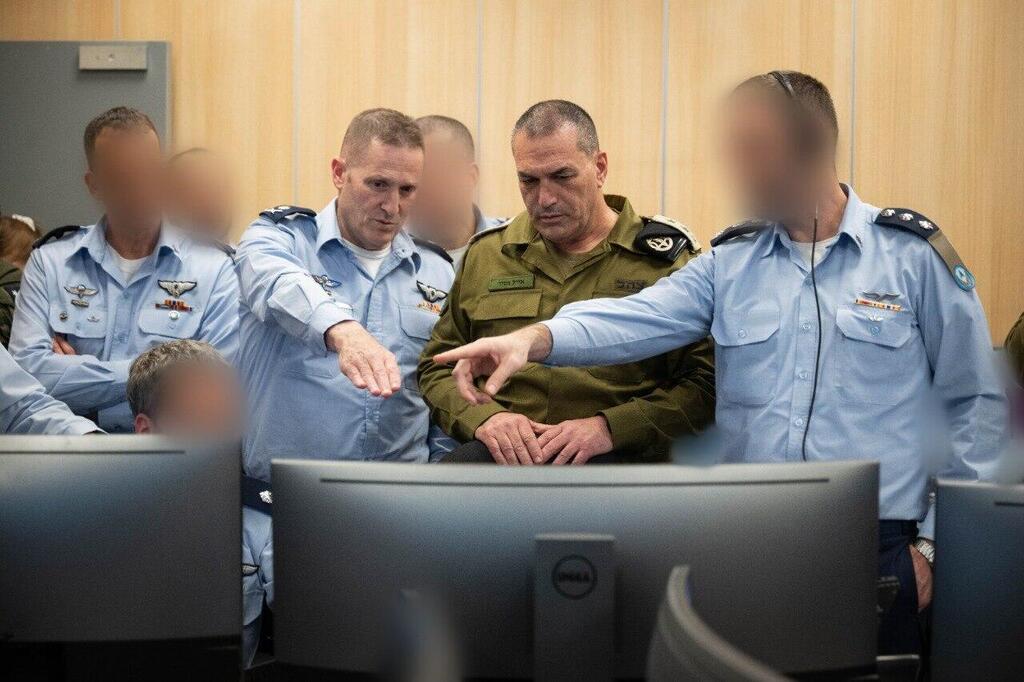
IDF Chief of Staff Eyal Zamie and Air Force Commader Tomer Bar
(Photo: IDF)
The military said the operation was approved by the chief of staff and commanded by the head of the Israeli Air Force and the chief of Northern Command.
“The IDF is prepared at immediate readiness and will continue to remove threats throughout the area between the border and the line defined framework of the ceasefire understandings,” the statement said.
The Cristofani Ridge lies in a strategic area about 12 kilometers, or roughly 7.5 miles, north of the Israeli side of Mount Hermon and below the Syrian Hermon zone, which the IDF says is currently under its control. The ridge overlooks the Beirut-Damascus highway and the Bekaa Valley in eastern Lebanon, where Hezbollah has long maintained a significant presence.
The area has a long military history for Israel. On June 9, 1982, during the First Lebanon War, Israeli forces including the elite Sayeret Matkal unit fought Syrian troops there. According to the account cited in the report, one Israeli soldier was killed and about 40 Syrians were killed, with Israeli forces prevailing in the battle.
ynet military analyst Ron Ben-Yishai said the move was a tactical step intended to give Israel control over longer-range areas, including the Bekaa Valley. He said the area once sat along a weapons-smuggling route used by Yasser Arafat’s Palestine Liberation Organization, with arms moving from Syria to the Hermon area and from there toward the Beirut-Damascus corridor and the southern Bekaa region, including Hasbaya, Kfoua, Shebaa and Shouba.
He also noted that in 1987, Israeli forces carried out another operation in the same sector, known as Operation Cristofani, in which a Givati infantry force was inserted and three soldiers were killed in a Hezbollah ambush.
Ben-Yishai said the ridge dominates two vital sectors. To the north, toward the Bekaa Valley, control of the area can help detect launches and prevent terrorists from moving into southern Lebanon and toward the Hermon region. He said that was part of the reason fighting took place there during the 1982 war, including what is known in Israel as the “battle for the wooded area,” fought slightly farther north at the edge of the ridge.
That battle, he said, was against a Syrian commando force trying to stop Israeli troops from advancing into eastern Lebanon and blocking the Damascus-Beirut highway. He described it as a successful battle, though Israeli forces stopped there and did not continue farther north and east.
The area is also highly important to Hezbollah in southern Lebanon, he said. Whoever controls the Cristofani Ridge can observe and direct fire at access routes between the Bekaa Valley and the Nabatieh region in southern Lebanon, as well as toward the Galilee panhandle in northern Israel.
From there, he said, it is possible to disrupt both missile launches and the movement of terrorists trying to head south, effectively isolating their areas of operation. In the Bekaa Valley, he added, Hezbollah’s remaining assets are believed to consist mainly of manpower reserves and heavy missiles.