


Against the backdrop of heightened alert and a U.S. military buildup in the Middle East ahead of a possible strike on Iran, Prime Minister Benjamin Netanyahu delivered brief remarks Monday during a so-called “40 signatures” debate in the Knesset plenum. He said Israel is facing “complex and challenging days,” but expressed confidence in the public.
“We have pushed back an existential threat from the Iranian tyrant,” Netanyahu said. “No one knows what tomorrow will bring. We are keeping our eyes open.”
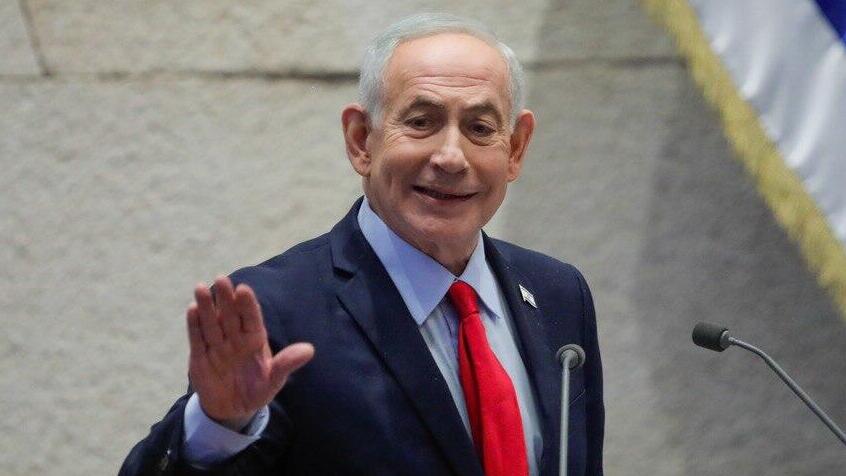
“I recently returned from my seventh meeting with the U.S. president since his election,” Netanyahu said in what was a shorter-than-usual speech. “Over the past two and a half years we have removed every threat to Israel’s citizens. I say today that the security of millions of Israelis has never been stronger, the alliance with the United States has never been tighter. The relationship between me and President Trump has never been like this, nor has the cooperation between our security forces. The whole world knows the strength of Israel.”
Addressing tensions with Iran, Netanyahu said: “These are very challenging and complex days. The public understands that. No one knows what tomorrow will bring. We are vigilant and prepared for any scenario. In these days, the nation must stand shoulder to shoulder. I trust in our strength, in our commanders and in our male and female soldiers, and in the citizens of Israel.”
Opposition leader Yair Lapid followed Netanyahu at the podium, sharply criticizing the prime minister and saying history will define him by the events of October 7.
“I understand the attempt to write a different history,” Lapid said. “You know the truth, and that is what frightens you. History will remember you only for October 7.”
Lapid said part of the shock and pain stems from looking back and failing to understand how the warning signs were missed, including what he described as the flow of Qatari funds to Hamas and a “mistaken and destructive policy” of strengthening the group.
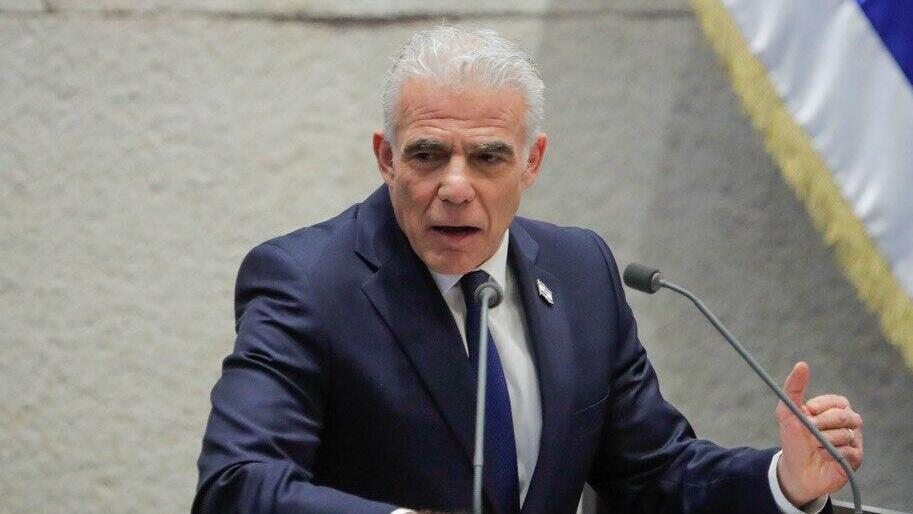
Yair Lapid
(Photo: Shalev Shalom)
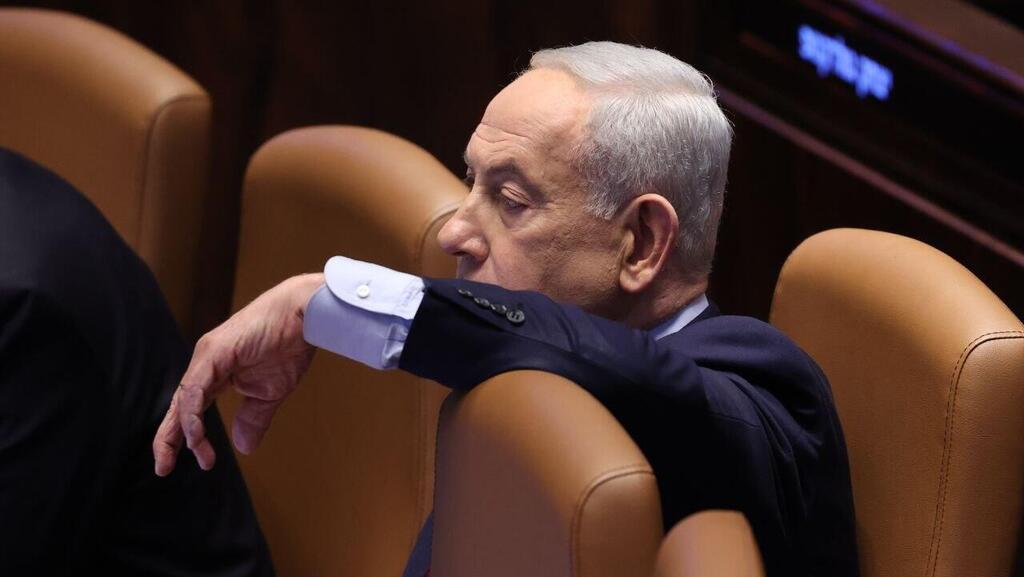
Netanyahu
(Photo: Alex Kolomoisky)
He continued his attack on Netanyahu and Likud, saying they are “not right-wing,” and addressed the possibility of a campaign against Iran.
“If that campaign comes, and it should, we will all put everything aside,” Lapid said. “All disagreements will be frozen. As in the past, I will mobilize. I will go anywhere necessary — to CNN, to the British Parliament — and tell everyone: You know I am the opposition leader, Netanyahu and I are rivals, but on this he is right. Iran must be struck with full force.”
Lapid also called for targeting Iran’s oil fields and energy facilities. “Here at home, I tell you again: Israel must not hesitate, even at the price of a cautious confrontation with the Americans. Strike the oil fields and energy plants. That is what will bring down the ayatollahs,” he said.
The opposition leader also addressed the proposed draft exemption law, telling Netanyahu he cannot change the past but can shape the future. “If you want to be a historic leader, it will not happen in your comfort zone,” Lapid said, urging him to end what he described as unequal military service obligations.
The Knesset debate was titled “Loss of security control inside and outside Israel,” amid surging crime in the Arab community, where 53 people have been killed since the start of the year.
During preliminary speeches, Ra’am lawmaker Waleed Taha shouted at Netanyahu and called on him to dismiss National Security Minister Itamar Ben-Gvir. “In any normal country, people take responsibility for failures,” Taha said. “You appointed someone convicted of supporting a terrorist organization. Either fire him or take responsibility for this failure.”
“It cannot be that people are murdered and no one takes responsibility,” Taha added. “In Israel, no one pays a price for anything.” Addressing Netanyahu directly, he urged him to act against crime and extortion and to replace “your failed minister.”
Taha’s remarks come amid a petition before the High Court of Justice seeking Ben-Gvir’s dismissal. In response, the coalition has renewed efforts to advance legislation known as “Deri Law 2,” which would limit the court’s ability to intervene in ministerial appointments and dismissals. Earlier Monday, the Knesset House Committee approved the establishment of a special panel to promote the bill.
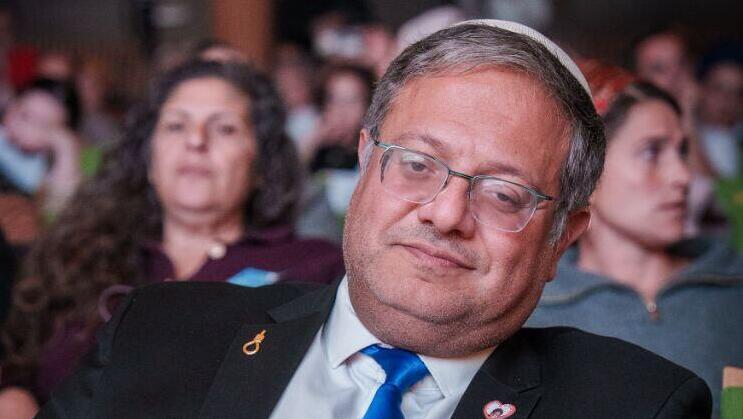
Itamar Ben-Gvir
(Photo: Shalev Shalom)
Yisrael Beytenu leader Avigdor Lieberman also criticized Netanyahu during the debate. “Prime minister of October 7 — it was a massacre,” Lieberman said, referring to a reported request by the Prime Minister’s Office to remove the word “massacre” from a law commemorating the attack.
“On your watch, babies, Holocaust survivors, women and men were murdered, raped, burned and kidnapped,” Lieberman said. “The Nukhba terrorists beheaded people, abused bodies, burned people alive. October 7 was the largest and most horrific massacre in Jewish history since the Holocaust, and the responsibility is first and foremost yours. You are chiefly responsible.”
Netanyahu convened the security Cabinet on Sunday for preparations across multiple fronts ahead of a possible U.S. strike on Iran and its implications for Israel. The working assumption is that Iran would seek to draw Israel into the confrontation and pressure its proxy groups to attack Israel. In that scenario, Israeli officials see what they describe as a rare opportunity to act against all threats — Iran, Hezbollah and the Houthis.
Netanyahu also held smaller consultations Sunday focused not only on Iran but also on Hezbollah and the Houthis.
Israeli officials were surprised Sunday by the Trump administration’s decision to hold another round of indirect talks with Iran — the third — on Thursday in Geneva. In Jerusalem, officials view the meeting as a last genuine opportunity after two previous rounds failed to produce results. Israel understands that Trump accepted a proposal by his envoy, Steve Witkoff, to give diplomacy another chance, even though Witkoff himself has acknowledged that Iran is not prepared to “surrender,” despite the significant U.S. military buildup in the region.