

How could a death row inmate survive two doses of a lethal drug and regain consciousness? The extraordinary case of Christa Pike has thrust the death penalty in the United States back into headlines around the world in recent days, reigniting debate over how executions are carried out.
Pike was sentenced to death for murdering a female friend at age 18 because she suspected the victim was trying to "steal" her boyfriend. On September 30, more than 30 years after the murder, the state of Tennessee attempted to execute her.
Gallery
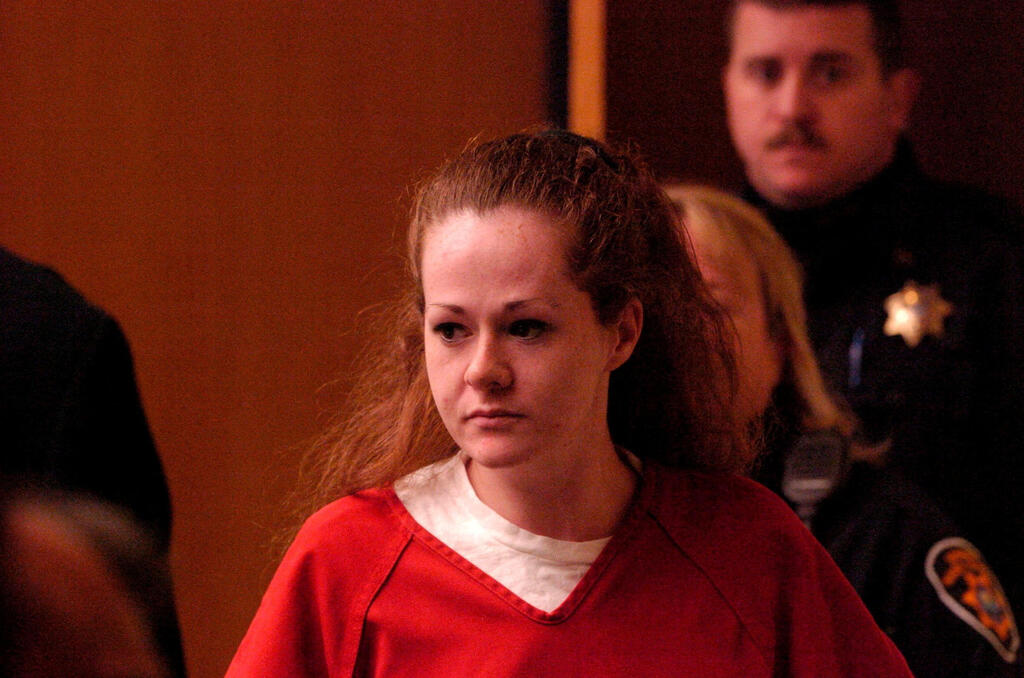
Christa Pike, the Tennessee murderer who survived an execution attempt
(Photo: J. Miles Cary/ Knoxville News Sentinel/USA TODAY NETWORK via REUTERS)
Pike received two doses of a drug that, in high concentrations, is supposed to stop breathing and heart function. But then something highly unusual happened: She did not die. Pike was taken to a hospital, recovered quickly and in recent days has begun walking and even speaking.
Death row inmates surviving execution attempts is uncommon, but not unprecedented. In almost every previous case, it happened because the procedure was halted midway, either because an electric chair malfunctioned or because the execution team was unable to find a suitable vein and insert an IV.
Pike's case, however, is particularly extraordinary. As far as is known, she is the first person in U.S. history to survive an execution attempt after the lethal drug had already been injected into her body.
Pike's was not even the only botched execution attempt in Tennessee this year. In May, the state attempted to execute Tony Carruthers, who had been sentenced to death for kidnapping and murder, at the same prison. The execution team spent about an hour and a half trying to insert an IV but failed, and the procedure was called off.
Pike's case, however, proved to be the final straw for Tennessee. In its wake, the governor suspended all executions through the end of the year, and the state's corrections commissioner resigned.
The injection designed to be 'humane' has the highest failure rate
But what happened in Tennessee was not merely an isolated failure. A study by Professor Austin Sarat, which examined nearly 8,800 executions in the United States between 1890 and 2010, found that the very method intended to make executions more efficient and less gruesome has an exceptionally high rate of complications.
According to the study, 7.2% of the 1,054 executions carried out by lethal injection since 1982 were botched. That is a higher failure rate than any other execution method and more than twice the overall average.
There are three main reasons for this. The first is physiological: The injection works only if the drug enters the bloodstream directly. But for some inmates, including older people and those with a history of drug use, finding a suitable vein can be extremely difficult. When the IV is not properly inserted, the drug may fail to reach its intended destination.
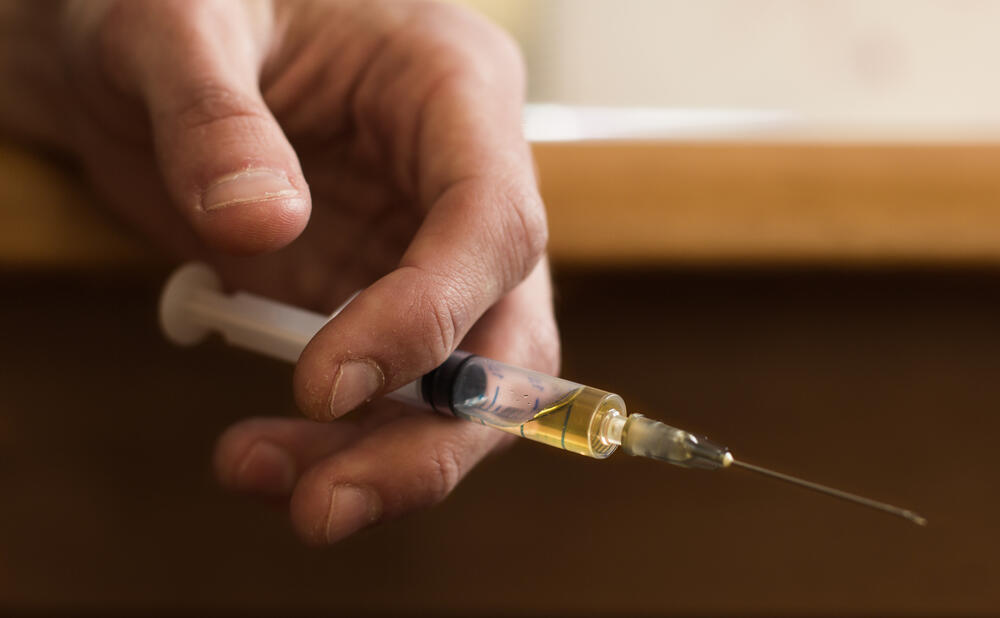
The procedure looks entirely medical, with syringes, IV lines and monitors, but those carrying it out do not necessarily have the necessary medical training or experience
(Photo: shutterstock)
The second problem is a lack of properly trained personnel. According to research by Professor Corinna Lain of the University of Richmond, very few doctors across the United States participate in executions. Many physicians refuse to take part in the procedure on ethical grounds.
The result is a paradox: The procedure looks entirely medical, with syringes, IV lines and monitors, but those carrying it out do not necessarily have the necessary medical training or experience.
The third problem is the drugs themselves. Many pharmaceutical companies do not want their products used in executions and therefore refuse to sell them to states for that purpose. As a result, states are forced to obtain the drugs from small pharmacies and suppliers whose identities are sometimes kept secret. Under these circumstances, it is difficult to know who manufactured the drugs, how they were stored and how reliable they are.
This is where the economic absurdity comes in. Because almost no one is willing to supply the drugs, states pay exorbitant prices for them. Tennessee, for example, paid an average of approximately $95,000 for the drugs needed for each execution between 2017 and 2020, according to the Death Penalty Information Center.
Even so, the drugs account for only a small portion of the overall cost. The common assumption is that the death penalty is cheaper than life imprisonment, but in many cases the opposite is true. A University of Denver study found that cases in which prosecutors seek the death penalty take more than five years on average to reach sentencing, compared with less than a year and a half for cases involving life imprisonment without parole.
The real costs come afterward, during the appeals process, which lasts nearly 20 years on average. According to the Death Penalty Information Center, in some states a death penalty case costs $1 million to $3 million more than a case that ends in a life sentence.
Can Pike be executed a second time?
Despite the failed attempt, Pike's story is not over. Her death sentence remains in effect, and at least in theory, Tennessee could attempt to carry it out again.
But her case differs from previous botched executions. In Pike's case, the lethal drug had already been injected into her body. Her case could therefore present the courts with an unusual legal question: Would a second attempt to execute someone violate the Eighth Amendment to the U.S. Constitution, which prohibits "cruel and unusual punishments"?
Another possibility is that Tennessee's governor could decide to commute her sentence to life imprisonment.
As of October 2026, the death penalty remains legal in 27 US states. Another 23 states have abolished it, while executions are effectively suspended by governors' orders in several states, including California.
Tennessee tried to close the case of Christa Gail Pike, but instead reopened the broader debate over the death penalty. Her case raises a question that is difficult to ignore: If the state cannot reliably carry out an execution, how much can it be trusted to decide who should be put to death?