

Capt. Noam Ravid, Maj. Yaniv Kula, Staff Sgt. Uri Bar-Or and Col. Ehsan Daxa were photographed during the height of the fighting in the Gaza Strip, at times only moments before they were killed.
In a special project marking Memorial Day, their family members told ynet and Yedioth Ahronoth about who they were — and about the final photographs of their loved ones.
Gallery
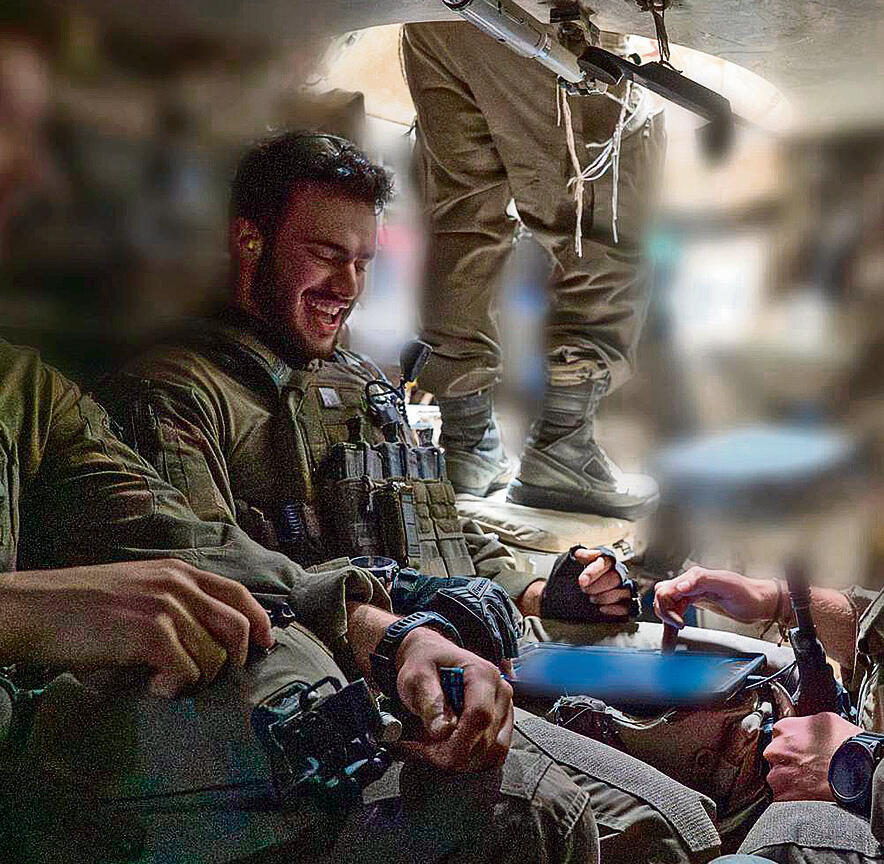
Capt. Noam Ravid, in a moment of rest in Gaza
(Photo: IDF Spokesperson’s Unit, Documentation Unit)
‘He was in the right place and fully at peace with himself’
Capt. Noam Ravid of Shaarei Tikva. An officer in the Yahalom combat engineering unit. He was 23 when he was killed.
It was recently reported that half of “Team Ravid” — six soldiers — decided to continue to officer training after the death of their commander, Capt. Noam Ravid. Three of them have already received their ranks, and the other three are expected to receive them soon. Noam was killed on May 3, 2025, during operational activity in southern Gaza. Staff Sgt. Yaly Seror of the Samur unit, which specializes in tunnels and caches, was also killed with him.
His father, Erez, said: “Noam finished officer training and went on to serve in two roles as a team commander in basic training and advanced training in the battalions, and then as a team commander in the unit’s combat training track. He was someone who shared a great deal, and we knew about his role and the dangers.
“Our last conversation was on Friday, after Independence Day, which was observed early that year. Noam was killed on the fifth of Iyar. Noam, who had just come through an intense week, sounded tired. He called to say he was coming out on Sunday and asked us to arrange a few things for him. It was a good conversation, and we even photographed the steak waiting for him in the freezer from the Independence Day barbecue. We were completely in the mindset of, ‘In two days he’ll be out of Gaza,’ but the next day he was killed.
“A Golani force identified terrorists who had fled into a tunnel and called in Noam and his team. They arrived at the site and carried out all the procedures, including sending in a dog and a drone, but when they approached, an explosive device was detonated from inside the wall. Hamas released a video showing Noam’s force walking into the building.”
His mother, Shlomit, added: “Our two older sons watched the video. We still haven’t. Later, we also received the photographers’ images. Today, we are one year from the day Noam was killed. Every minute is an insane struggle. We saw quite a few photographs, including some taken by soldiers from the team, pictures from his final week. Every time it shakes us all over again. On the one hand, we are glad there are pictures of Noam in the field, in the middle of what he was doing. Still, when you think about it, this was his last day, his last hours.”
Erez said: “Noam was a super-professional officer. He did things the right way. You can see that they were very whole and focused on their mission. Noam was full of joy for life, making the most of every moment with great love for everyone, including moments of singing and joking around. He was a person of friends, of people. He loved life. In every second and every situation, he would find the both-and. We know he was doing something he loved, that he was in the right place to be, and that he was fully at peace with himself.
“We will always be happy to receive any photograph or video of Noam, both for us and for future generations. In the week Noam was killed, his brother and sister-in-law had planned to tell all the siblings they were expecting. Peleg Noam is already 6 months old, and the more he gets to know his uncle, the happier we will be.”
‘His photographs convey the magnitude of the loss’
Maj. Yaniv Kula of Modiin. Husband of Neta. He was 26 when he was killed.
Maj. Yaniv Kula enlisted in 2018 in the Duvdevan unit, and after officer training, he went on to serve in the Nahal Brigade. He was killed on Oct. 19, 2025. One of his soldiers, Itay Yavetz, was also killed in the same incident.
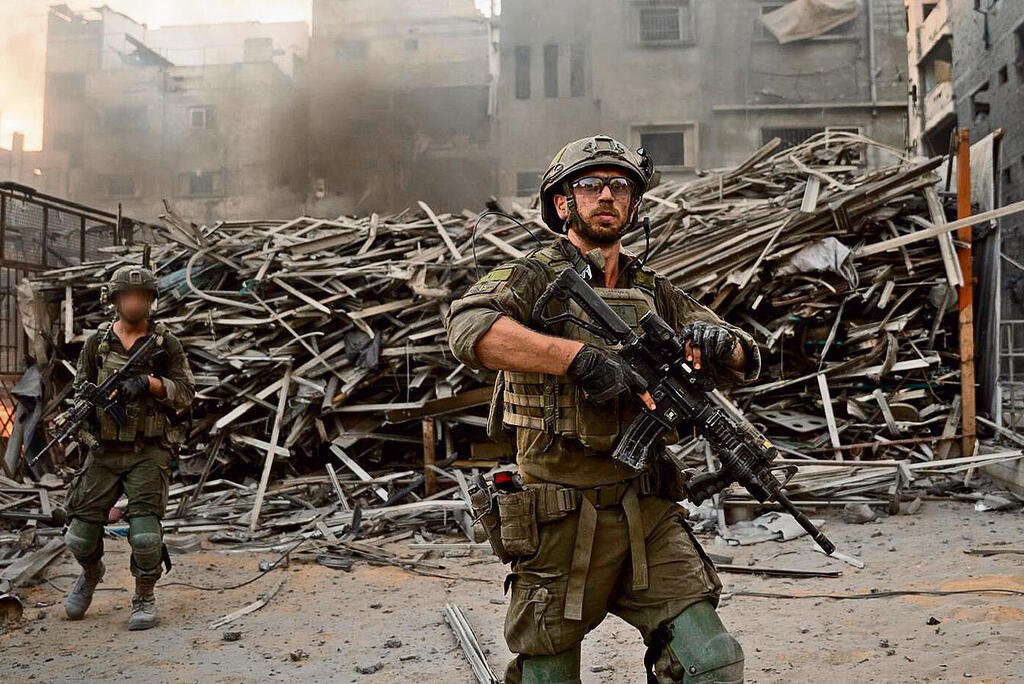
Maj. Yaniv Kula
(Photo: IDF Spokesperson’s Unit, Documentation Unit)
His father, Oren, said: “Yaniv enlisted in Duvdevan, completed the entire grueling course, and after officer training moved to the Nahal Brigade. On October 7, even though he was actually in school at the time, Yaniv rejoined his battalion, the 932nd, and went into Gaza with them for five months. In August, he took command of the battalion’s lead company and served with them for three months. The company was in a difficult state after losing both its company commander and deputy company commander, and even so, he managed to lift them up. Yaniv was home on the evening of the first day of Sukkot. He returned to the army and was supposed to come home again after the holiday.”
His mother, Dagnit, said: “Every Friday we have a family ‘ceremony’ of opening FaceTime, and he tried to join the call, but the connection kept breaking up. On Sunday, he was killed.”
Oren added: “Yaniv was hit by sniper fire. His company was securing an engineering force whose mission was to expose a tunnel in the Rafah area. It was an operation that lasted several days.
“During the shiva and afterward, some of the soldiers under his command sent us photographs they had received from the documentation unit, and that is how we realized there had been a photographer documenting their activity. Usually, Yaniv was the one taking pictures, so we are pretty much chasing after photographs of him. The images help us experience what he experienced, to feel the places where he was. You can see the way he stands — steady, strong. You can see that he was confident in what he was doing, how meticulous he was, how he went down to the smallest details. And that is only the tip of the iceberg.
“Our son was so much more than what you see. We could talk about him endlessly — about his being a musician, an athlete, a family man, a friend, a listening ear, someone who drew people after him, someone who united everyone. And those photographs express the magnitude of what was lost.”
Dagnit added: “Our refrigerator is full of photographs of Yaniv, but none of them are military ones. The military pictures are still too painful right now, so we say, ‘Let’s put them aside and look later.’ We were moved by them, yes, but they are not the pictures we look at. He was much more than just one photograph, or just a military function.”
The photographer, Master Sgt. A., also said: “When we asked which company commander was best to be with, they told us: ‘Kula, an operational company commander.’ Our role as documenters is a little complicated, and attaching ourselves to a company commander is not always easy, but he welcomed us with open arms. After I learned he had been killed, I had a feeling of loss. I captured his moments as a commander, a company commander, a fighter and a person, and I am sure he had a thousand and one other sides I did not capture.”
‘The picture conveys a message of selflessness: now it is my turn to fight’
Staff Sgt. Uri Bar-Or of Midreshet Ben-Gurion. A soldier in Battalion 50 of the Nahal Brigade. He was 21 when he was killed.
On May 28, 2024, Staff Sgt. Uri Bar-Or’s company carried out a raid in Rafah. During the operation, a powerful explosive device detonated, killing Uri and two other soldiers: Staff Sgt. Amir Galilov and Staff Sgt. Ido Appel. Four other soldiers were seriously wounded.
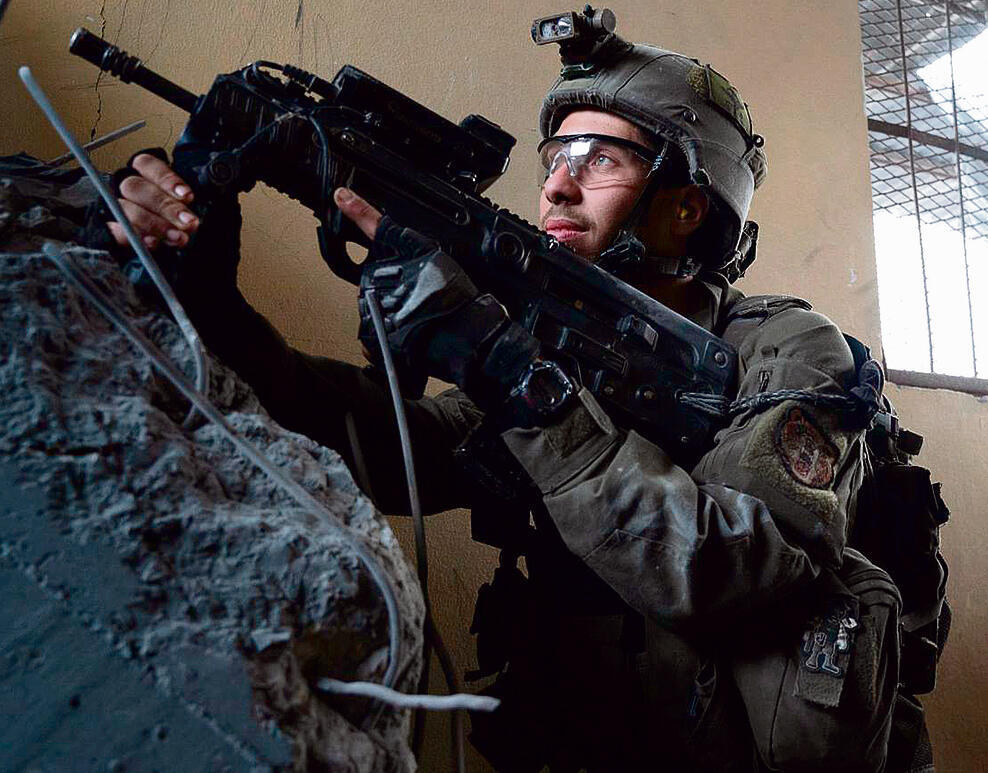
Staff Sgt. Uri Bar-Or
(Photo: IDF Spokesperson’s Unit, Documentation Unit)
Uri’s father, Kobi, said: “Uri was killed in the first entry into Rafah, in a compound that included a school, a mosque and a clinic. They pounded the school and advanced toward the clinic. Then a D9 bulldozer came and shaved down everything around the clinic and opened a breach in the wall. Tragically, a powerful explosive device detonated on them, and Uri was killed along with two of his friends. It was a significant event in the fighting, and a video was even circulated showing pilots saluting the coffins at Soroka.”
“Uri called home on Sunday, two days before he was killed. He sounded very calm and said it was a quiet place and there was nothing there. That was true. He was not lying to me. We came out of the conversation calm. He gave off a very relaxed, settled energy, and that is why we were in shock when the knock came at the door.”
Uri’s mother, Noa, said: “I do not think we have managed to come out of it to this day. Uri said, ‘I’m afraid to die,’ and Kobi answered him, ‘You’re not going to die,’ with complete confidence.
“These pictures show Uri in action, as a soldier for the state. Uri was also an artist and a soldier. His WhatsApp status was: ‘Why either-or if you can also have both-and.’ To me, Uri is my son, the artist. But on Memorial Day, I say that he was a soldier and defended the state. At this time of year, I can connect with the fighter in him, the way you see him in these photographs.”
Kobi added: “This is a war picture that shows survival and attack, but it also conveys a message of defense and selflessness — now it is my turn to act, to fight. I saw other pictures in which he is attaching explosive charges to the pillars of houses. These pictures contain fighting, protecting the home, a desire for better lives in our country. Uri chose to go there, and he was an excellent soldier.”
The photographer, Staff Sgt. A., said: “The picture was taken during the last battle of that day. I am climbing a staircase, I look up, I see Uri covering us, and that is the picture I took. It was one of those moments in life when only he and I were there. He recognized me and I recognized him — it turned out we knew each other from home. Uri was one grade above me in a small high school. In that situation I felt Uri was protecting me, that I knew he would fire if a terrorist came and threatened my life. I am glad that through the photographs I can tell the world who Uri Bar-Or was. Out of comradeship and friendship among fighters, for me it is an honor to pay him final respects.”
‘He knew how to look people straight into the heart’
Col. Ehsan Daxa of Daliyat al-Karmel, husband of Huda and father of three. He was 41 when he was killed.
Col. Ehsan Daxa, who enlisted in the Armored Corps in 2001, received a citation from the head of Northern Command for his actions during the Second Lebanon War. In June 2024, during the Swords of Iron war, he was appointed commander of the 401st Brigade. Only after his death was it cleared for publication that he was the one who led to the exposure of the tunnel shaft in Rafah where the bodies of six hostages, murdered shortly before, were found. On Oct. 20, 2024, Daxa was killed in Jabaliya after an explosive device was detonated near an observation point that he had reached with other senior officers. With his death, he became the most senior officer killed since the start of the ground operation in Gaza, alongside Col. Itzhak Ben Basat.
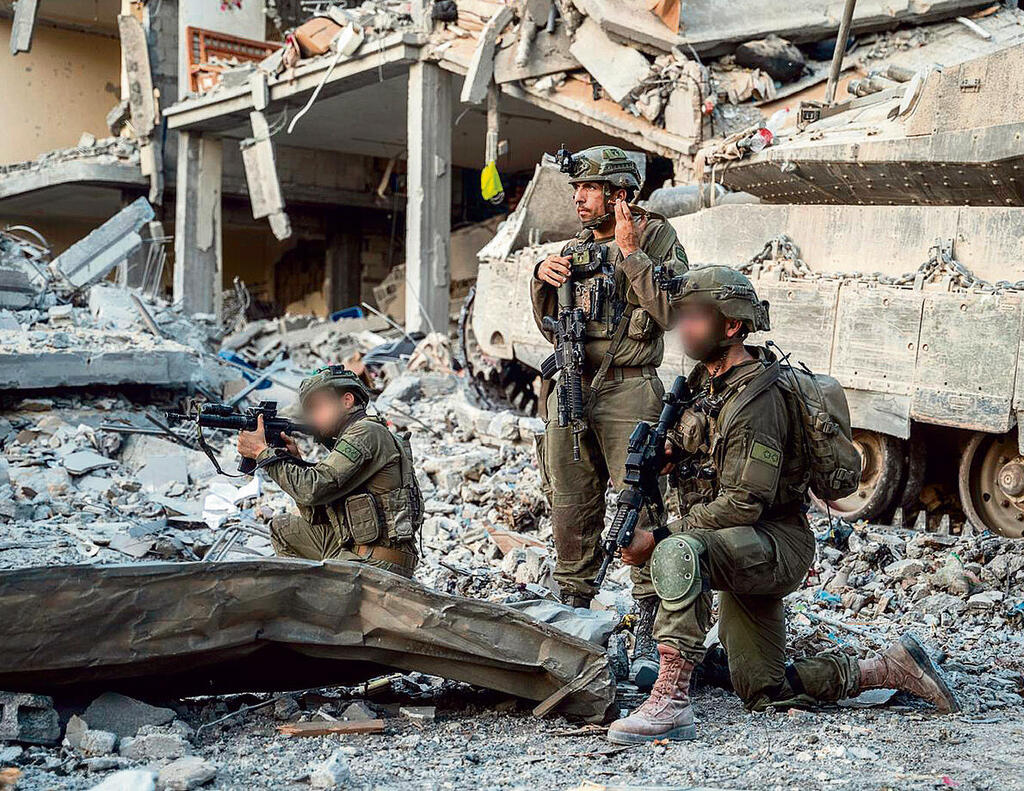
Col. Ehsan Daxa
(Photo: IDF Spokesperson’s Unit, Documentation Unit)
His brother Ihab said: “Since Ehsan was killed, quite a few pictures have reached me documenting moments from his life, and it floods me with longing. That flood makes me look at the photographs again and again and understand how present Ehsan is in our lives, in his life and even after his death. There is one thing many of the photographs have in common — you can see that he is looking his conversation partner in the eyes, really listening, looking into that person’s inner self, and that is what set my brother apart: he knew how to look people straight into the heart. Ehsan was part of something larger. All his life he tried to convey to others a message of partnership, listening, inclusion, equality and humanity, and I think you can see that in quite a few of the pictures. Fortunately, there are many photographs of him, many of them spontaneous, because he did not like being photographed.
“We last spoke about five days before the incident. We are five siblings, three boys and two girls. He was No. 2 and I was the third. We are all very close, but the brothers also have a separate group. We are best friends, and no story ever slipped past us. At the time I was in Andorra, and Ehsan asked me in the group where I had disappeared to and why I was not sending pictures. I answered honestly: ‘You are in Gaza right now, and it does not feel right to send you pictures of me enjoying myself while you are in combat.’ So he replied: ‘Send them immediately. I have to know what is going on there, outside Israel.’ That shows how busy he was, but also how present he remained in our lives. I received the news while abroad and sent my younger brother to check again. Those were not easy hours.
“In my home, all the pictures are always in a visible, accessible place. At our parents’ house, the living room looks like a museum because of all the pictures. Ehsan built himself a wooden cabin, and that too has photographs and mementos in it: his first tanker’s coveralls, the weapon that was with him, and also the photographers’ images. I was not surprised by the photographs, because I know the unit and how important it is to be with the brigade commander. I was deeply moved to know there were more records and moments that people managed to preserve of him and make accessible to others.”
The photographer, Staff Sgt. Sh., said: “When you are in the field, you look for the hottest and most relevant place, so every time I heard that Ehsan, the brigade commander, was due to arrive, I moved closer to his area. In the main photograph I took, which was widely published, you see the commander of Battalion 932 and Ehsan walking together along the most threatened route in the area, as a display of superiority or control of the area. That was in August 2024, two months before Ehsan was killed.
“With Ehsan, there was this feeling that nothing would happen to him. So it really surprised me that he was killed. Three months ago, a memorial was dedicated in his memory at the tri-border area in the southern Golan Heights, at the border between Jordan, Syria and Israel. I asked to photograph the event to close the circle.”