

Less than a year after its founding, the young State of Israel faced what could have become one of the gravest crises of its early existence: a planned British airstrike on Tel Aviv.
The dramatic episode unfolded in early 1949, during Israel’s War of Independence. In a single day, Israeli Air Force pilots shot down five British aircraft over the Negev amid fighting with Egyptian forces. Britain, whose Royal Air Force units were stationed in Egypt, prepared what Israeli newspapers later described as a large-scale retaliatory bombing of Tel Aviv.
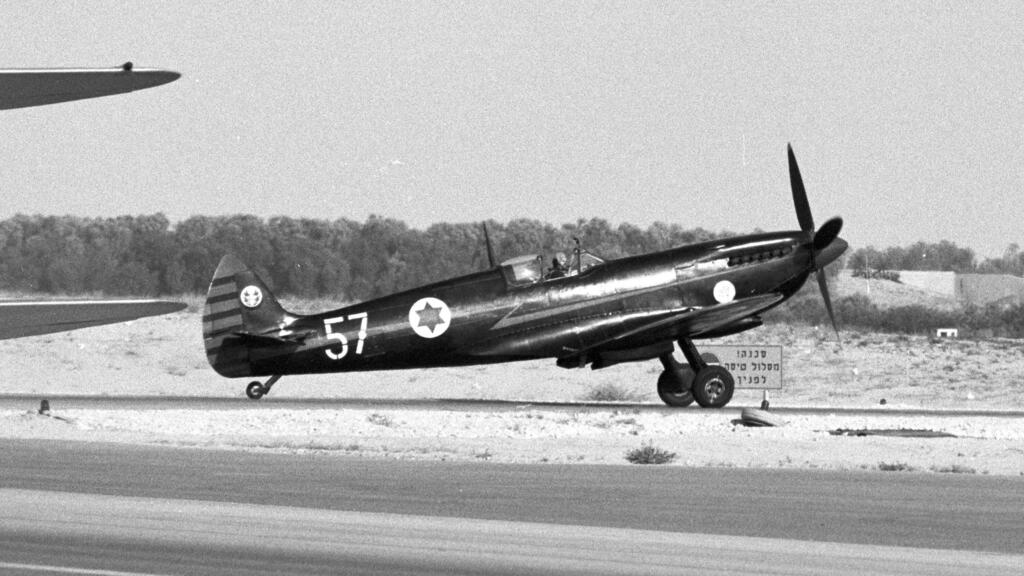
The strike was called off just hours before takeoff — after direct intervention by U.S. President Harry Truman.
A mistaken dogfight
In late 1948, the Israel Defense Forces launched Operation Horev, aimed at driving Egyptian forces out of the Negev. British aircraft based near the Suez Canal routinely conducted reconnaissance flights over battle zones, at times crossing into Israeli territory. Their more advanced planes could operate beyond the range of Israeli anti-aircraft fire.
On a cold morning in January 1949, two aircraft crossed the border and spotted smoke rising from the ground. They dove lower and saw an Israeli convoy in flames. Israeli troops, who had been attacked by Egyptian planes roughly 30 minutes earlier, assumed the aircraft were Egyptian returning to strike again and opened fire. One plane was shot down. Its British pilot parachuted and was captured by Israeli forces.
At the same time, Israeli Air Force aircraft on patrol identified additional British planes that had crossed the border. They engaged them, shooting down two. Furious, the British dispatched more aircraft, triggering a large-scale aerial battle.
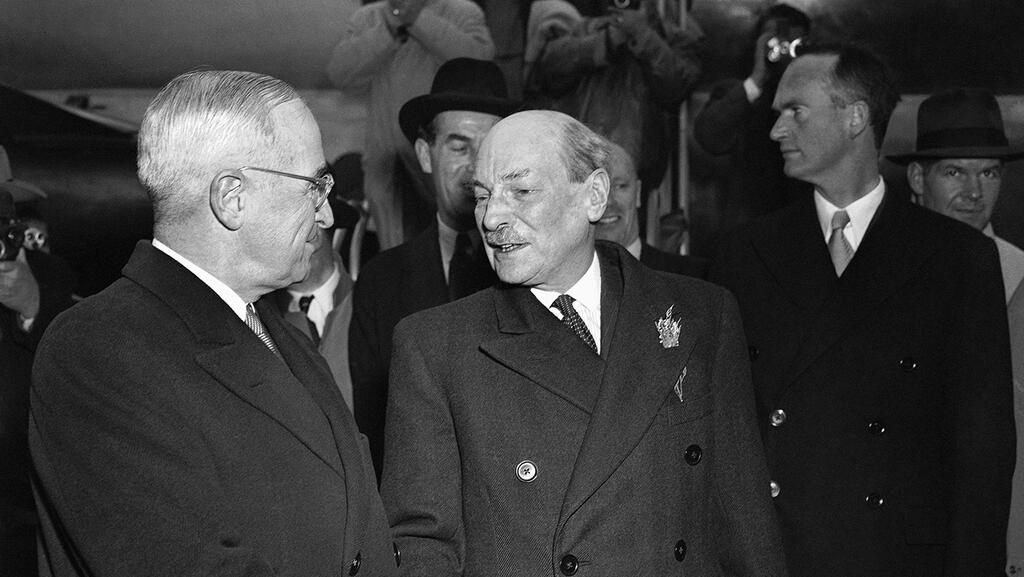
Former British Prime Minister Clement Attlee (right) and Harry Truman
(Photo: AP)
By the end of the day, Britain had lost five planes. Israel lost none, though several Israeli aircraft — including one flown by Ezer Weizman, who would later become Air Force commander and president of Israel — were damaged but managed to land safely.
Only after landing did Israeli pilots realize the planes they had downed were British, not Egyptian.
That evening, the Israeli pilots, many of whom were veterans of Britain’s Royal Air Force during World War II, reportedly sent a message to their former counterparts: “Sorry about yesterday, but you were on the wrong side of the fence. Come over for a drink sometime — you’ll see many familiar faces.”
A planned strike on Tel Aviv
Behind the scenes, however, Britain was preparing retaliation.
According to a front-page report in Yedioth Ahronoth at the time, RAF headquarters in London ordered squadrons in Suez to prepare a dawn bombing mission targeting Tel Aviv.
The American envoy in Cairo learned of the plan and alerted the White House. Truman, recognizing the potential for a catastrophic escalation in the Middle East, intervened directly. Bypassing diplomatic channels, he reportedly called British Prime Minister Clement Attlee and demanded that the operation be halted.
At 3 a.m., roughly three hours before the armed aircraft were scheduled to take off, the order came down to cancel the attack.
More than 70 years before President Joe Biden would use similar language in a different regional crisis, Truman delivered a blunt message: “Don’t.”
The episode is revisited in the podcast “Hofert Journalism” from BePo, which explores the little-known incident that briefly brought Britain and Israel to the brink of open conflict — and the American intervention that prevented Tel Aviv from becoming a wartime target.