


Israeli Arab advocacy activist Yoseph Haddad became involved in a physical confrontation Monday during the filming of a podcast in Los Angeles, after appearing in a “one versus 10” format against a group of pro-Palestinian activists.
The exchange with one participant, identified in the report as far-right activist Dennis Faitosa, escalated from a verbal argument into physical contact inside the studio and later into a fight outside.
Footage of the incident in the podcast studio and parking lot


The incident took place during filming of the American podcast Digital Social Hour. Faitosa recently ran in the Republican primary for California’s 30th Congressional District but was eliminated after receiving only a small share of the vote.
Video from the studio shows Faitosa calling Haddad a “baby killer,” a profane insult and a “murderous monster” over Haddad’s service in the IDF. According to Haddad, Faitosa lost control during what was supposed to remain a verbal debate and initiated physical contact inside the studio.
Haddad said that once filming ended, Faitosa waited for him outside and attacked him from behind in the parking lot. Haddad and members of his entourage then fought back, with Haddad himself seen throwing punches.
“I was attacked by a neo-Nazi in the U.S., but he forgot he had picked a former Golani soldier,” Haddad wrote on X. “I came to a confrontation with a group of anti-Israel activists who simply broke down in the face of the truth,” he wrote. “At one point, a man who is clearly a neo-Nazi came up against me. He tried to turn the debate physical in the studio, and in the parking lot he tried to settle the score and attacked me from behind.”
“He learned a painful lesson very quickly, because when it comes to anti-Israel attacks, we do not stay silent, and this time he picked the wrong person,” Haddad added.
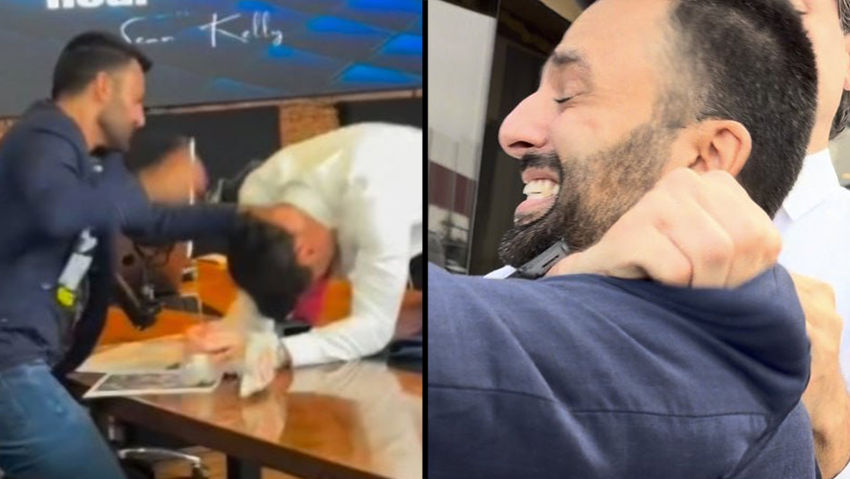
Yoseph Haddad attacked by far-right activist in the US
Haddad, who has spent years engaged in pro-Israel advocacy abroad and was previously selected to light a torch at Israel’s Independence Day ceremony in recognition of that work, said the incident reflected what he described as a recurring pattern.
“This is their constant method,” he wrote. “When they are defeated in a verbal confrontation and have nothing to answer, they move to physical violence.”
“Their biggest problem? They lose there too, and badly,” he added.
Haddad also criticized others present at the scene, saying the response to the confrontation reflected what he views as a broader pattern in criticism of Israel. “They rushed to accuse the Israelis,” he said, referring to himself and members of his entourage. “That is the essence of anti-Israel propaganda in one spoonful: first they attack Israel savagely, then complain and portray themselves as victims when Israel responds, defends itself and wins.”