

Since the launch of Operation Roaring Lion, the IDF and the United States have struck more than 15,000 targets across Iran, in an almost equal division of activity, according to Israeli security officials.
More than 50 senior Iranian officials have been killed, and thousands of sorties carried out by the IDF and US forces have targeted hundreds of ballistic missile array sites, missile production facilities and command centers.
IDF strikes Basij units in Tehran
(Video: IDF)


Data published by the Institute for National Security Studies, a Tel Aviv-based think tank, indicate that 70% of Iran’s ballistic missile launchers and missiles have been put out of use. The report also said 250 unmanned aerial vehicles were severely damaged and 80% of Iran’s air defense systems were struck.
In addition, 100 anti-aircraft batteries and 120 radar systems were destroyed, missile production has dropped to zero and an estimated two-thirds of Iran’s military industry has been destroyed in the strikes.
Israeli and US officials have operated under what officials described as an informal division of labor. The IDF has focused primarily on western Iran, while US Central Command has concentrated on eastern and southern parts of the Islamic Republic, with particular emphasis on the Iranian navy, which US officials describe as threatening shipping in the Strait of Hormuz.
In recent days, however, Israel appears to have expanded its strikes into areas previously targeted mainly by the United States. On Wednesday, the Air Force struck Iranian naval targets in the Caspian Sea for the first time. Iranian opposition-affiliated media outlets reported that the strike took place in the northern port city of Bandar Anzali, about 160 miles from Tehran, and targeted more than five Iranian vessels. Reports also indicated damage to an Iranian naval base in the area.
Israel also struck targets in southern Iran on Wednesday, after US forces had largely operated there until now. Those strikes targeted petrochemical facilities, with an emphasis on gas infrastructure at the refinery complex in the port city of Asaluyeh in Bushehr province.
Israeli officials said the strike was coordinated with the United States, although President Donald Trump later denied that claim.
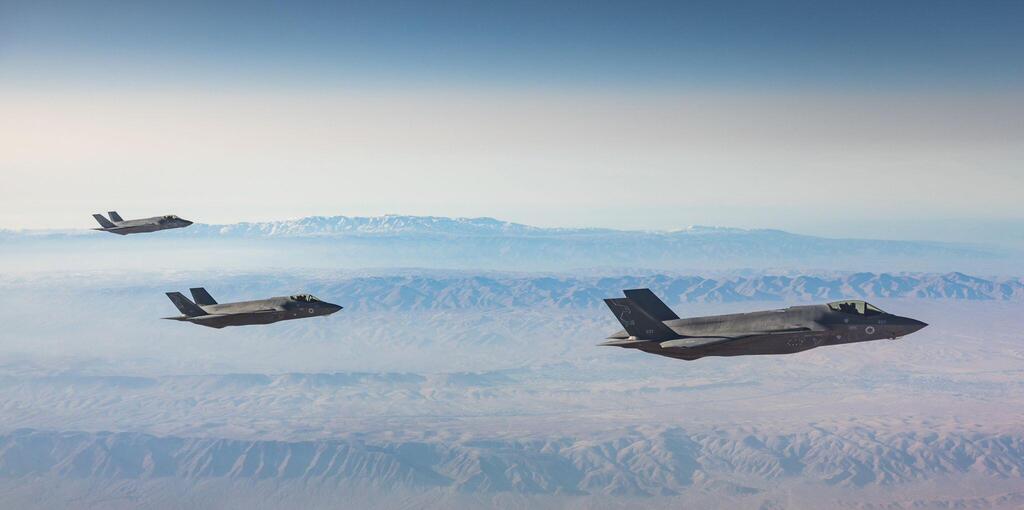
The facility targeted in Asaluyeh is Iran’s largest gas processing plant, handling more than 40% of the country’s gas production. Israel struck part of the facility, directly affecting 20% of Iran’s gas processing capacity, according to Israeli officials. The South Pars field in the Persian Gulf, whose pipelines were reportedly damaged, is the world’s largest natural gas field and is jointly owned by Iran and Qatar.
Separately, US Central Command on Thursday released additional footage of strikes against Iranian naval targets in the Strait of Hormuz. It said that 120 Iranian naval vessels, including dozens of mine-laying boats, have been destroyed or severely damaged since the start of the operation.
US Central Command said its targets have included command and control centers, Islamic Revolutionary Guard Corps headquarters buildings and intelligence sites, air defense systems, ballistic missile sites, Iranian naval vessels and submarines, anti-ship missile sites, military communications capabilities, ballistic missile and drone production facilities and underground missile storage sites.
About 50,000 US troops are participating in the strikes and related defensive operations, alongside extensive Central Command assets. The operations have included B-1, B-2 and B-52 bombers, as well as F-18, F-22, F-35, F-15 and F-16 fighter jets. The US has also deployed MQ-9 drones, A-10 attack aircraft, EC-130H and EA-18G electronic warfare aircraft, airborne early warning and control aircraft, P-8 maritime patrol aircraft, U-2 and RC-135 reconnaissance planes, C-17 and C-130 transport aircraft, refueling planes and helicopters.
In addition to air assets, US Central Command has deployed multiple destroyers with defensive and offensive capabilities, two aircraft carriers — the USS Abraham Lincoln and the USS Gerald R. Ford — submarines, Patriot and THAAD air defense systems stationed across the Middle East and what it described as “special capabilities” that were not detailed.
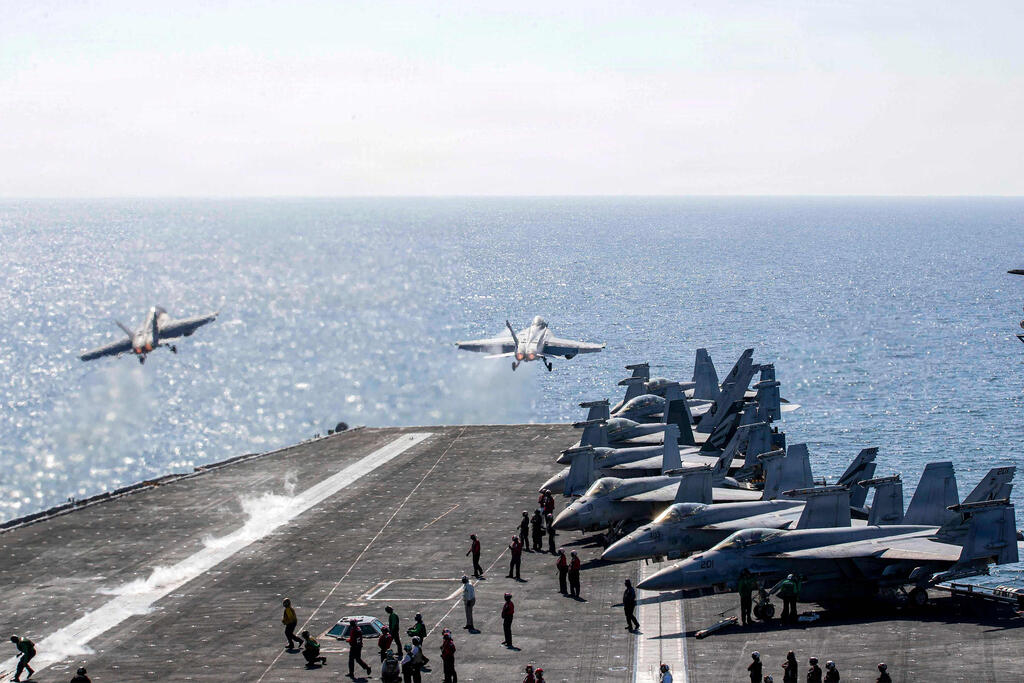
USS Abraham Lincoln
(Photo: US NAVY / AFP)
A senior Israeli official told ynet that the “strategic and historic cooperation with the Americans is dismantling the Iranian military, the Revolutionary Guards, the political, military and scientific leadership and their defense industry.” The official said the achievements were “many times greater than planned” and that damage to Israel’s home front has been significantly lower than initially feared. “The military plan is working well,” the official said.
According to the official, the war with Iran “has no expiration date.”
“We are pressing full throttle,” the official said. “There is no American decision to reduce the intensity of the strikes, even if it may appear that way.”
The official reiterated that the strike on the gas facility was coordinated with the United States, despite Trump’s denial. “It is his right to deny it,” the official said. “It is convenient for him to put it on us in front of the Qataris and say the Israelis are crazy.”
The official added that thousands of new targets are added each day and that the target bank continues to grow, but acknowledged that Iran’s leadership is not showing signs of surrender.
“There is currently a Shiite Iranian leadership that says, ‘If we surrender to the Americans today, it will be the worst surrender since the Battle of Karbala. That will not happen,’” the official said. “From their perspective, they have the ability to endure, even if it is clear they are losing. This is an extreme, ideological leadership that believes it must emerge stronger from the war. They are not showing signs of surrender.”