

The decision to make Aliyah can take years. Sometimes it develops over months, and sometimes it follows a single moment that changes everything. But once the ticket is booked and the suitcases begin to close, the big questions about Zionism, identity and belonging quickly give way to much more practical ones.
What do you do on your first day? Where do you register? How do you receive your documents? Which health fund should you choose? When do you open a bank account? What happens to money left overseas? How do you find a job without starting your career from scratch? And if something happens in the middle of the night, who do you call?

On September 8, ynet Global will hold the Global Aliyah Live Summit, a special international day of broadcasts devoted to Aliyah and the life that comes after it.
The summit will be broadcast in Hebrew, English, Russian and French, bringing together senior public officials, Aliyah and absorption organizations, and experts in healthcare, banking, employment and housing with the people currently experiencing the process themselves: new immigrants.
The first 24 hours: you landed. What now?
One of the summit’s central panels will focus on the moment when months or years of preparation suddenly become reality: the first 24 hours in Israel.
After the flight, the welcome and the first photo in the country comes Israeli bureaucracy, which can feel like an entirely new system that newcomers have to learn from scratch.
Which documents do you receive when you arrive? What has to be done immediately and what can wait? How do you begin dealing with government offices? When should you register with a health fund? How do you open a bank account? What benefits are available to new immigrants, and how do you access them?
The panel will bring those different steps together and help make sense of the stage when everything is unfamiliar, from the country and language to the systems and unwritten rules of daily life.
What to do before you board the plane
Some of the mistakes new immigrants make begin before they ever land in Israel.
The summit will therefore also focus on the days and weeks before Aliyah: which documents to bring, what to arrange with banks in the country of origin, what to do with savings and assets abroad, when to start looking for work in Israel and which arrangements can be completed before departure.
But those final days are not only about lists and documents. New immigrants participating in the summit will also talk about the moment Aliyah stops being an idea and becomes real: saying goodbye to family and friends, leaving a job, packing up a home, dealing with uncertainty and realizing that within days they will need to build a new routine in another country.
The money stays the same. The rules change
Opening a bank account in Israel may sound like a technical step, but for new immigrants it can raise an entire set of questions.
A special financial panel, featuring experts and representatives including Bank Leumi and mortgage advisers, will explain how financial life in Israel works for newcomers.
How do you transfer money from abroad? What happens when some income or assets remain overseas? How does Israel’s credit system work? What should you know about foreign currency, fees and international transfers?
The discussion will also move to a question many olim face later: whether and when to buy a home in Israel.
Mortgage advisers will explain what purchasing property looks like from a new immigrant’s perspective and what should be checked before making one of the biggest financial decisions of a lifetime.
You made Aliyah. Your career does not have to stay behind
A doctor, engineer, tech professional, teacher, executive or entrepreneur can arrive in Israel with 10 or 20 years of experience and discover that the first challenge is explaining to the local job market who they are.
That is why one of the summit’s major topics will be how to bring your career with you.
Employment specialists, including representatives of centers that work with new immigrants, will address questions facing almost every working-age oleh: When should you begin searching? How should a résumé be adapted for the Israeli market? How do you build a professional network from scratch? Which professions require Israeli licensing? And what happens when substantial overseas experience does not automatically translate into an equivalent position in Israel?

The discussions will also cover entrepreneurship, retraining and the options available to those who want to start a business.
The goal is not simply to help newcomers find work, but to help them bring to Israel the knowledge, experience and skills they have already spent years building.
Health funds, family doctors and one number to remember
Israel’s healthcare system can also take time to understand, particularly for people arriving from countries where medical care works very differently.
Representatives from Clalit Health Services will explain how to register with a health fund, choose a doctor, make appointments and access services available to new immigrants from the beginning of their lives in Israel.
The summit will also address a question nobody wants to face but everyone needs to know how to answer: what happens in a medical emergency?
A dedicated segment will explain how to contact Magen David Adom, what happens after dialing 101, what information dispatchers need and what new immigrants should know about Israel’s emergency medical system.
Among all the new phone numbers, passwords and apps that come with moving countries, 101 is one number worth knowing from day one.
Not just talking about olim, but talking with them
Alongside officials, experts and organizations, the summit will also feature new immigrants at different stages of their lives in Israel, and they will not be there only to tell success stories.
They will talk about what surprised them, what was harder than expected, where bureaucracy caught them unprepared, what their first weeks looked like, how they found a job or apartment and what they know now that they wish they had known before boarding the plane.
That combination of official information and firsthand experience will be one of the summit’s central themes.
Sometimes the best answer to a question from someone planning Aliyah comes from someone who made it a month ago.
From the Ministry of Aliyah to the Jewish Agency
The Global Aliyah Live Summit will feature senior officials and representatives from many of the central organizations involved in Aliyah and integration in Israel, including the Ministry of Aliyah and Integration, the Jewish Agency for Israel, the World Zionist Organization, Keren Hayesod, Ofek Israeli, Nefesh B’Nefesh, Clalit Health Services, Bank Leumi, the Jerusalem Municipality, Masa Israel Journey and Magen David Adom, along with employment organizations, advisers and other professionals.
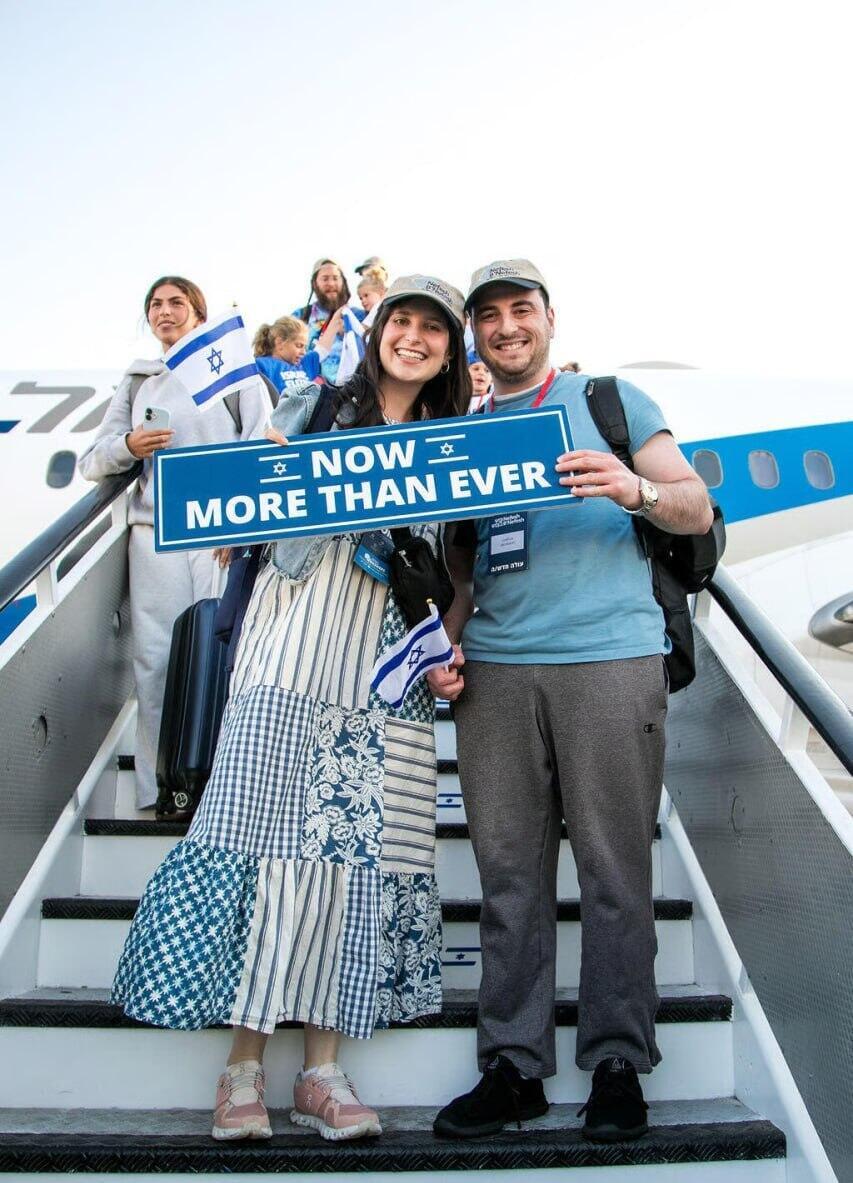
(Photo: Courtesy of Kinneret Rivkind)
Participants will also include the Minister of Aliyah and Integration and the chairman of the Jewish Agency, who will address the broader picture: Who is making Aliyah today? What has changed in recent waves of immigration? What barriers still confront newcomers? And what does Israel need to do not only to bring Jews to the country, but to help them stay and succeed?
Broadcast schedule, Israel time
13:00-14:00 — Live broadcast in Russian, in cooperation with Vesti
14:00-17:00 — Live broadcast in English on ynet Global and ynet
17:00-18:00 — Live broadcast in French on ynet Global
Four languages, one country
The September 8 broadcast will be held in Hebrew, English, Russian and French and is intended both for people already in Israel and for Jews around the world at different stages of planning Aliyah.
Throughout the day, the discussions will cover nearly every part of starting a new life in Israel: healthcare, money, work, housing, mortgages, rights, bureaucracy, community and everyday life.
Behind all of those practical questions is one larger one: How do you turn the dream of Aliyah into a life that actually works?
ynet Global’s Global Aliyah project has been following olim and prospective immigrants throughout the year with guides, articles, personal stories and practical information about life in Israel. On September 8, that conversation moves live.
For those who have already booked a ticket, those planning to arrive within the next year and those still sitting in Paris, London, New York, Toronto or Moscow wondering whether the time has come, the summit is designed to offer answers to the large and small questions that come with the decision.
Because Aliyah does not end when you land at Ben Gurion Airport.
That is where it really begins.