

The Hamas-run government media office in Gaza announced Monday that the head of the emergency committee had submitted his resignation ahead of the transfer of the Strip’s administration to the national committee. Senior Hamas official Mahmoud Mardawi welcomed the decision, calling it a “national step” and urging “all Palestinian forces to support the transfer of Gaza’s administrative powers to the national committee.”
Senior Israeli officials, however, stressed that the move was no more than “meaningless spin and a stalling tactic.”
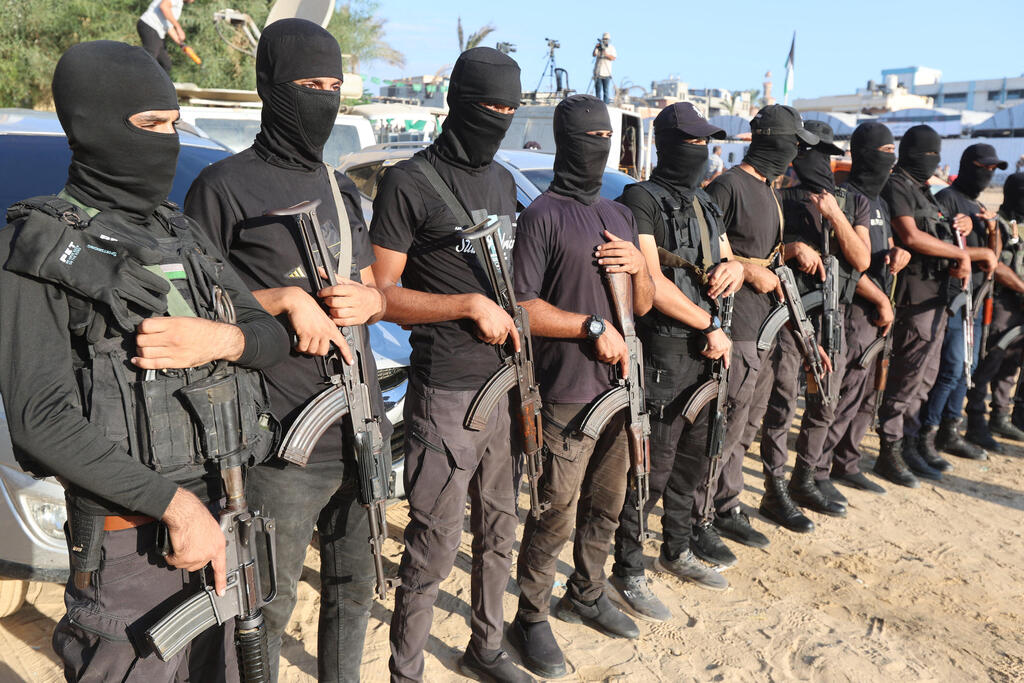
In its statement, the Gaza government media office said that alongside the committee chairman’s resignation, “employees at the technical and professional levels will continue in their roles to ensure the continued provision of services to citizens.” It added that “the current heads of government institutions will serve as a temporary body during the transition period. All employees will continue to carry out their duties under the responsibility of the national committee for the administration of Gaza.”
Hamas spokesman Hazem Qassem told Qatar’s Al Jazeera network that the terror organization “took another positive step today to remove Israel’s excuses.” He said the move was meant to advance the entry of the technocrats’ committee to administer the Strip, adding that “the ball is now in the mediators’ court.”
Qassem also claimed that Hamas had fulfilled all of its commitments, including its willingness to transfer all Gaza government portfolios, including the security portfolio, and said the movement does not want to be part of the arrangements for managing the Strip after the fighting ends.
Senior Israeli officials said the move was a spin, adding: “We already received indications from sources in Gaza yesterday that this is what would happen, but Palestinian officials told us this is only a symbolic step meant to create an appearance of progress for the mediators.”
According to the officials, “Mladenov previously accused Hamas of blocking the entry of the technocratic committee. In practice, all the officials remain in their posts and Hamas continues to rule. From Hamas’ perspective, the move is meant to allow the technocratic committee to enter under conditions that are convenient for Hamas. Hamas is essentially continuing to manage affairs behind the scenes.”
The Saudi-owned London-based newspaper Asharq Al-Awsat reported Sunday night that Hamas’ leadership planned to announce Monday the dissolution of the de facto government that has ruled the Gaza Strip for nearly 20 years. According to the report, the move was intended to clear the way for the entry of the technocrats’ committee, whose entry into the Strip has not yet been possible, Palestinians claim, because of Israel.
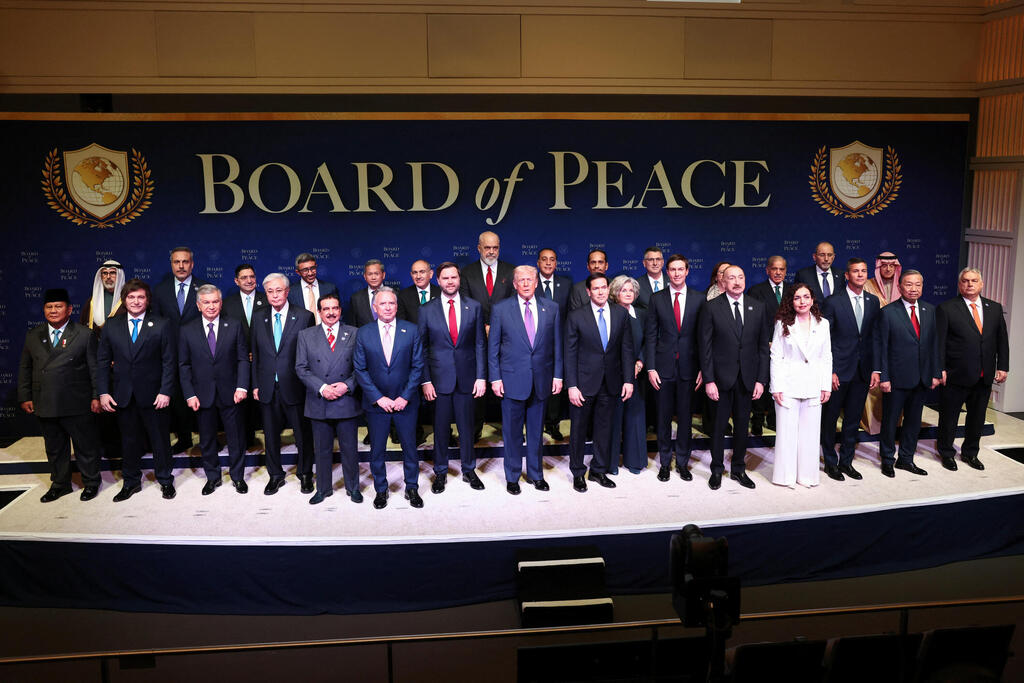
Board of Peace
(Photo: REUTERS/Kevin Lamarque)
The “committee for following up on government work” serves as the de facto government in Gaza. Under U.S. President Donald Trump’s plan, it is supposed to be replaced by a technocratic committee headed by Ali Shaath. Many of the committee’s members have close ties to the Palestinian Authority.
Shaath was chosen after a lengthy screening process. He previously served as a director-general and deputy minister in Palestinian Authority government ministries, as well as head of the PA’s industrial zones authority. He has a clear institutional connection to the Palestinian Authority, but was not involved in policymaking.
The report on Hamas’ intention to dismantle its de facto government in Gaza came after Nahum Barnea revealed last week in ynet's outlet sister, Yedioth Ahronoth, that the U.S. administration had decided to drop the disarmament of Hamas as a condition for the reconstruction of the Gaza Strip.
Hamas’ disarmament had been part of Trump’s 20-point plan, which paved the way for the Gaza ceasefire agreement. According to the report, despite the fact that Hamas’ weapons have not been dismantled, the Americans decided to move to Phase 2: the gradual reconstruction of areas of Gaza under Israeli control.
Under the reported plan, Israel would withdraw; an international force would enter in its place; temporary residential neighborhoods would be built; and the population would move gradually. New cities with residential towers would not be built at first. The project is expected to be completed within 10 years.
The establishment of the Board of Peace in January 2026 was a product of the second phase of Trump’s 20-point plan to end the war in Gaza. After the plan moved from the ceasefire stage to a phase that included disarmament, reconstruction and the creation of an alternative governing mechanism to Hamas, Trump announced that an international council would be established to oversee the administration and reconstruction of the Strip.
Trump presented the council as a body that would include senior leaders from around the world, saying that “kings, presidents and prime ministers” wanted to take part.
Immediately after its establishment, Trump made clear that the Board of Peace was not meant to run Gaza itself, but to serve as a supreme supervisory body within a transitional mechanism. Under it, a professional Palestinian committee was planned to handle the day-to-day management of the Strip until a permanent arrangement could be formulated.
As part of the plan, the board was to oversee the implementation of reconstruction, disarmament and the creation of new civilian institutions, while an international force was meant to help maintain security and order.
The same framework also included the establishment of a Palestinian technocrats’ committee, also known as the national committee for the administration of Gaza. The committee was planned to include 15 professionals approved by Israel. Its members were meant to oversee civilian fields such as infrastructure, sanitation, education and public services, without clear political affiliation, as part of an effort to create a professional transitional administration not controlled by Hamas.
At the start of its work, the committee faced significant difficulties, including the lack of a permanent headquarters, infrastructure shortages and inadequate preparation that forced it to operate only partially and in a decentralized manner.